
NATO Secretary General Mark Rutte Meets U.S. President Trump Amid Iran Conflict Strains and Alliance Burdensharing Debate
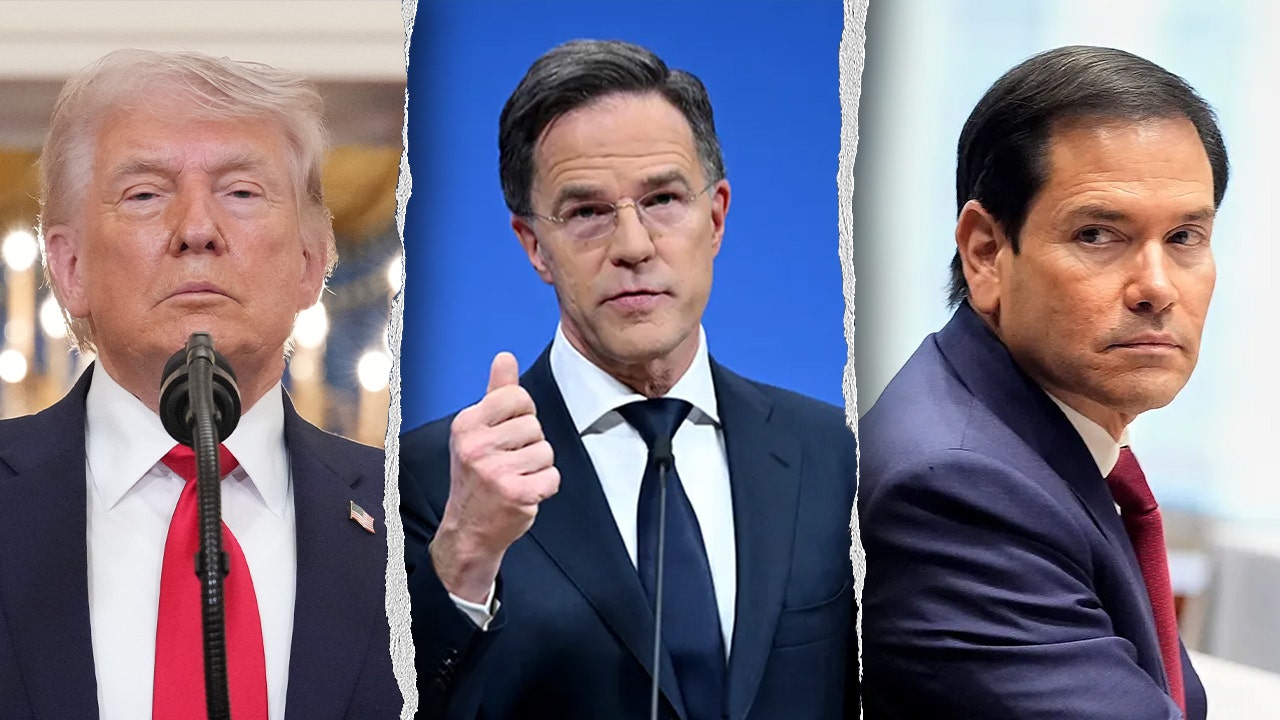
Cover image from foxnews.com, which was analyzed for this article
NATO chief Mark Rutte met President Trump to address alliance strains from the Iran conflict and US threats to withdraw, as the administration weighs burdensharing. The visit occurs amid discussions on China's alleged aid to Iran and NATO frustrations. Coverage emphasized volatile US-NATO relations post-ceasefire.
PoliticalOS
Wednesday, April 8, 2026 — Politics
Strains in U.S.-NATO relations over Iran are real, driven by ally refusals legally permitted under treaty limits, but de-escalation via ceasefire reduces immediate risks. Rutte's visit highlights ongoing burdensharing debates amid Trump's threats, unverified in exact phrasing. Cross-check unconfirmed quotes and omissions for full context on a legally bounded alliance.
What outlets missed
Most outlets downplayed or omitted the precise origins of the Iran conflict, including U.S.-Israeli strikes on February 28, 2026, killing Ayatollah Khamenei and prompting Iran's Hormuz closure as retaliation, framing Iran as the sole aggressor. They largely ignored NATO Treaty Article 5 and 6 geographic/legal limits excluding mandatory Middle East offensive support, presenting ally refusals as disloyalty rather than treaty compliance. Coverage underemphasized the April 7-8 ceasefire details, including Pakistan mediation and immediate market relief, which contextualized the Rutte-Trump meeting as post-de-escalation diplomacy rather than mid-crisis desperation. Ally rationales, like Spain's 'illegal' label, received minimal detail compared to U.S. grievances.
WASHINGTON (AP) -- NATO Secretary General Mark Rutte met with President Donald Trump at the White House on April 8, 2026, amid heightened tensions over European allies' limited support for U.S.-led operations against Iran, known as Operation Epic Fury. The visit, described by a NATO official in a statement to Spectrum News as a 'long-planned' effort to build on the NATO Summit in The Hague, also aimed to discuss defense industry cooperation, security dynamics related to Iran, and Russia's war in Ukraine.
The Iran conflict escalated on February 28, 2026, when U.S. and Israeli airstrikes targeted sites in Tehran, including those associated with Supreme Leader Ayatollah Ali Khamenei, whom Iranian state media reported killed in the strikes, according to Reuters reporting on that date and Wikipedia's conflict timeline. Iran responded by closing the Strait of Hormuz on the same day, obstructing a vital oil chokepoint and causing global energy price spikes, per U.S. Energy Information Administration data and BBC timelines cited in bias analyses.
In late March 2026, several European NATO members denied U.S. requests for base access and airspace use related to the operations. Spain closed its Rota Naval Station and Morón Air Base to U.S. combat, refueling, or staging missions, as reported by Fox News and confirmed in PBS NewsHour and Al Jazeera accounts from early 2026; Spanish Prime Minister Pedro Sánchez called the operation 'illegal, reckless and unjust,' per those outlets. France blocked Israeli aircraft from using its airspace to transport U.S.-made munitions, according to Fox News and Philippe Magoni/AP imagery; French President Emmanuel Macron stated on April 2, 2026, to reporters, 'I am not the commentator on an operation that the Americans decided on with the Israelis alone. They can later regret not being supported,' as quoted in Fox News.
The United Kingdom initially barred U.S. fighter jets from its bases but later softened its stance following Trump's criticism, per The Hill; UK Prime Minister Keir Starmer convened Hormuz-dependent nations for separate discussions, as noted in The Hill. Italy's position was mixed, with Prime Minister Giorgia Meloni referenced but no specific denial detailed; Italian Defense Minister Guido Crosetto expressed doubt on April 8 about unilateral U.S. NATO withdrawal, telling unnamed outlets it would require congressional approval and weaken Europe, according to Washington Examiner.
Trump publicly criticized NATO allies for inadequate support. On March 31, 2026, he allegedly posted on Truth Social, 'You'll have to start learning how to fight for yourself, the U.S.A. won't be there to help you anymore, just like you weren't there for us,' as cited by Fox News, though no archived post was independently verified in the reviewed coverage. Secretary of State Marco Rubio told Fox News's Sean Hannity on April 1, 2026, 'If now we have reached a point where the NATO alliance means that we can’t use those bases... then NATO is a one-way street,' questioning U.S. membership value; Rubio also told Fox News recently that the administration would 'reexamine' NATO post-conflict.
Trump reportedly called NATO a 'paper tiger' in recent weeks and, when asked about withdrawal by a Reuters reporter earlier in April, said, 'Wouldn't you if you were me?' per Al-Monitor/Reuters; he described membership as 'beyond reconsideration' to The Telegraph on April 2, according to The Hill. These characterizations remain unverified by public transcripts in the sources reviewed. White House spokeswoman Anna Kelly stated, 'He has been disappointed by NATO and other allies' unwillingness to be helpful throughout Operation Epic Fury... the United States will remember,' as quoted in Al-Monitor/Reuters.
European sources expressed concerns. Two European diplomats told Al-Monitor/Reuters that European countries were unlikely to join mine-clearing in the Strait of Hormuz during hostilities; another senior European diplomat said Rutte would discuss 'burden-shifting' and leaning into Hormuz reopening post-ceasefire. Oana Lungescu, former NATO spokesperson now at the Royal United Services Institute, called it 'a dangerous point for the transatlantic alliance,' per Al-Monitor/Reuters. Spanish Foreign Minister Jose Manuel Albares told La Sexta TV on April 8 that NATO is mutually beneficial but U.S. remarks prompt European sovereignty steps, floating a pan-European military, according to Washington Examiner.
NATO's foundational treaty limits its scope. Article 5, invoked post-9/11, applies to attacks on members in Europe, North America, or North Atlantic islands north of the Tropic of Cancer (per Article 6, NATO website); it does not mandate support for offensive operations in the Middle East like those against Iran, a point omitted in most coverage but noted in bias analyses referencing MSNBC and The Conversation. Senior U.S. officials privately reassured Europeans of commitment, per one European official involved, as reported by Al-Monitor/Reuters.
On April 7-8, 2026, Trump announced a two-week pause in attacks after Iran agreed to a ceasefire mediated by Pakistan, tied to Hormuz reopening, via Truth Social, leading to falling oil prices and rising stocks, per Al Jazeera, Guardian, and Reuters reports cited in bias analyses; Iran vowed to mine the strait until war's end, per Al-Monitor/Reuters. The meeting occurred post-announcement, framing it amid de-escalation.
Rutte, dubbed a 'Trump whisperer' in multiple outlets including Al-Monitor/Reuters, Fox News, Washington Examiner, and The Hill—though the label lacks direct attribution—has a reported rapport with Trump. He allegedly called Trump 'daddy' in a 2025 schoolyard brawl analogy for Israel-Iran, per Al-Monitor/Reuters and Fox News, but clarified in June 2025 it was metaphorical for European reliance, not literal, as quoted in The Hill. At Davos in January 2026, Rutte helped de-escalate Trump's Greenland threats against Denmark, per The Hill. Last month, Rutte said members have 'different views' but agree on denying Iran nuclear/missile capability, applauding U.S. degradation efforts, per Washington Examiner (unverified quote).
Broader frictions include Ukraine aid diversion risks, Trump's Russia engagement, and Greenland, per Al-Monitor/Reuters. Finnish President Alexander Stubb told Trump of a 'more European NATO,' per Fox News (unverified). Matthew Kroenig of the Atlantic Council told The Associated Press that Rutte keeps the U.S. engaged constructively, per The Hill. The Economist's Zanny Minton Beddoes suggested on CNN April 6 it could signal 'divorce,' citing post-9/11 ally support, per The Hill.
Trump's withdrawal powers are limited; experts say he needs Congress and can withhold support unilaterally, per The Hill. Italian Minister Crosetto cautioned troop withdrawals would weaken Europe. The White House did not confirm press access for the meeting, per Al-Monitor/Reuters. Rutte planned to stay through Sunday for a Reagan Foundation speech and Bilderberg Meeting, per The Hill.
No NATO role in Middle East operations was tasked to Rutte, per a diplomat in Al-Monitor/Reuters. European diplomats expected discussions on maritime trade restoration and defense spending increases. Trump also named Japan, South Korea, and Australia unhelpful, per Washington Examiner.
Coverage ranges from European-anxiety alarmism in al-monitor.com/Reuters, emphasizing 'crisis point' and NATO peril, to pro-U.S. grievance in foxnews.com and washingtonexaminer.com, highlighting ally 'disloyalty' and 'reexamine' needs via unverified Trump quotes. Thehill.com sits in the middle with loaded Trump volatility framing but notes Rutte's diplomacy. All inflate drama through unverified elements while downplaying treaty limits and ceasefire.
Behind the Coverage
al-monitor.com
Most biased
foxnews.com
washingtonexaminer.com
thehill.com
Least biased
What each outlet got wrong
al-monitor.com
Employed alarmist framing with phrases like 'pushed U.S. relations... to a crisis point' and 'DANGEROUS POINT FOR THE ALLIANCE' in all caps, while attributing unverified Trump quotes such as 'paper tiger' and 'Wouldn't you if you were me?' without transcripts, and skewing toward anonymous European diplomats.
Our version: The neutral version labels these Trump characterizations as unverified where no public transcripts exist, balances with U.S. private reassurances, and frames the visit amid de-escalation rather than crisis.
foxnews.com
Prioritized U.S. grievances through unverified quotes like Trump's alleged Truth Social post 'You'll have to start learning how to fight for yourself, the U.S.A. won't be there to help you anymore, just like you weren't there for us' and Rubio's 'reexamine that relationship,' detailing ally blocks without their rationales.
Our version: The neutral version notes such quotes as unverified or alleged, includes European leaders' statements like Sánchez calling the operation 'illegal, reckless and unjust' and Macron's remarks, and explains NATO treaty limits on offensive support.
washingtonexaminer.com
Framed the story with a loaded headline 'NATO’s Rutte heads to White House to make peace with Trump' and unverified quotes like Trump's 'NATO is nothing but a “paper tiger”' from a Monday press conference and Rutte praising U.S. 'degrading that capability,' portraying Trump as aggrieved.
Our version: The neutral version describes the visit as 'long-planned' per NATO statements for cooperation on defense and security, flags unverified quotes, and contextualizes with the recent U.S.-Iran ceasefire announcement.
thehill.com
Used loaded language to depict Trump as erratic, such as 'wildly mixed signals,' 'fumed over the refusal,' and 'potentially explosive moment,' while attributing unverified Rutte 'daddy' anecdote and Rubio's 'one-way street' without full verification.
Our version: The neutral version employs factual descriptions like 'publicly criticized NATO allies,' clarifies the 'daddy' remark as metaphorical per Rutte's own words, and provides balanced context on verifiable base denials and treaty scope.
Facts outlets left out
NATO's Article 5 and 6 limit collective defense to attacks on members in Europe, North America, or North Atlantic islands north of the Tropic of Cancer, not requiring support for U.S. offensive operations in the Middle East against Iran.
Omitted by: foxnews.com, thehill.com
Trump announced a two-week pause in attacks on April 7-8, 2026, after Iran agreed to a ceasefire mediated by Pakistan tied to Strait of Hormuz reopening, leading to falling oil prices and rising stocks.
Omitted by: washingtonexaminer.com
The Iran conflict escalated February 28, 2026, with U.S.-Israeli airstrikes on Tehran killing Supreme Leader Ayatollah Ali Khamenei per Iranian media and Reuters, prompting Iran's Strait closure.
Omitted by: thehill.com, foxnews.com
Spain's PM Pedro Sánchez called U.S. operations 'illegal, reckless and unjust'; France's Macron said 'They can later regret not being supported' for deciding alone.
Omitted by: thehill.com, washingtonexaminer.com
Framing tricks we caught
Alarmist framing
“al-monitor.com: 'the war with Iran has pushed U.S. relations with other members of the military alliance to a crisis point' and 'This is a DANGEROUS POINT FOR THE ALLIANCE.'”
Neutral alternative: Neutral version describes 'heightened tensions over European allies' limited support' without crisis hyperbole.
Loaded headline
“washingtonexaminer.com: 'NATO’s Rutte heads to White House to make peace with Trump.'”
Neutral alternative: Neutral uses straightforward dateline 'NATO Secretary General Mark Rutte met with President Donald Trump at the White House.'
Primacy effect (leading with one side)
“foxnews.com leads with 'Trump, Rubio face NATO chief as US moves to 'reexamine' alliance after Iran clash,' detailing U.S. quotes and ally blocks before European views.”
Neutral alternative: Neutral starts with meeting facts, then balances U.S. criticisms, European responses, and treaty context.
Loaded language
“thehill.com: 'Trump has sent wildly mixed signals,' 'fumed over the refusal of allies,' 'potentially explosive moment.'”
Neutral alternative: Neutral reports 'Trump publicly criticized NATO allies for inadequate support' factually.
Source articles
More in Politics

Federal Agents Search Omar Home in Ongoing Immigration Probe
Homeland Security agents searched the Minnesota Democrat's DC residence in a criminal probe, prompting accusations of political intimidation from Omar and Democratic leaders. Coverage spans left-leaning outlets like NPR, BBC, and The Guardian alongside right-leaning criticism from The Federalist and Daily Wire.

Trump Diesel Import Plan Draws Pushback Over Russia Ties
The weekend agreement drew bipartisan congressional pushback and criticism from Ukraine's Zelenskyy, with analysts downplaying US fuel price impacts. Right-leaning outlets like National Review, Dispatch, and Washington Examiner questioned its legality and effectiveness.

Independents Test Voter Appetite for Middle Ground in 2026 Midterms
Nearly 200 independents are running in competitive races as voters weigh ballot measures on housing costs in states like Massachusetts. Left-leaning coverage from NYT, NPR, and Guardian highlights turnout and key races while right outlets focus on GOP strategy.
Trump Rallies in Alaska, Ohio to Bolster GOP Senate Candidates
The president rallied in Wasilla for Sen. Dan Sullivan and faced empty seats at an Ohio event amid midterm concerns. Outlets across the spectrum covered the trips as signals of GOP vulnerability weeks before Election Day.
The Compass
You just read five takes on one story.
What's your take? Find your political shape in a few minutes.
Take the test