
Pentagon Email Floats NATO Penalties for Spain Over Iran War Rift

Cover image from cnbc.com, which was analyzed for this article
Pentagon email proposes suspending Spain from NATO and other penalties for insufficient support in Iran war. Reports highlight alliance fractures as EU pushes de-escalation. Doubts grow over NATO's role amid US demands.
PoliticalOS
Friday, April 24, 2026 — Politics
The leaked email exposes genuine and deepening NATO divisions over burden-sharing in a conflict that does not trigger the alliance's mutual defense clause. Proposed measures like suspending Spain or revisiting the Falklands are legally impossible under the North Atlantic Treaty and appear intended primarily as leverage rather than executable policy. The single most important reality is that anonymous sourcing leaves the document's exact status unverified, yet the public airing of grievances has already damaged trust on both sides of the Atlantic.
What outlets missed
Most accounts underplayed that the email's contents rest entirely on one anonymous U.S. official with no independent corroboration of the document itself, its date, or its precise circulation level across the Pentagon. Spain's position was more nuanced than simple refusal—it allowed U.S. forces to remain at Rota and Morón but drew a legal line at offensive strikes from its territory, a distinction that reframes the dispute as bounded rather than total abandonment. Outlets also gave short shrift to the non-Article 5 nature of the Iran operations, which explains why allies viewed participation as discretionary rather than obligatory under the North Atlantic Treaty. Finally, the full text of Article 13—permitting only voluntary one-year-notice withdrawal, never suspension or expulsion—was rarely explained beyond a single NATO quote, leaving readers without the treaty's clear legal boundary.
Pentagon Considers Suspending Spain From NATO in Sharp Rift Over Iran War Support
A leaked internal Pentagon email has proposed suspending Spain from NATO and reconsidering American support for Britain's claim to the Falkland Islands as possible retaliation against allies seen as insufficiently supportive during the United States' military campaign against Iran, according to multiple officials familiar with the document. The disclosure, first reported by Reuters, underscores the growing fracture in the Western alliance three months into a conflict that has already disrupted global energy markets and tested the limits of collective defense.
The email, which has circulated at senior levels inside the Defense Department, expresses sharp frustration with certain NATO partners' reluctance to grant the United States access, basing, and overflight rights for operations related to the Iran war. These permissions, known inside the Pentagon as ABO, are described in the document as "just the absolute baseline for NATO," according to a U.S. official who spoke on condition of anonymity to describe the internal deliberations. The note accuses some European governments of displaying "a sense of entitlement," signaling a transactional approach to alliance management that has become more pronounced under President Donald Trump.
Among the options floated is the suspension of Spain from the 32-member military alliance. Pentagon authors acknowledge that such a move would be largely symbolic with limited operational impact on U.S. forces, but it would send a powerful message of displeasure. Another option involves revisiting Washington's long-standing backing of the United Kingdom's sovereignty over the Falkland Islands, which are also claimed by Argentina. The email does not recommend that the United States withdraw from NATO outright or shutter American bases in Europe, though officials declined to rule out a broader drawdown of forces that has been widely anticipated.
The tensions stem from the early days of the conflict, which began with U.S. airstrikes on February 28. Iran responded by closing the Strait of Hormuz, a chokepoint for roughly one-fifth of global oil shipments, triggering economic shockwaves that have rippled through Europe. Trump has repeatedly criticized NATO members for failing to deploy their own naval forces to help reopen the waterway, a position he amplified in an April 1 interview with Reuters in which he openly mused about leaving the alliance. "Wouldn't you if you were me?" the president asked.
This latest episode reflects a pattern. Since returning to office, Trump has treated alliances less as enduring partnerships built on shared values and more as business arrangements to be renegotiated when partners fall short of immediate American demands. The email's language about European "entitlement" echoes years of conservative criticism that wealthier NATO members have underinvested in their own defense while relying on the United States as security guarantor. Yet the specific threats now under discussion risk accelerating the very drift they purport to correct.
Spanish Prime Minister Pedro Sánchez, speaking Friday at an EU leaders' meeting in Cyprus, pushed back firmly. "We are a reliable member" of NATO that meets all its obligations, he said, adding that Madrid's position is one of "absolute collaboration with the allies, but always within the framework of international legality." Sánchez emphasized that governments operate on official policy, not leaked emails. A NATO official separately told reporters that the alliance's founding treaty contains no mechanism for suspending a member state, suggesting any such move would trigger a profound legal and political crisis.
The United Kingdom also appears in the email as a focus of American irritation, though the precise grievances against London remain unclear from the reporting. British Prime Minister Keir Starmer has publicly ruled out participation in any U.S. blockade of the Strait of Hormuz, while still offering other forms of diplomatic and logistical support. The inclusion of the Falklands in the Pentagon document appears designed to exploit a long-running territorial dispute as leverage, a tactic that could further alienate London at a moment when European security concerns, from Ukraine to the Mediterranean, require close coordination.
The episode arrives as the administration has reached a temporary ceasefire with Iran and Israel, pausing major hostilities for roughly two weeks to allow Tehran to reopen the strait and negotiations to continue. Defense Secretary Pete Hegseth has been visible in recent weeks attempting to manage both the military campaign and the diplomatic fallout. Pentagon Press Secretary Kingsley Wilson declined to comment directly on the email when asked.
For an alliance already strained by divergent threat perceptions, the leak risks compounding damage. European governments have watched the U.S. shift toward a more unilateral posture with a mixture of alarm and resignation. Many quietly share American frustrations about burden-sharing; defense spending across the continent remains uneven despite years of pledges. Yet the bluntness of considering NATO suspension or territorial retaliation strikes at the heart of what the alliance was designed to prevent: the weaponization of security guarantees among democratic partners.
The broader context is a world in which great-power competition with China looms and transnational problems from climate to supply chains demand cooperation. NATO has endured for more than seven decades not because every member agrees on every issue, but because it has provided a framework for resolving disagreements without fracturing the collective deterrent. Introducing formal punishments for insufficient enthusiasm in a Middle East conflict that many Europeans view as peripheral to their core security interests could erode that foundation.
U.S. officials insist the email represents brainstorming rather than settled policy. Yet its existence, and the fact that it reached high levels inside the Pentagon, suggests a genuine debate underway about how far Washington is willing to go to enforce alliance discipline. As the temporary ceasefire holds and longer-term talks begin, the question is whether the United States will treat its European partners as indispensable allies in an uncertain century or as subordinates whose loyalty must be compelled. The leaked document indicates that, for at least some in the administration, the answer remains unsettled.
You just read Liberal's take. Want to read what actually happened?
More in Politics
Trump at 32% Approval as Gas Prices Test GOP Midterm Hopes
NYT/Siena polling showed Trump's approval at historic lows around 32 percent with Democrats leading by double digits in key districts. Early voting has surged in battleground states.

Record Early Voting Hits Battlegrounds, Shifting Partisan Shares
AP analysis found hundreds of thousands more early ballots than in 2022 in states including Texas, Ohio, Kansas, Maine, and North Carolina, shifting partisan dynamics.
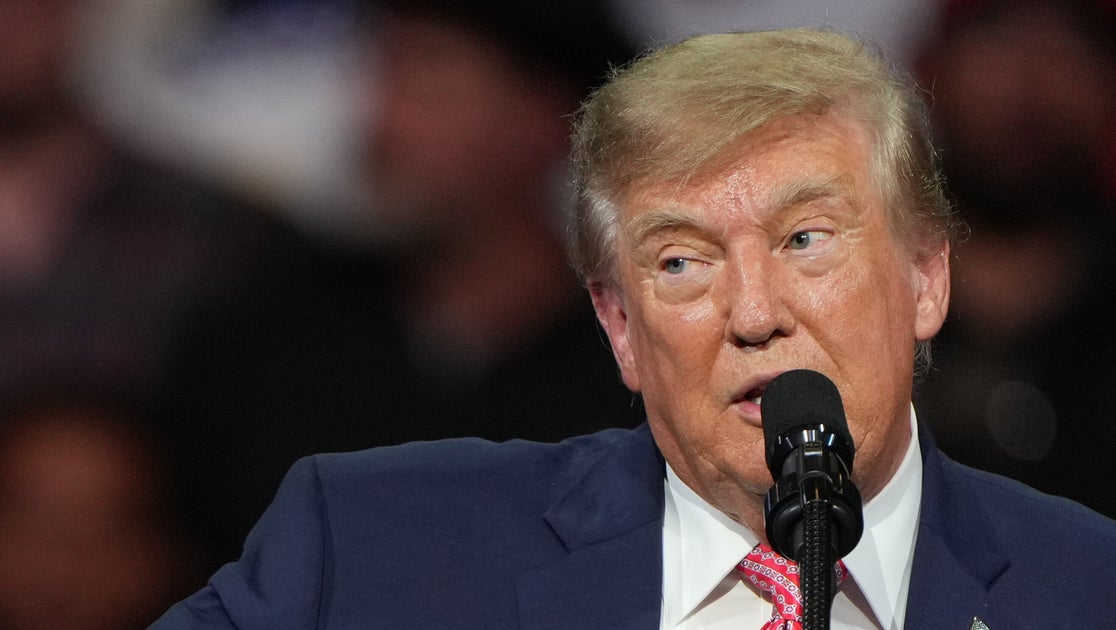
Trump Backs Marshall in Kansas Senate Race Tightened by Farm Costs
President Trump rallied in deep-red Kansas for GOP Sen. Roger Marshall in a competitive race, announcing an $8 billion farm fuel relief program amid high diesel prices. Democrats see an opening to end 94 years of GOP dominance in the state.

Trump Pauses Russia Sanctions Amid Ukraine Tensions and Missile Strikes
Trump waived sanctions on Russia and floated trilateral talks with Putin and Xi as part of ending the Ukraine war, while tensions rose with Zelenskyy over Starlink and arms. Bipartisan senators engaged Zelenskyy amid the shifts.
The Compass
You just read five takes on one story.
What's your take? Find your political shape in a few minutes.
Take the test