
Nebraska Enacts First Medicaid Work Requirements, Testing Compliance vs. Coverage Risks
Cover image from nbcnews.com, which was analyzed for this article
Nebraska implements Medicaid work requirements under Trump budget law, requiring proof of employment for many recipients. Low-income residents worry about coverage loss on day one. Policy sparks debate on welfare reform efficacy.
PoliticalOS
Friday, May 1, 2026 — Politics
Nebraska's early rollout of Medicaid work requirements will test whether data automation and self-attestation can prevent the administrative disenrollments that plagued Arkansas, where most losses stemmed from paperwork rather than actual noncompliance. With two-thirds of eligible adults already working or in school and broad medical exemptions available, the central risk is not unwillingness to work but whether notification and verification systems function smoothly enough to avoid coverage gaps for those the law intends to protect. How Nebraska performs will shape implementation in dozens of states facing the 2027 federal mandate.
What outlets missed
Both outlets underplayed that Nebraska's system allows self-attestation for volunteering, education and certain exemptions without supporting medical documentation, a deliberate easing compared to earlier state experiments. They also gave minimal attention to how post-pandemic eligibility reviews left states with fresher, more complete data on enrollees, improving automation prospects that were unavailable in Arkansas in 2018. The fact that roughly two-thirds of expansion adults already work or study, per longstanding KFF data, received only passing mention despite directly supporting the state's 72-percent auto-verification claim. Finally, coverage of the 25,000-loss projection treated it as settled despite the specific figure not appearing in searchable Urban Institute publications, leaving readers without clear signals on verification status.
Nebraska Launches Medicaid Work Requirements Eight Months Early
Nebraska on Friday became the first state to enforce work requirements for many of its Medicaid recipients, moving ahead of a federal mandate included in President Donald Trump's One Big Beautiful Bill Act signed last July. The policy requires able-bodied adults ages 19 to 64 to document at least part-time work, job training, or schooling to maintain eligibility for the government health program. State officials describe the change as a common-sense step to connect more people to the workforce and ease the burden on taxpayers who fund the program.
Roughly 72,000 Nebraskans fall under the new rules, according to state health department estimates. The Urban Institute, a nonpartisan research organization, projects that as many as 25,000 could lose coverage if they fail to meet the standards or do not submit proper documentation. New applicants must prove compliance immediately, while current enrollees have until the end of July to file their initial reports. Those who miss deadlines after receiving notice risk having their benefits terminated.
The requirements stem from provisions in the sweeping tax and spending legislation that Republicans passed last year. That measure made work rules a condition of Medicaid expansion under the Affordable Care Act for states that participate. While the federal government set a nationwide compliance date of January 2027, Nebraska chose to implement the policy now. Governor Jim Pillen, a Republican, has long supported the move, arguing it reflects Nebraska values of personal responsibility and economic independence.
Supporters point to evidence from other public assistance programs that conditioning benefits on work or training can increase employment rates without causing widespread harm. Similar rules have operated for years in welfare programs such as Temporary Assistance for Needy Families. Proponents contend that Medicaid, originally designed to help the disabled, elderly, and very poor, has expanded dramatically since the Affordable Care Act, covering millions of working-age adults with no serious health limitations. In their view, expecting recipients to contribute through employment simply aligns incentives with reality. Able-bodied adults who choose not to work, they argue, should not indefinitely draw from a program funded by the earnings of working families.
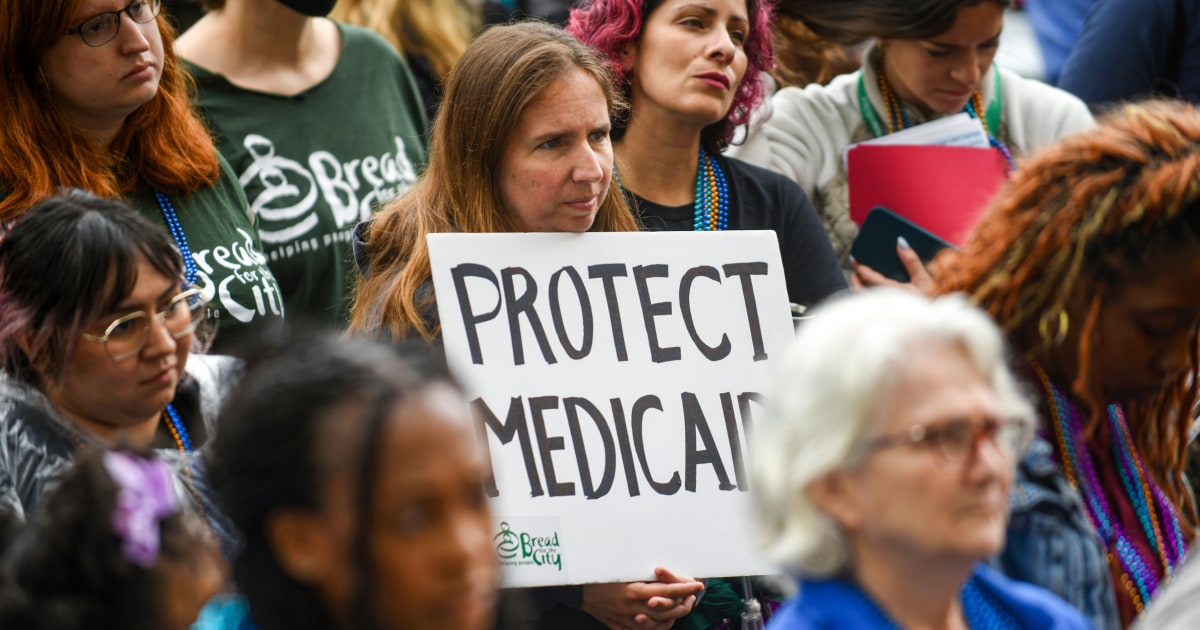
Critics, including healthcare advocacy groups, call the rollout unnecessarily rushed. Anthony Wright of Families USA said states received only 18 months to prepare for a complex new eligibility system, and Nebraska's decision to start early adds avoidable pressure. They worry that bureaucratic hurdles, not lack of effort, will cause coverage gaps. Technical glitches in verifying work hours or exemptions could prove especially difficult for people juggling multiple low-wage jobs without paid time off or reliable internet access.
One such person is Schmeeka Simpson of Omaha. The 46-year-old works three jobs: as a patient navigator for the American Civil Liberties Union, an administrative assistant at Nebraskans for Peace, and part-time shifts at a Dunkin' store. None of the positions offer health insurance. Simpson has relied on Medicaid since her divorce more than a decade ago. She lost food assistance benefits last year after missing a renewal deadline due to paperwork complications and fears similar problems could arise with the new Medicaid rules.
"Adding more barriers won't make the program work any better," Simpson said.
Her situation illustrates both sides of the debate. Simpson is clearly working well above any reasonable threshold the state is likely to set. For her and thousands like her, the requirement should be straightforward to meet if the verification process functions smoothly. Yet her experience with prior benefit disruptions highlights legitimate concerns about administrative competence. State officials say they are prepared to handle the volume and will offer exemptions for those caring for children or family members with disabilities, students, and people with medical conditions that prevent work.
The broader context matters. Medicaid spending has grown rapidly in expansion states, straining budgets and competing with priorities such as education and infrastructure. Nationally, the program now covers more than 80 million people at a cost exceeding $600 billion annually. Work requirements represent one attempt to slow that growth by encouraging self-sufficiency rather than permanent dependence. Research on Arkansas's short-lived Medicaid work experiment, implemented during the previous Trump administration, showed mixed results: many recipients increased earnings, though some lost coverage during the transition.
Nebraska's early adoption will be closely watched. If successful, it could encourage other states to follow once the Trump administration issues formal guidance expected in June. The policy does not affect children, pregnant women, or the elderly and disabled who make up the traditional Medicaid population. It targets only the expansion group added under the 2010 health law.
For policymakers who share Thomas Sowell's long-held view that incentives shape behavior, the Nebraska experiment tests a basic proposition: programs that demand nothing in return can unintentionally discourage work and trap people in cycles of dependency. Whether the new rules produce more independence or simply add red tape will become clearer in the months ahead as the first notices go out and residents begin submitting documentation. State health officials say they will track outcomes closely, including changes in employment rates among former recipients.
The rollout occurs against a backdrop of strong national job growth and low unemployment in Nebraska. That environment should make compliance easier for those willing to work. The question now is whether the verification system can distinguish effectively between those who cannot work and those who simply choose not to, without creating excessive friction for people already contributing through multiple jobs. Nebraska has placed its bet on the idea that expecting accountability from able-bodied adults strengthens both the program and the people it serves.
You just read Conservative's take. Want to read what actually happened?
More in Politics
Trump at 32% Approval as Gas Prices Test GOP Midterm Hopes
NYT/Siena polling showed Trump's approval at historic lows around 32 percent with Democrats leading by double digits in key districts. Early voting has surged in battleground states.

Record Early Voting Hits Battlegrounds, Shifting Partisan Shares
AP analysis found hundreds of thousands more early ballots than in 2022 in states including Texas, Ohio, Kansas, Maine, and North Carolina, shifting partisan dynamics.

Trump Backs Marshall in Kansas Senate Race Tightened by Farm Costs
President Trump rallied in deep-red Kansas for GOP Sen. Roger Marshall in a competitive race, announcing an $8 billion farm fuel relief program amid high diesel prices. Democrats see an opening to end 94 years of GOP dominance in the state.

Trump Pauses Russia Sanctions Amid Ukraine Tensions and Missile Strikes
Trump waived sanctions on Russia and floated trilateral talks with Putin and Xi as part of ending the Ukraine war, while tensions rose with Zelenskyy over Starlink and arms. Bipartisan senators engaged Zelenskyy amid the shifts.
The Compass
You just read five takes on one story.
What's your take? Find your political shape in a few minutes.
Take the test