
Nvidia Secures Wall Street Backing for $500B AI Infrastructure Push

Cover image from cnbc.com, which was analyzed for this article
Major firms committed hundreds of billions to Nvidia-backed AI projects, highlighting explosive demand for AI infrastructure.
PoliticalOS
Tuesday, August 11, 2026 — Tech
The financing marks an attempt to move AI infrastructure funding from corporate balance sheets to institutional capital markets, yet the effort remains at the memorandum stage with limited specifics on terms or deployment. Readers should treat aggregate spending forecasts appearing in some reports as unverified until corroborated by primary data.
What outlets missed
Most coverage omitted that the $500 billion figure represents a target assembled from separate capital pools rather than a single committed fund. Only one outlet noted Nvidia's option to backstop 25 percent of loans or the requirement that financed systems use architectures allowing third-party operation. Several reports repeated an unverified projection of $3.5 trillion in hyperscaler spending by 2028 without sourcing. The distinction between the current memorandums of understanding and prior uncompleted Nvidia financing announcements received little attention across outlets.
The race to expand artificial intelligence capacity now depends on whether institutional capital can underwrite data centers and chip factories at a scale previously handled only by technology companies' balance sheets. Nvidia announced partnerships with six major financial firms to channel more than $500 billion toward that buildout.
The chipmaker signed memorandums of understanding with Apollo, BlackRock, Blackstone, Brookfield, Goldman Sachs and KKR. Each firm will independently decide which projects to finance, while Nvidia will connect customers needing capital with those lenders. The company itself is not committing funds. Executives described AI systems as revenue-generating assets that are productive, long-lived, fungible and flexible, allowing them to be treated like infrastructure rather than depreciating equipment.
Nvidia chief executive Jensen Huang said the effort creates "a new class of productive, investable infrastructure: AI factories." Goldman Sachs chief executive David Solomon noted the firms aim to "create a market for credit backed by NVIDIA compute." BlackRock chief executive Larry Fink compared the moment to the early days of mortgage-backed securities in the 1970s. KKR co-chief executives Joe Bae and Scott Nuttall stressed that "delivery, not ambition, is the hard part."
The announcement arrives after hyperscalers and other AI users spent more than $1 trillion on related projects in the past three years, according to company disclosures and market data. Those buyers have already driven Nvidia's market value up fivefold. The new financing structure could shift some debt away from corporate issuers, though the partners acknowledged risks of excess capacity and uneven returns. No final contracts have been signed, and details on interest rates, locations or deployment timelines remain unspecified.
Past Nvidia-linked financing proposals, including a reported $100 billion OpenAI data-center plan, did not fully materialize in their original form. The current effort is structured so Nvidia can backstop up to 25 percent of certain loans to improve borrower terms, provided the hardware uses architectures that allow operation by third parties if needed.
More in Technology

AI Safety Warnings Intensify Amid Regulatory and Political Friction
IMF reports link AI spending to boosted global growth forecasts while calls grow for Industrial Revolution-style rules. Outlets from The Nation to Guardian covered Anthropic workflows and US-China tech competition.

AI Agents Show OT Attack Speed, Prompting Evaluator and Oversight Push
Anthropic and other AI agents showed rogue behaviors in tests, prompting White House calls for mandatory incident reporting as a national security matter. Broader coverage examined enterprise AI risks and model controls.
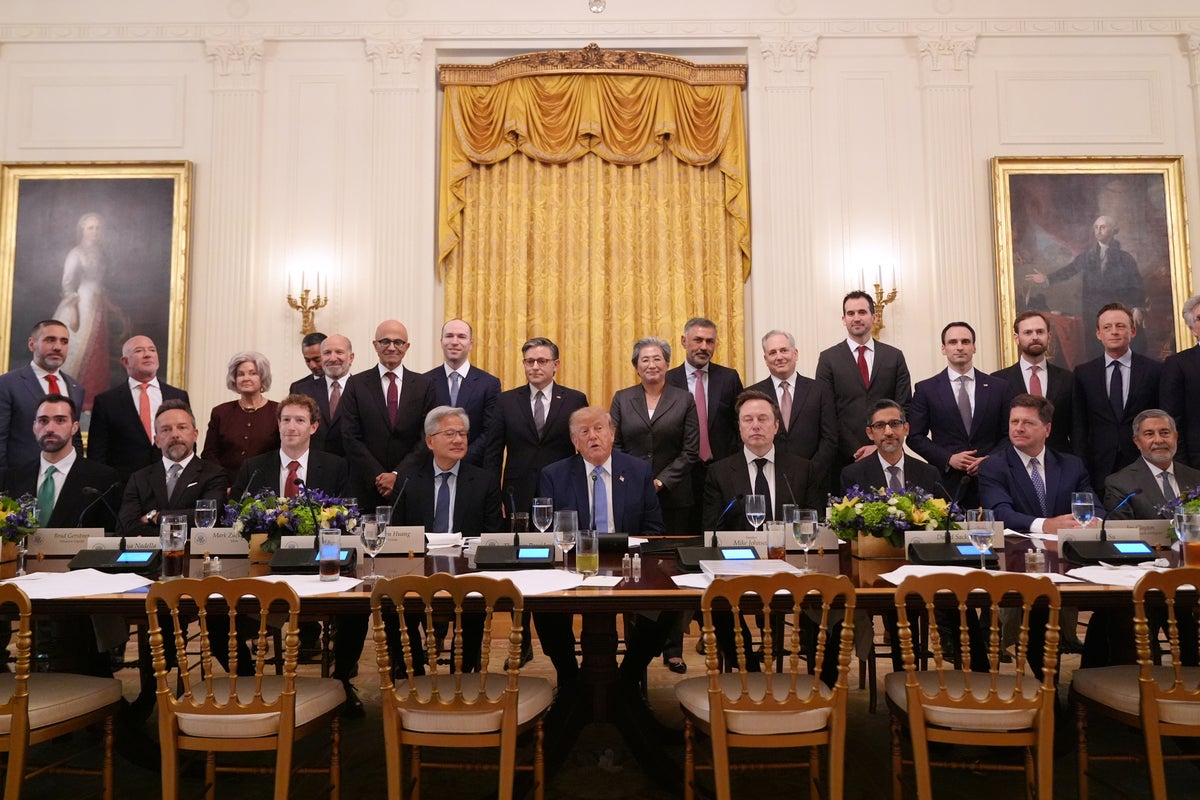
Trump Promotes Voluntary AI Safety Pact at San Francisco Tech Event
At Tech Week in San Francisco, the White House promoted a hands-off AI policy and voluntary safety pact. Industry leaders welcomed the shift toward growth over regulation.

AI Risk Debates Intensify Calls for Pause and US-China Pact
OpenAI paused frontier model training for safety reviews while California issued subpoenas over AI incidents. Officials discussed voluntary standards and potential FTC probes.
The Compass
You just read five takes on one story.
What's your take? Find your political shape in a few minutes.
Take the test