
Hegseth Faces Sharp Questions on $25B Iran Costs as War Powers Deadline Nears

Cover image from foxnews.com, which was analyzed for this article
Defense Secretary Pete Hegseth endured sharp questioning from lawmakers on the Iran war's mounting costs, now totaling billions, the impending 60-day war powers deadline, and his decisions like firing senior officers. Critics highlighted falsehoods and combative responses during House and upcoming Senate hearings. The testimony underscores partisan divides over the blockade's effectiveness and future funding.
PoliticalOS
Thursday, April 30, 2026 — Politics
The congressional hearings expose a core unresolved tension: whether the administration's Iran strategy of strikes, ceasefire and ongoing blockade justifies $25 billion in costs and leadership upheaval at the Pentagon before the War Powers clock runs out on May 1. Lawmakers on both sides are demanding measurable objectives and an exit path, not rhetoric. Readers should recognize that claims unique to one outlet, such as specific unverified quotes or casualty details, could not be independently corroborated across reporting.
What outlets missed
Most coverage omitted the conflicting U.S. intelligence assessments from 2025 on damage to Iran's nuclear program, with the CIA estimating years-long setbacks while a DIA report suggested only months; this dispute directly fueled Rep. Adam Smith's questioning of shifting rationales. Outlets also underplayed specific U.S. military casualties, reported at 13 in some accounts, and gave little attention to the full scope of Pentagon leadership changes beyond a few names. The precise sequence of the April 8 ceasefire, which paused direct strikes but left the U.S. naval blockade in place, was missing from several previews that continued to describe an active "war" entering its 59th day. Finally, Iranian civilian toll estimates around 10,000 total deaths received almost no mention, narrowing the story to domestic political theater.
Hegseth Lashes Out at Critics as Unauthorized Iran War Nears Constitutional Deadline
Defense Secretary Pete Hegseth is expected to face sharp questioning in the Senate on Thursday following a disastrous appearance before the House Armed Services Committee in which he evaded basic questions about strategy, costs and civilian casualties in the United States’ unauthorized military campaign against Iran. The hearing comes as the conflict, now in its 59th day, approaches the 60-day limit set by the 1973 War Powers Resolution, which requires congressional approval for sustained operations or the withdrawal of forces.
What began as a discussion of the Pentagon’s proposed $1.5 trillion budget for fiscal 2027 quickly became a referendum on President Donald Trump’s decision to launch strikes against Iran in late February without explicit congressional authorization. Pentagon figures released during Wednesday’s House hearing put the price tag at $25 billion so far, a sum that has already strained munitions stockpiles and contributed to the closure of the Strait of Hormuz, sending oil prices soaring and destabilizing global energy markets.
Hegseth’s performance before the House was marked by visible frustration and repeated deflections. When pressed by Rep. Adam Smith, the top Democrat on the committee, about the administration’s plan now that Iran’s nuclear capabilities remain intact and the economic fallout mounts, Hegseth responded by attacking the premise of the question. “I take issue with the premise,” he said, before pivoting to praise Trump’s “courage” and criticize previous administrations. Smith repeatedly interrupted to ask the straightforward follow-up: “What’s the plan?” Hegseth offered no clear answer.
Instead, the defense secretary grew combative. At one point he declared that “the biggest adversary we face at this point are the reckless, feckless and defeatist words of congressional Democrats and some Republicans.” The remark drew immediate backlash from lawmakers across the aisle. Rep. Pat Ryan, a West Point graduate and Democrat from New York, called it “a fucking joke,” noting that Hegseth had failed to provide straightforward answers even about the deaths of six Americans in the conflict.
Democrats also challenged Hegseth on the reported bombing of a school that killed children, the rapid depletion of critical U.S. munitions, and the shifting public justifications for the war. Questions arose about whether service members might face unlawful orders, referencing video of lawmakers urging troops to refuse illegal directives. Hegseth dismissed much of the scrutiny as politically motivated, appearing rattled when follow-up questions prevented him from retreating to prepared talking points. Multiple accounts described his testimony as an “unraveling,” with the former Fox News host, accustomed to friendly media settings, struggling in an environment that demanded precision and accountability.
Republicans on the committee largely defended the operation and focused on using the massive budget request to rebuild domestic manufacturing and replenish weapons stocks. Yet even some GOP members expressed quiet unease about the war’s duration and expense. Sen. Roger Wicker of Mississippi, who will chair Thursday’s Senate hearing, has emphasized reindustrialization, but the session is widely expected to center on the same unresolved questions that dogged Hegseth in the House.
Independent Sen. Angus King of Maine, a member of the Senate Armed Services Committee, told NPR he intends to press Hegseth on core issues of legality, strategy and exit conditions. King’s questions are likely to focus on whether the administration believes it can continue operations beyond the May 1 deadline without explicit congressional consent, a constitutional flashpoint that has already sparked debate over Trump’s bypassing of Congress.
The situation is further complicated by Iran’s response. In a statement read on state television, the country’s new supreme leader, Ayatollah Mojtaba Khamenei, vowed to protect Iran’s nuclear and missile programs as “national assets.” He declared that foreigners have “no place in the Persian Gulf except at the bottom of its waters,” signaling that Tehran has no intention of capitulating. Diplomacy appears stalled, with no clear off-ramp in sight.
The war has already produced measurable damage beyond the battlefield. The blockade of the Strait of Hormuz has contributed to what some economists describe as an economy in freefall for the region. At home, the absence of congressional approval has raised fresh concerns about executive overreach at a moment when public trust in institutions is fragile. As Hegseth prepares for the Senate, the central questions remain unanswered: what constitutes success in this conflict, how much more it will cost in blood and treasure, and whether Congress will finally assert its constitutional authority or continue to cede ground to an administration operating without clear legislative consent.
The coming days will test whether lawmakers treat the May 1 deadline as a serious legal boundary or another procedural formality to be ignored. For now, the administration’s own defense secretary has offered little reassurance that a coherent plan exists beyond continued escalation and rhetorical attacks on domestic critics.
You just read Progressive's take. Want to read what actually happened?
More in Politics
Trump at 32% Approval as Gas Prices Test GOP Midterm Hopes
NYT/Siena polling showed Trump's approval at historic lows around 32 percent with Democrats leading by double digits in key districts. Early voting has surged in battleground states.

Record Early Voting Hits Battlegrounds, Shifting Partisan Shares
AP analysis found hundreds of thousands more early ballots than in 2022 in states including Texas, Ohio, Kansas, Maine, and North Carolina, shifting partisan dynamics.
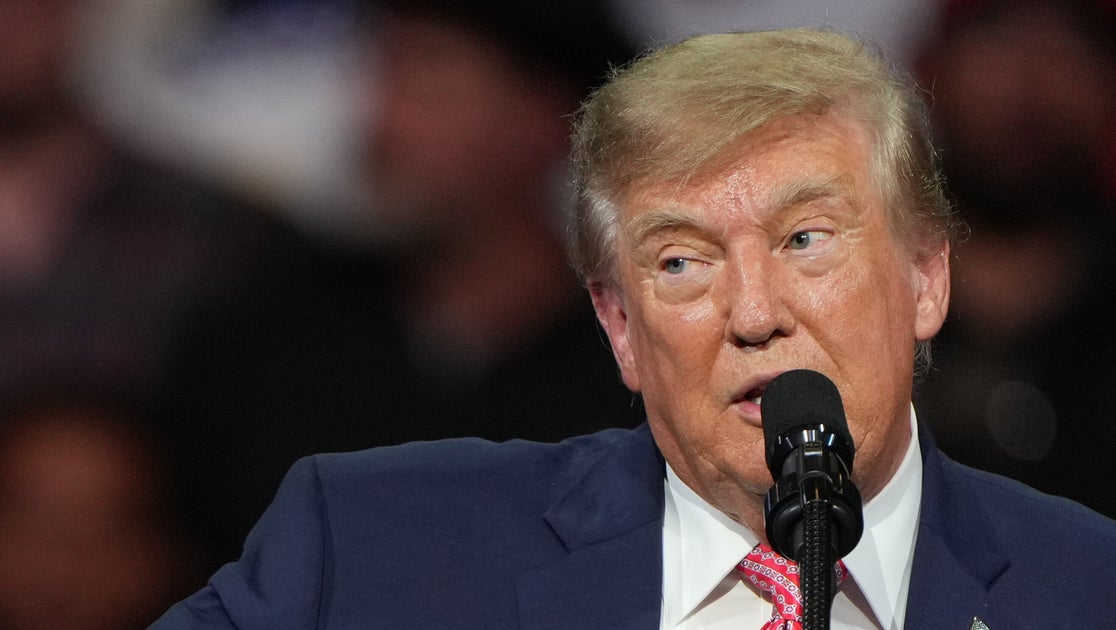
Trump Backs Marshall in Kansas Senate Race Tightened by Farm Costs
President Trump rallied in deep-red Kansas for GOP Sen. Roger Marshall in a competitive race, announcing an $8 billion farm fuel relief program amid high diesel prices. Democrats see an opening to end 94 years of GOP dominance in the state.

Trump Pauses Russia Sanctions Amid Ukraine Tensions and Missile Strikes
Trump waived sanctions on Russia and floated trilateral talks with Putin and Xi as part of ending the Ukraine war, while tensions rose with Zelenskyy over Starlink and arms. Bipartisan senators engaged Zelenskyy amid the shifts.
The Compass
You just read five takes on one story.
What's your take? Find your political shape in a few minutes.
Take the test