
Hegseth Defends Iran War Strategy as Senate Grills Him on Costs, Firings and Legality

Cover image from salon.com, which was analyzed for this article
Defense Secretary Pete Hegseth testified before the Senate on Iran operations, facing questions on civilian casualties, controversial comments, and military ideology. He clashed with senators like Elizabeth Warren while defending the blockade strategy. Confirmation prospects remain uncertain amid partisan divides.
PoliticalOS
Friday, May 1, 2026 — Politics
The Senate hearing laid bare partisan rifts over an Iran campaign now two months old, with Democrats demanding precise figures on costs already at $25 billion, clearer legal justification under War Powers, and explanations for multiple senior military firings. Republicans largely affirmed the goal of blocking Iranian nuclear weapons and accepted the administration's claim that a ceasefire paused the 60-day clock. The single most important reality is that Congress has yet to formally authorize the operation, leaving its long-term footing uncertain even as casualties mount and global economic ripples continue.
What outlets missed
Most coverage omitted the precise timeline: strikes began February 28, notification to Congress came March 2, and the ceasefire started April 7-8 with no further exchanges of fire. Outlets downplayed or ignored the $1.5 trillion supplemental defense budget request that formed a major part of both House and Senate hearings. Verified U.S. casualties, cited by Sen. Reed as 13 killed and more than 400 injured, appeared in only a few transcripts yet were absent from Salon, Western Journal and one Independent piece. Reporting also underplayed bipartisan agreement on the Iranian nuclear threat even amid clashes, and failed to note that many of the same Democratic senators had previously voted to confirm Hegseth or his predecessors. Finally, claims of specific war crimes or 200 deaths in Caribbean operations surfaced in only one source and could not be independently verified.
Hegseth Argues Ceasefire Pauses War Powers Deadline as Senate Questions Iran Strategy
Defense Secretary Pete Hegseth told senators on Thursday that a fragile ceasefire with Iran has effectively paused the legal clock requiring the Trump administration to seek congressional approval for continued military operations. The assertion came during a tense Senate Armed Services Committee hearing that highlighted deepening institutional friction over the administration's handling of the conflict now in its third month.
The exchange with Sen. Tim Kaine, a Virginia Democrat, underscored the core legal dispute. Friday marks 60 days since President Trump notified Congress of strikes that began on March 2. Under the 1973 War Powers Resolution, the president must terminate the use of American forces after that period unless Congress authorizes an extension or declares war. Hegseth argued that because hostilities have "terminated" with a ceasefire in place since early April, the deadline no longer applies in the way the statute intends. Kaine rejected that interpretation on the spot, warning that the law does not appear to support a pause and that the administration faces an imminent constitutional question.
A senior administration official had earlier emphasized that active fighting has stopped, even as broader diplomatic efforts to secure a longer-term agreement remain stalled. The strategic picture is more complicated than the ceasefire language suggests. The Strait of Hormuz remains effectively closed, disrupting global energy flows and contributing to rising costs for gasoline, fertilizer and other commodities that are already reaching American households. Multiple senators pressed Hegseth on the war's projected duration and total price tag, questions he met with broad assurances that any expenditure was justified to prevent Iran from acquiring a nuclear weapon.
The hearing represented the second consecutive day of difficult appearances for Hegseth. On Wednesday before the House Armed Services Committee he grew visibly frustrated when lawmakers compared the conflict to previous American entanglements in the Middle East. In the Senate, his opening statement was interrupted by a protester who called him a war criminal. Exchanges with Democratic senators grew sharp. Sen. Elizabeth Warren of Massachusetts confronted him over a Financial Times report suggesting his broker had attempted to purchase shares in a defense-focused BlackRock fund shortly before the strikes began. Hegseth dismissed the story as "false" and "made up out of whole cloth," insisting he has never profited from the conflict and that "no one owns me."
Beyond the immediate legal and financial questions, the hearing exposed growing unease among some Republicans about Hegseth's broader approach to leading the Pentagon. Since taking office last year he has overseen more than a dozen high-level dismissals, retirements and reassignments. The most alarming to some GOP lawmakers was the mid-conflict firing of Army Chief of Staff Gen. Randy George. House Armed Services Committee Chairman Mike Rogers, an Alabama Republican, has privately expressed concern, according to sources familiar with the conversations. Critics inside and outside the military describe the pattern as an ideological housecleaning that prioritizes loyalty over experience. Among those removed were the first female commandant of the Coast Guard, the head of the Army’s Chaplain Corps, and a four-star general responsible for training and transformation.
Sen. Jack Reed, the Rhode Island Democrat who leads the committee, framed these developments in stark terms. He told Hegseth that the United States finds itself in a "worse strategic position" than before the conflict, citing dead and wounded service members, damaged bases, depleted munitions stocks and lowered morale. Reed suggested the secretary has been telling the president what he wants to hear rather than what he needs to hear. Other Democrats, including Michigan's Elissa Slotkin and Arizona's Mark Kelly, questioned whether the administration was contemplating the use of troops at polling stations during the upcoming midterm elections, an idea that has circulated in conservative circles as a safeguard against supposed fraud.
Hegseth repeatedly praised Trump for showing "courage" in launching the operation and accused "defeatist Democrats" of undermining the mission. Yet the cumulative impression from two days of testimony was of an administration that has launched a significant military campaign without a clearly articulated endgame or broad congressional buy-in. The economic ripple effects are no longer theoretical. Families across the country are paying higher prices for goods connected to the closed strait, even as the conflict's original objectives remain only partially achieved.
The War Powers Resolution was passed in the aftermath of Vietnam precisely to prevent presidents from conducting open-ended conflicts without legislative consent. Its enforcement has always been uneven, dependent on political will. What makes the current moment distinct is the combination of a contested legal interpretation, the politicization of the officer corps, and the absence of a persuasive theory of victory that extends beyond preventing a nuclear Iran. Hegseth's defenders argue he is a decisive reformer cleaning out entrenched bureaucracy. His critics, including some Republicans, worry that replacing experienced leaders with ideological allies during active hostilities risks the very military effectiveness the administration claims to prize.
As the 60-day mark arrives, the administration appears prepared to assert that the ceasefire renders further congressional approval unnecessary. Whether courts or Congress ultimately accept that view will test the resilience of institutional guardrails that have been strained repeatedly in recent years. For now, the Strait of Hormuz stays closed, the economic costs continue to mount, and the Senate's questions about strategy, accountability and the character of American civil-military relations remain unanswered.
You just read Liberal's take. Want to read what actually happened?
More in Politics
Trump at 32% Approval as Gas Prices Test GOP Midterm Hopes
NYT/Siena polling showed Trump's approval at historic lows around 32 percent with Democrats leading by double digits in key districts. Early voting has surged in battleground states.

Record Early Voting Hits Battlegrounds, Shifting Partisan Shares
AP analysis found hundreds of thousands more early ballots than in 2022 in states including Texas, Ohio, Kansas, Maine, and North Carolina, shifting partisan dynamics.
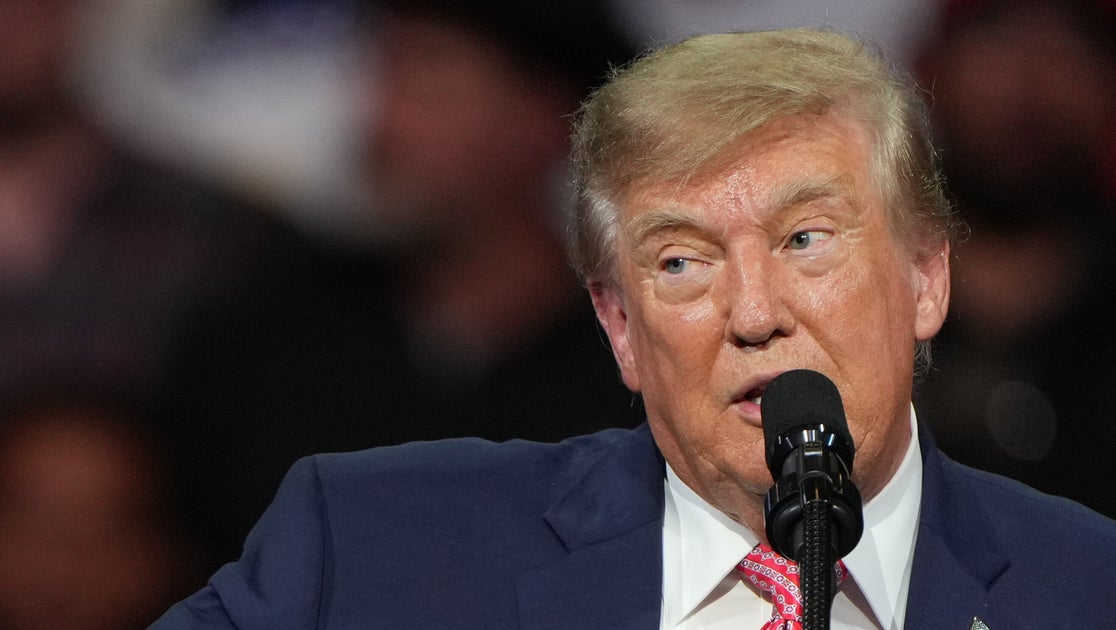
Trump Backs Marshall in Kansas Senate Race Tightened by Farm Costs
President Trump rallied in deep-red Kansas for GOP Sen. Roger Marshall in a competitive race, announcing an $8 billion farm fuel relief program amid high diesel prices. Democrats see an opening to end 94 years of GOP dominance in the state.

Trump Pauses Russia Sanctions Amid Ukraine Tensions and Missile Strikes
Trump waived sanctions on Russia and floated trilateral talks with Putin and Xi as part of ending the Ukraine war, while tensions rose with Zelenskyy over Starlink and arms. Bipartisan senators engaged Zelenskyy amid the shifts.
The Compass
You just read five takes on one story.
What's your take? Find your political shape in a few minutes.
Take the test