
Third Trump Assassination Attempt Ignites Debate on Political Violence and Rhetoric
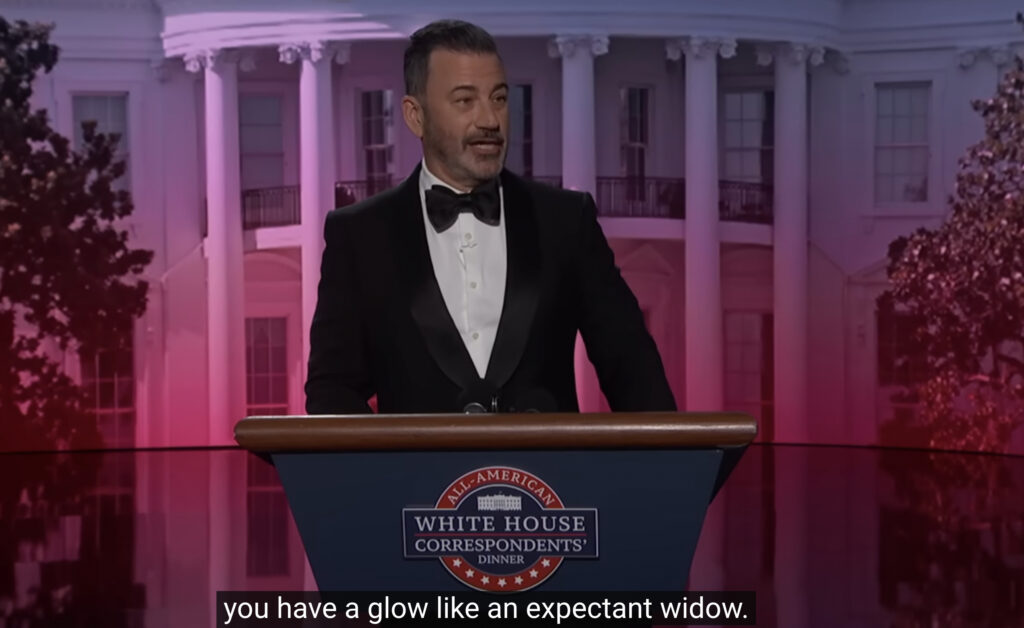
Cover image from thefederalist.com, which was analyzed for this article
Another assassination attempt on President Trump has renewed discussions on rising political violence in the US, with analysts noting bipartisan rhetoric fueling tensions. Trump is highlighted as a frequent target, but coverage points to broader societal issues. Security measures are under scrutiny following the incident.
PoliticalOS
Wednesday, April 29, 2026 — Politics
While President Trump has faced three documented attempts on his life since 2024 and both parties have lost prominent figures to violence, available data show support for actual political killing remains below 3 percent across the population and incidents are carried out by isolated, often mentally troubled individuals rather than organized movements. Public fear far outstrips the statistical reality, giving politicians on all sides incentive to exploit anxiety for policy or electoral gain. The republic has endured far higher historical rates of assassination and domestic terrorism; whether today’s polarized rhetoric and social-media amplification erode norms further will depend on whether leaders dial down inflammatory language and institutions maintain precise focus on genuine threats.
What outlets missed
Most coverage omitted granular shooter backgrounds that blur partisan lines: Crooks was a registered Republican who voted in 2022 midterms; Routh voted for Trump in 2016. These details, drawn from FBI and registrar records, were not corroborated across all outlets and therefore remain partially unverified in aggregate. Independent trackers such as Princeton’s Bridging Divides Initiative and American University’s PERIL have quantified political violence incidents reaching 30-year highs in some categories since 2016, with documented spikes in 2025; these trend lines received little sustained attention. The full video of fired UnitedHealthcare employee Alison King shows her explicitly criticizing her own cynical reaction and calling national division “sad,” a nuance collapsed in sensational retellings. Finally, cumulative hate-crime statistics cited by experts require cross-checking against annual FBI releases; the four-year aggregates of 9,000 religious and 25,000 racial incidents could not be independently verified in every source.
UnitedHealthcare Ousts Employee Who Expressed Regret Over Failed Trump Assassination Attempt
UnitedHealthcare has terminated a social media manager who posted a TikTok video sarcastically lamenting the failure of an assassination attempt against President Donald Trump and other administration officials at the White House Correspondents’ Association Dinner. The company acted within days of the April 26 incident at the Washington Hilton, stating that such comments contradict its values and that violence has no place in public discourse.
Alison King, based in the Minneapolis-St. Paul area, recorded her reaction shortly after the event. In the video, which circulated widely on social media before she apparently removed related accounts, King said her immediate response was to assume the report was fabricated. She then added with evident sarcasm, “Aww, they missed?” King described her second reaction as “So happy they missed,” before concluding that such thoughts reveal how “cooked” the country has become. A screenshot and video clip shared by the account LeftismForU identified her professional ties to UnitedHealthcare, Optum, and marketing firms.
In a statement to Fox News Digital, the insurer said, “Violence is never acceptable and any comments that suggest otherwise are in no way consistent with our mission and values. The person who made comments online about Saturday night’s incident at a Washington event where President Trump and many other political leaders were gathered is no longer employed by the company.” The swift dismissal reflects corporate recognition that open endorsement of lethal political violence crosses a line no employer can ignore.
The dinner shooting marks the third documented attempt on Trump’s life in under two years. The first, in Butler, Pennsylvania, in July 2024, came within inches of succeeding when a gunman fired from a rooftop, grazing the president’s ear, killing one attendee, and critically wounding two others. Authorities have yet to establish a clear motive for that shooter, Thomas Matthew Crooks, whose online searches included both Trump and Joe Biden. The latest attempt involved a gunman rushing security barriers with apparent intent to target Trump and senior officials. Between these events, an armed man was arrested near Justice Brett Kavanaugh’s home in 2022 after expressing a desire to kill conservative justices.
This pattern fits a larger sequence of targeted political killings and plots. Conservative activist Charlie Kirk was assassinated last year. Minnesota Democratic state legislator Melissa Hortman was also killed in what authorities treated as a politically motivated attack. An attempt on Kavanaugh’s life and other incidents directed at Republican figures have heightened concern that rhetorical dehumanization is producing real-world consequences. As commentator Erick Erickson noted on social media, the list now includes Kirk’s assassination, multiple Trump attempts, the Kavanaugh plot, and additional threats.
Some observers nevertheless caution against overstating the novelty of the moment. Dartmouth professor Sean Westwood, who studies political violence, told The New York Times that American history has seen far bloodier periods. Between 1865 and 1901 three of nine presidents were assassinated. The 1960s and 1970s brought the killings of John F. Kennedy, Robert Kennedy, and Martin Luther King Jr. along with waves of domestic bombings. By comparison, recent decades have registered fewer mass-casualty political attacks. Westwood attributes part of today’s alarm to “myopia” that forgets this longer record.
Yet history also shows how elite tolerance for violent rhetoric can erode norms. A biography of Justice Samuel Alito detailed by Mollie Hemingway recounts warnings issued after the 2022 leak of the Dobbs draft opinion overturning Roe v. Wade. The leak appeared calculated to inflame activists before the decision could be released, creating an implicit incentive to eliminate a conservative justice and render the opinion moot. Alito and others recognized that certain quarters of the left had moved from policy disagreement to open celebration of personal harm. The same dynamic has appeared after each Trump attempt, with prominent voices deflecting responsibility, questioning the victims’ motives, or implying that the targets somehow invited the attacks.
The Washington Post noted that Trump has become a singular lightning rod, generating both intense loyalty and visceral opposition unmatched by most modern politicians. Yet the paper also acknowledged that political violence now touches figures across the ideological spectrum and that its deeper causes include extreme polarization, eroded trust in institutions, and a cultural habit of framing opponents as existential threats rather than fellow citizens. What receives less attention in such accounts is the asymmetry in elite reaction. When conservative figures are targeted, segments of progressive media and academia often respond with equivocation or outright jokes about widows, whereas attacks on liberals produce immediate, unqualified condemnation.
The UnitedHealthcare episode illustrates how quickly such rhetoric can collide with professional reality. Employers across industries are discovering that tolerance for employees who treat assassination as entertainment carries reputational and operational costs. In a nation where health care decisions already involve life-and-death stakes, customers and patients may reasonably question whether ideological fervor that celebrates missed shots at political leaders belongs anywhere near positions of responsibility.
The incident also underscores a recurring cultural pattern. When public figures openly muse that the wrong person survived an attack, they reveal a moral inversion in which eliminating dissenters seems preferable to debating them. This mindset does not emerge in a vacuum. It is cultivated by years of framing political opponents as irredeemable dangers to democracy itself. The result is a climate in which unstable individuals feel licensed to act while others applaud from the sidelines or quickly change the subject.
Whether current levels of violence exceed those of prior turbulent eras remains debatable. What seems clearer is that the normalization of wishing death upon elected leaders and their supporters corrodes the foundations of self-government. A republic depends on the assumption that losers in political contests accept the outcome and pursue peaceful redress rather than bullets. When that assumption frays, every election becomes a potential trigger for mayhem.
UnitedHealthcare’s decision to fire King is a small corrective in a larger struggle over whether American culture will recommit to rejecting violence or continue excusing it when aimed at the disfavored side. The company’s action suggests at least some institutions still recognize that celebrating assassination attempts has no place in a civilized society, regardless of one’s political frustrations.
You just read Conservative's take. Want to read what actually happened?
More in Politics
Trump at 32% Approval as Gas Prices Test GOP Midterm Hopes
NYT/Siena polling showed Trump's approval at historic lows around 32 percent with Democrats leading by double digits in key districts. Early voting has surged in battleground states.

Record Early Voting Hits Battlegrounds, Shifting Partisan Shares
AP analysis found hundreds of thousands more early ballots than in 2022 in states including Texas, Ohio, Kansas, Maine, and North Carolina, shifting partisan dynamics.
Trump Backs Marshall in Kansas Senate Race Tightened by Farm Costs
President Trump rallied in deep-red Kansas for GOP Sen. Roger Marshall in a competitive race, announcing an $8 billion farm fuel relief program amid high diesel prices. Democrats see an opening to end 94 years of GOP dominance in the state.

Trump Pauses Russia Sanctions Amid Ukraine Tensions and Missile Strikes
Trump waived sanctions on Russia and floated trilateral talks with Putin and Xi as part of ending the Ukraine war, while tensions rose with Zelenskyy over Starlink and arms. Bipartisan senators engaged Zelenskyy amid the shifts.
The Compass
You just read five takes on one story.
What's your take? Find your political shape in a few minutes.
Take the test