
Third Trump Assassination Attempt Ignites Debate on Political Violence and Rhetoric
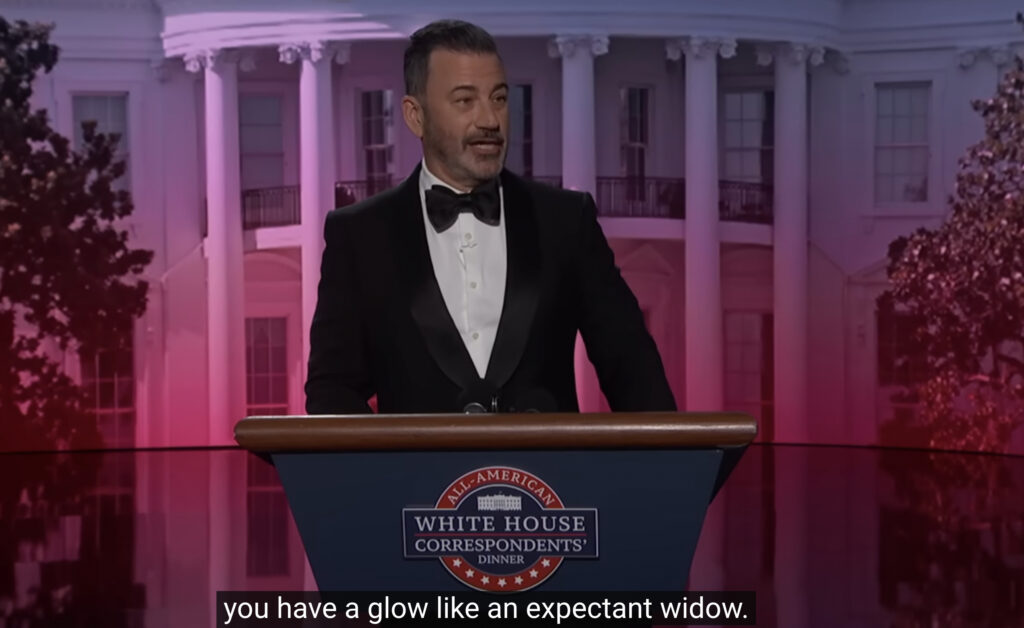
Cover image from thefederalist.com, which was analyzed for this article
Another assassination attempt on President Trump has renewed discussions on rising political violence in the US, with analysts noting bipartisan rhetoric fueling tensions. Trump is highlighted as a frequent target, but coverage points to broader societal issues. Security measures are under scrutiny following the incident.
PoliticalOS
Wednesday, April 29, 2026 — Politics
While President Trump has faced three documented attempts on his life since 2024 and both parties have lost prominent figures to violence, available data show support for actual political killing remains below 3 percent across the population and incidents are carried out by isolated, often mentally troubled individuals rather than organized movements. Public fear far outstrips the statistical reality, giving politicians on all sides incentive to exploit anxiety for policy or electoral gain. The republic has endured far higher historical rates of assassination and domestic terrorism; whether today’s polarized rhetoric and social-media amplification erode norms further will depend on whether leaders dial down inflammatory language and institutions maintain precise focus on genuine threats.
What outlets missed
Most coverage omitted granular shooter backgrounds that blur partisan lines: Crooks was a registered Republican who voted in 2022 midterms; Routh voted for Trump in 2016. These details, drawn from FBI and registrar records, were not corroborated across all outlets and therefore remain partially unverified in aggregate. Independent trackers such as Princeton’s Bridging Divides Initiative and American University’s PERIL have quantified political violence incidents reaching 30-year highs in some categories since 2016, with documented spikes in 2025; these trend lines received little sustained attention. The full video of fired UnitedHealthcare employee Alison King shows her explicitly criticizing her own cynical reaction and calling national division “sad,” a nuance collapsed in sensational retellings. Finally, cumulative hate-crime statistics cited by experts require cross-checking against annual FBI releases; the four-year aggregates of 9,000 religious and 25,000 racial incidents could not be independently verified in every source.
UnitedHealthcare Fires Worker Who Mocked Survival of Trump and Administration Officials
UnitedHealthcare terminated a social media manager after she posted a video sarcastically lamenting that an assassin failed to kill President Donald Trump during a shooting at the White House Correspondents’ Association Dinner. The incident marks the latest example of open celebration of political violence from voices inside corporate America and on the political left.
Alison King, identified as working in the Minneapolis-St. Paul area with ties to UnitedHealthcare, Optum, and related marketing firms, recorded her reaction to the April 26 incident. In the video, which circulated widely on X before she apparently deleted related accounts, King said her immediate thought was that reports of the attack must be fake. She then added, “Aww, they missed?” while describing her second reaction as disappointment that the gunman had not succeeded. “So happy they missed. Yeah, that’s sad,” she said in a mocking tone before concluding that such thoughts show the country is “cooked.”
A UnitedHealthcare spokesperson told Fox News Digital that the company does not tolerate comments suggesting violence is acceptable. “The person who made comments online about Saturday night’s incident at a Washington event where President Trump and many other political leaders were gathered is no longer employed by the company,” the statement read. Violence, the company said, is inconsistent with its values.
The firing comes days after a gunman rushed security at the Washington Hilton during the annual media dinner, an event attended by Trump, administration officials, and prominent journalists. Authorities described it as a deliberate attempt on the president’s life and those around him. This was the third such attempt on Trump in recent years, following the 2024 Butler, Pennsylvania rally shooting that grazed his ear and killed a spectator, and at least one other foiled plot.
The pattern extends beyond Trump. Conservative activist Charlie Kirk was assassinated last year. There was also an armed attempt on Supreme Court Justice Brett Kavanaugh and the killing of Minnesota Democratic state legislator Melissa Hortman. Yet reactions from some on the left have often blended deflection, minimization, or outright expressions of regret that the attacks did not succeed. After the latest incident, prominent voices repeated familiar lines: that Trump himself bears responsibility through his rhetoric, or that the real story is not the violence but political polarization.
That stance was predicted. During the 2022 leak of the Supreme Court’s draft opinion overturning Roe v. Wade, Justice Samuel Alito and his colleagues faced protests that included explicit calls for violence and targeting of justices’ homes. Mollie Hemingway’s recent biography of Alito details how the justice recognized that elements of the left viewed assassination as a legitimate tool to preserve favored policies. The Law of Merited Impossibility, as some have called it, appears to be playing out again: denial that violence is being encouraged, followed by suggestions that the targets deserve it anyway.
Major outlets have responded with familiar framing. The New York Times consulted Dartmouth professor Sean Westwood, who noted that political violence in the 1860s through the 1970s included multiple presidential assassinations and waves of domestic bombings. By those standards, he argued, the current era does not yet qualify as a new peak. The Washington Post acknowledged Trump has faced repeated targeting but insisted the causes are “deeper” and rooted in broad polarization, noting that Thomas Matthew Crooks, the Butler shooter, left behind no clear manifesto. Both pieces spent considerable space suggesting Americans should view the latest attempt through a both-sides lens rather than confront the one-sided nature of recent celebratory rhetoric.
This corporate episode reveals how such attitudes have seeped into mainstream institutions. King was not some anonymous online troll. She held a professional role shaping public messaging for a major health insurer. Her casual sarcasm about an attack on a sitting president and his team suggests a cultural comfort with violent fantasies that once would have ended careers instantly. Instead, it required public exposure on platforms like X, where users flagged her affiliations with marketing agencies and questioned how patients and clients would feel knowing a company representative expressed such views.
President Trump addressed the attempt Saturday night, saying those who make the biggest impact draw the strongest opposition. His remark was characteristically blunt, but it reflects a reality his supporters have watched for years: sustained rhetorical attacks from media, political figures, and cultural voices that paint him and his movement as existential threats. When language like that becomes routine, it is unsurprising that some begin to treat actual violence as wish fulfillment.
The UnitedHealthcare termination is a rare moment of accountability. Most expressions of glee after these incidents produce no professional consequences. The pattern of attacks on conservatives, combined with minimization from institutional media and occasional corporate indifference until caught, points to a political culture that tolerates, even winks at, eliminationist rhetoric. Whether this latest firing signals any broader shift remains to be seen. The country has now witnessed repeated real-world consequences of that rhetoric, from Butler to Washington to the killings of public figures. The question is how much louder the warnings must become before the normalization of such attitudes is treated as the emergency it clearly represents.
You just read America First's take. Want to read what actually happened?
More in Politics
Trump at 32% Approval as Gas Prices Test GOP Midterm Hopes
NYT/Siena polling showed Trump's approval at historic lows around 32 percent with Democrats leading by double digits in key districts. Early voting has surged in battleground states.

Record Early Voting Hits Battlegrounds, Shifting Partisan Shares
AP analysis found hundreds of thousands more early ballots than in 2022 in states including Texas, Ohio, Kansas, Maine, and North Carolina, shifting partisan dynamics.
Trump Backs Marshall in Kansas Senate Race Tightened by Farm Costs
President Trump rallied in deep-red Kansas for GOP Sen. Roger Marshall in a competitive race, announcing an $8 billion farm fuel relief program amid high diesel prices. Democrats see an opening to end 94 years of GOP dominance in the state.

Trump Pauses Russia Sanctions Amid Ukraine Tensions and Missile Strikes
Trump waived sanctions on Russia and floated trilateral talks with Putin and Xi as part of ending the Ukraine war, while tensions rose with Zelenskyy over Starlink and arms. Bipartisan senators engaged Zelenskyy amid the shifts.
The Compass
You just read five takes on one story.
What's your take? Find your political shape in a few minutes.
Take the test