
Third Trump Assassination Attempt Ignites Debate on Political Violence and Rhetoric
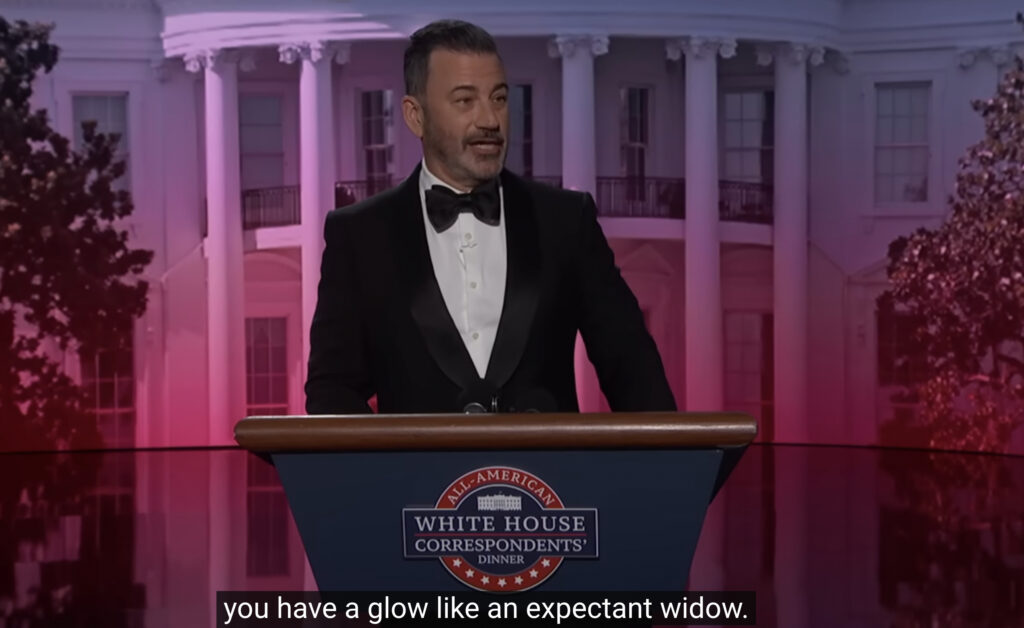
Cover image from thefederalist.com, which was analyzed for this article
Another assassination attempt on President Trump has renewed discussions on rising political violence in the US, with analysts noting bipartisan rhetoric fueling tensions. Trump is highlighted as a frequent target, but coverage points to broader societal issues. Security measures are under scrutiny following the incident.
PoliticalOS
Wednesday, April 29, 2026 — Politics
While President Trump has faced three documented attempts on his life since 2024 and both parties have lost prominent figures to violence, available data show support for actual political killing remains below 3 percent across the population and incidents are carried out by isolated, often mentally troubled individuals rather than organized movements. Public fear far outstrips the statistical reality, giving politicians on all sides incentive to exploit anxiety for policy or electoral gain. The republic has endured far higher historical rates of assassination and domestic terrorism; whether today’s polarized rhetoric and social-media amplification erode norms further will depend on whether leaders dial down inflammatory language and institutions maintain precise focus on genuine threats.
What outlets missed
Most coverage omitted granular shooter backgrounds that blur partisan lines: Crooks was a registered Republican who voted in 2022 midterms; Routh voted for Trump in 2016. These details, drawn from FBI and registrar records, were not corroborated across all outlets and therefore remain partially unverified in aggregate. Independent trackers such as Princeton’s Bridging Divides Initiative and American University’s PERIL have quantified political violence incidents reaching 30-year highs in some categories since 2016, with documented spikes in 2025; these trend lines received little sustained attention. The full video of fired UnitedHealthcare employee Alison King shows her explicitly criticizing her own cynical reaction and calling national division “sad,” a nuance collapsed in sensational retellings. Finally, cumulative hate-crime statistics cited by experts require cross-checking against annual FBI releases; the four-year aggregates of 9,000 religious and 25,000 racial incidents could not be independently verified in every source.
UnitedHealthcare Fires Worker for Sarcastic Comment on Failed Trump Assassination Attempt
UnitedHealthcare moved swiftly this week to terminate a social media manager who posted a TikTok video expressing disappointment that an assailant had failed to kill President Donald Trump during an incident at the White House Correspondents’ Association Dinner. The decision underscored the boundaries that even polarized institutions are willing to draw around public commentary on political violence, even as broader questions persist about why such violence has become a recurring feature of American public life.
The episode began Saturday night when security stopped a gunman attempting to reach Trump and other senior administration officials at the Washington Hilton. Details of the attempt remain under investigation, but it marks at least the third known effort to assassinate Trump since he returned to national politics, including the 2024 Butler, Pennsylvania rally where a gunman grazed the president’s ear, killed one attendee and wounded two others. The pattern has drawn renewed attention to the personal risks faced by high-profile political figures and to the larger climate that produces such acts.
Alison King, identified in social media reports as working in the Minneapolis-St. Paul area for UnitedHealthcare and affiliated marketing firms, recorded her reaction to news of the dinner incident. In the video, she described her immediate assumption that reports of an attack must be fabricated. She then added, with clear sarcasm, that her second thought was “Aww, they missed?” followed by an admission that she felt “so happy they missed.” She concluded that such a reaction signaled the country was in serious trouble. The post spread rapidly on conservative accounts before King apparently removed related profiles.
UnitedHealthcare’s response was unambiguous. A company spokesperson told Fox News Digital that “violence is never acceptable and any comments that suggest otherwise are in no way consistent with our mission and values.” The employee no longer works for the insurer. The termination aligns with a pattern seen in other corporations that have moved quickly to distance themselves from staff members whose public statements appear to normalize or celebrate political harm.
Yet the incident cannot be separated from a wider backdrop of political attacks. Last year saw the assassinations of Charlie Kirk, the influential conservative activist, and Melissa Hortman, a Democratic state legislator in Minnesota. Authorities have also investigated prior threats against Supreme Court justices and members of Congress. In the Butler case, the shooter, Thomas Matthew Crooks, left behind no manifesto or clear ideological trail; his searches included both Trump and Biden events. The absence of tidy motives has not reassured those who track rising threats.
Data offer a more nuanced picture than headlines alone suggest. Sean Westwood, a Dartmouth College professor who studies political violence and public perceptions of it, notes that American history contains far bloodier chapters. Between 1865 and 1901 three of nine presidents were assassinated, a rate that would equate to two or three presidents killed since the 1980s if repeated today. The 1960s and 1970s brought the killings of John F. Kennedy, Robert Kennedy and Martin Luther King Jr., alongside waves of domestic bombings. By comparison, the last two decades have seen fewer such concentrated bursts of lethal political violence, though high-profile incidents now receive instantaneous national amplification through digital platforms.
That speed and reach matter. Social media rewards the most extreme emotional reactions, creating the impression of constant crisis even when underlying rates of violence have not matched the worst periods in U.S. history. Westwood describes a form of “myopia” in which contemporary events feel uniquely dangerous because they arrive unfiltered into millions of pockets.
At the same time, scholars and journalists tracking these trends point to deeper structural factors. Intense partisan polarization, accelerated by fragmented media ecosystems and algorithms that prioritize outrage, has raised the emotional stakes of politics. Trump himself has become a singular lightning rod, generating fervent loyalty among supporters and visceral opposition among detractors. In remarks after the dinner incident, the president suggested that those who drive major change inevitably attract violence, adding that he hated to say he felt “honored” by the attention. The framing reflects his view that the attempts measure his impact, but it also illustrates how personal his political brand has become.
The reaction on parts of the right has been to highlight what they see as a leftward drift toward accepting violence. Some commentators recalled warnings from Justice Samuel Alito around the 2022 leak of the Dobbs decision overturning Roe v. Wade. The premature disclosure, they argued, created an implicit incentive to target conservative justices before the opinion could be formalized. That episode, combined with the current wave of attacks on conservative figures, has fueled arguments that elements of progressive culture increasingly treat political opponents as existential threats rather than fellow citizens.
Yet the record is not one-sided. Attempts have targeted figures across the spectrum, and the shooter who attacked the congressional baseball practice in 2017 was motivated by left-wing animus. The deeper problem, as Karen Tumulty noted in The Washington Post, lies in the erosion of norms that once constrained the expression of political hatred. When violence lacks obvious partisan fingerprints, as in the Butler case, it suggests something broader is at work: a society in which the rituals of democratic competition feel increasingly like zero-sum warfare.
The termination of a single employee will not alter these currents. What it does reveal is the tension between private institutions’ desire to project basic decency and a public sphere that increasingly treats callousness toward political opponents as a form of authenticity. For those who worry about democratic stability, the sequence of attempts, killings and cultural reactions forms a feedback loop. Each new incident raises the temperature, sharpens tribal identities and makes future violence marginally more thinkable.
Whether the country has truly entered a new era of political violence remains debatable when measured against the bloodshed of prior centuries. What feels unmistakable is the normalization of a politics in which assassination attempts no longer shock the system into reflection but instead become fresh ammunition for existing grievances. The swift corporate response to one tasteless video is, in its limited way, an attempt to push back against that normalization. The larger challenge is whether American society possesses the institutional imagination and mutual restraint to do the same.
You just read Liberal's take. Want to read what actually happened?
More in Politics

Trump Defends Ramaswamy Ad Using Estranged Mother in Ohio Race
President Trump defended a GOP nominee's ad featuring a Democratic opponent's estranged mother, calling it powerful, while drawing criticism from some Republicans including Ohio Gov. Mike DeWine. The ad has sparked internal GOP tensions ahead of midterms.
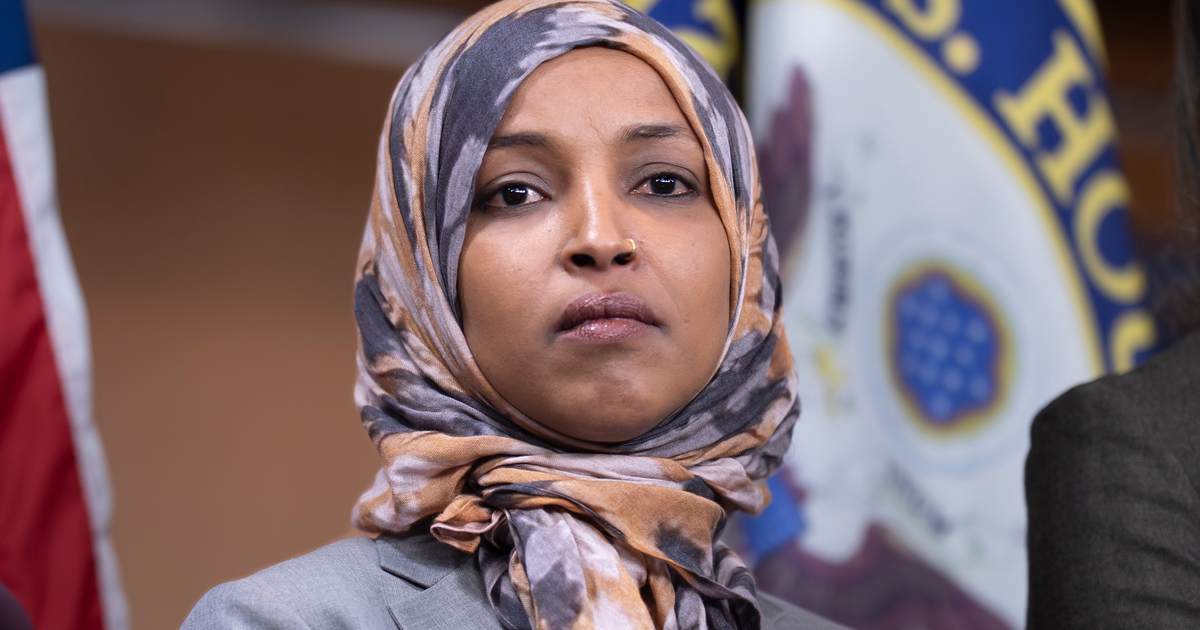
Federal Raid Targets Omar Amid Unresolved Name and Marriage Allegations
Agents searched Rep. Ilhan Omar's DC residence over immigration fraud allegations; she called it bizarre. Reports and commentary questioned her birth name and past marriage details.

Supreme Court Upholds New Hampshire Student ID Voting Ban
The Supreme Court upheld New Hampshire's ban on student IDs as valid voter identification just before midterms, affecting a tight Senate race.
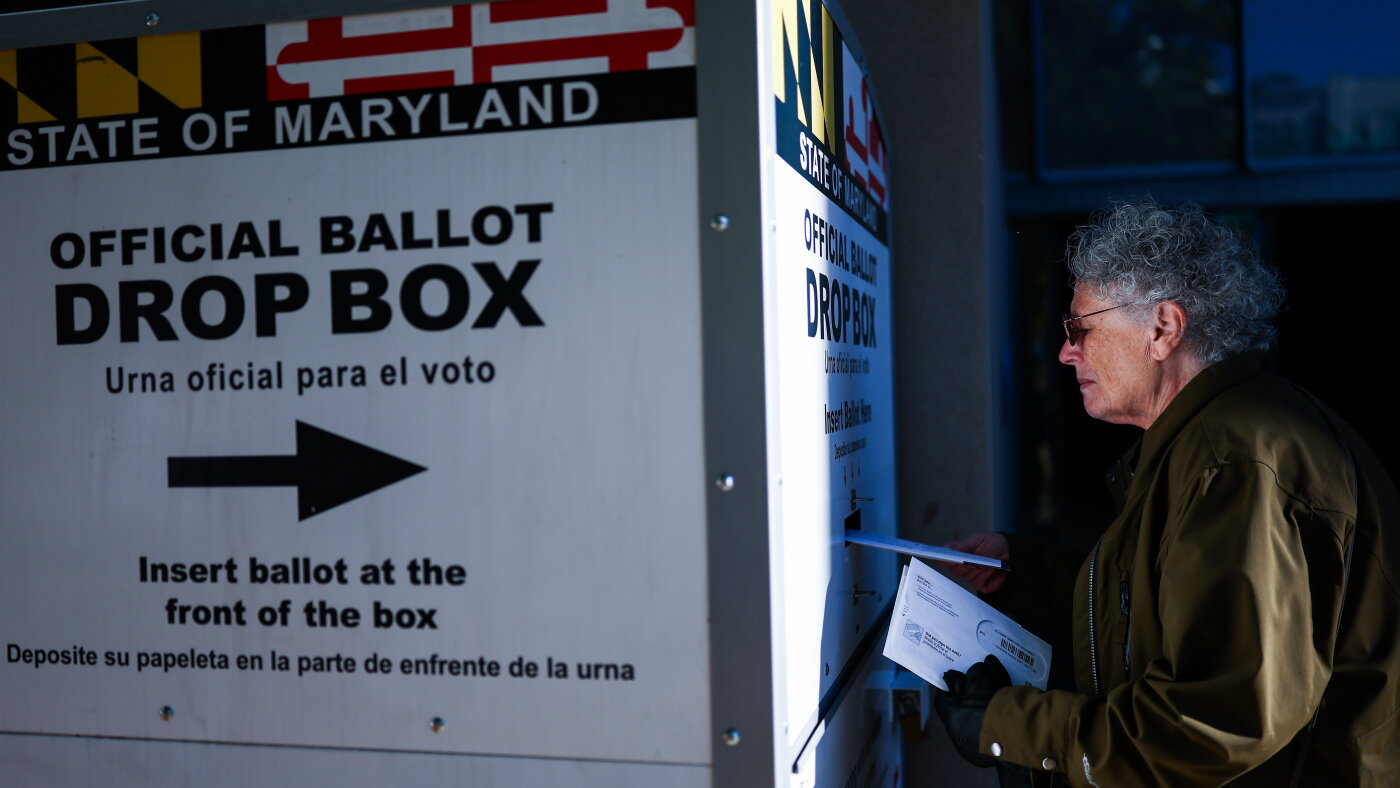
Early Voting Hits 21 Million as Most Trust Midterm Accuracy
Millions have already voted early as parties make final appeals amid $1.4 billion in ad spending; polls show confidence in election accuracy.
The Compass
You just read five takes on one story.
What's your take? Find your political shape in a few minutes.
Take the test