
Third Trump Assassination Attempt Ignites Debate on Political Violence and Rhetoric
Cover image from thefederalist.com, which was analyzed for this article
Another assassination attempt on President Trump has renewed discussions on rising political violence in the US, with analysts noting bipartisan rhetoric fueling tensions. Trump is highlighted as a frequent target, but coverage points to broader societal issues. Security measures are under scrutiny following the incident.
PoliticalOS
Wednesday, April 29, 2026 — Politics
While President Trump has faced three documented attempts on his life since 2024 and both parties have lost prominent figures to violence, available data show support for actual political killing remains below 3 percent across the population and incidents are carried out by isolated, often mentally troubled individuals rather than organized movements. Public fear far outstrips the statistical reality, giving politicians on all sides incentive to exploit anxiety for policy or electoral gain. The republic has endured far higher historical rates of assassination and domestic terrorism; whether today’s polarized rhetoric and social-media amplification erode norms further will depend on whether leaders dial down inflammatory language and institutions maintain precise focus on genuine threats.
What outlets missed
Most coverage omitted granular shooter backgrounds that blur partisan lines: Crooks was a registered Republican who voted in 2022 midterms; Routh voted for Trump in 2016. These details, drawn from FBI and registrar records, were not corroborated across all outlets and therefore remain partially unverified in aggregate. Independent trackers such as Princeton’s Bridging Divides Initiative and American University’s PERIL have quantified political violence incidents reaching 30-year highs in some categories since 2016, with documented spikes in 2025; these trend lines received little sustained attention. The full video of fired UnitedHealthcare employee Alison King shows her explicitly criticizing her own cynical reaction and calling national division “sad,” a nuance collapsed in sensational retellings. Finally, cumulative hate-crime statistics cited by experts require cross-checking against annual FBI releases; the four-year aggregates of 9,000 religious and 25,000 racial incidents could not be independently verified in every source.
UnitedHealthcare Fires Worker for Mocking Trump Assassination Attempt
UnitedHealthcare moved quickly this week to fire a social media manager who posted a sarcastic video expressing disappointment that President Donald Trump survived the latest assassination attempt against him. The decision underscored how even private expressions of glee over political violence can end careers in corporate America, while exposing the raw nerves of a country that has now seen multiple high-profile attacks on elected officials and activists from both parties.
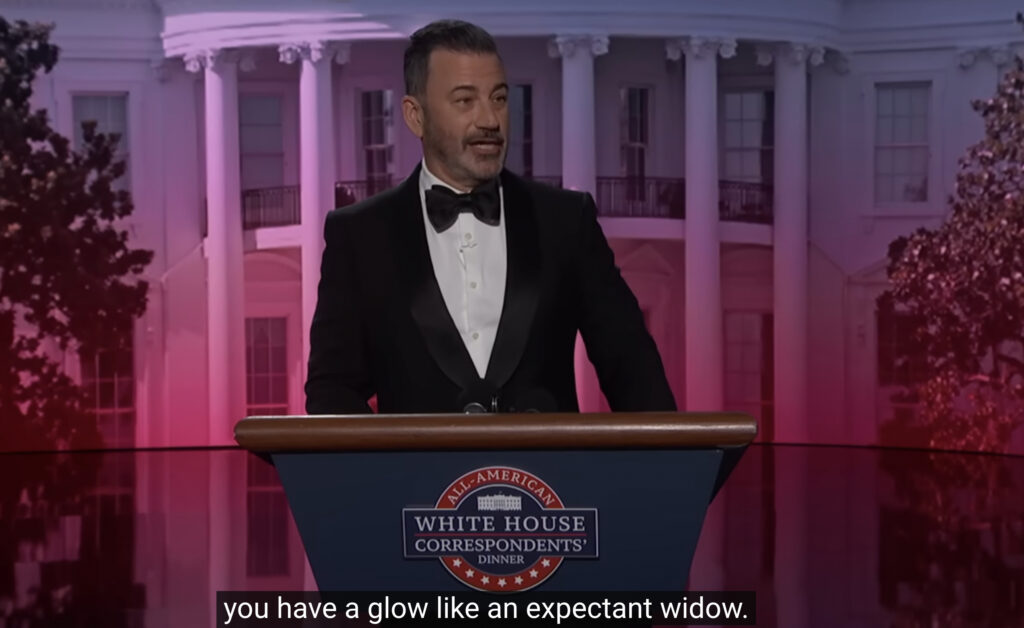
Alison King, based in the Minneapolis-St. Paul area, recorded herself reacting to gunfire that erupted at the White House Correspondents’ Association Dinner on April 26. In the since-deleted TikTok, King said her immediate thought was that the incident must be fake. She then added, with clear sarcasm, “Aww, they missed?” before declaring that such a reaction proved the country is “cooked.” The video circulated rapidly on conservative social media, prompting outrage and calls for her dismissal.
A UnitedHealthcare spokesperson told Fox News Digital on Tuesday that the company does not tolerate any suggestion that violence is acceptable. “The person who made comments online about Saturday night’s incident at a Washington event where President Trump and many other political leaders were gathered is no longer employed by the company,” the statement read. King’s LinkedIn account has been deleted, and she has not publicly responded since the video surfaced.
The firing comes as the nation once again confronts the reality of political violence. This was the third documented attempt on Trump’s life since 2024, following the Butler, Pennsylvania rally shooting that grazed his ear and killed a spectator, and at least one other foiled plot. Saturday’s incident at the Correspondents’ Dinner targeted not only the president but also senior members of his administration, according to law enforcement accounts.
Yet the violence is not one-sided. Last year saw the assassinations of conservative activist Charlie Kirk and Democratic Minnesota state legislator Melissa Hortman. Previous plots have targeted Supreme Court Justice Brett Kavanaugh and other Republican figures. Conservative commentator Erick Erickson listed these incidents alongside two additional attempts on Trump, arguing that a pattern of leftist aggression has become normalized. Some on the right have pointed to Justice Samuel Alito’s private warnings, reported in a new biography by Mollie Hemingway, that the leak of the Dobbs decision overturning Roe v. Wade created a perverse incentive for violence against conservative justices to derail the ruling.
Interviews with scholars suggest Americans’ perception of this moment may be more alarming than the raw historical data. Sean Westwood, a Dartmouth College professor who studies political violence, told The New York Times that the United States has endured far bloodier chapters. Between 1865 and 1901, three of nine presidents were assassinated. The 1960s and 1970s brought the killings of John F. Kennedy, Robert Kennedy, and Martin Luther King Jr., along with waves of domestic bombings. By comparison, the last two decades have been less lethal, though the constant drumbeat of threats creates a dangerous myopia.
The Washington Post noted that even when motives remain opaque, as in the case of Thomas Matthew Crooks, the 20-year-old who fired on Trump in Butler and left behind no clear ideological roadmap, the broader atmosphere of polarization feeds the problem. Trump himself addressed the latest attempt with characteristic bravado, telling reporters he “hates to say” he feels honored by being targeted but believes it reflects the impact of his agenda. Critics argue such framing only deepens the sense that politics is existential warfare.
King’s video, however distasteful, appears to reflect a fringe sentiment rather than any organized movement. Her employer’s decisive action aligns with a growing corporate reluctance to be associated with extremism of any stripe. Yet the episode also illustrates how quickly private thoughts shared online can ignite national recriminations. Progressive voices have condemned the remark, while conservative accounts have used it to paint a picture of a left that privately roots for bloodshed even as it lectures about democracy.
The larger question hovering over Washington is whether the country can break this cycle. Scholars warn that when citizens begin to view their political opponents as legitimate targets for elimination, democratic norms erode regardless of which party holds power. The swift termination of King is one small signal that some institutions still draw bright lines against celebrating violence. But with another attack on a president fresh in the headlines, and with bodies already having fallen on both sides of the aisle, those lines are being tested with disturbing frequency.
History offers little comfort that rhetoric alone will cool the temperature. From the partisan press of the 19th century that all but cheered presidential assassinations to the radical groups of the 1970s, Americans have repeatedly flirted with the idea that eliminating the other side solves problems. What feels new is the speed and reach of social media, which amplifies the Alison Kings of the world and the politicians who profit from portraying themselves as martyrs.
For now, the practical outcome is a former UnitedHealthcare employee learning that even sarcastic expressions of bloodlust carry consequences. The deeper reckoning about why so many Americans appear desensitized to political shootings remains painfully unfinished.
You just read Progressive's take. Want to read what actually happened?
More in Politics

Trump at 32% Approval as Gas Prices Test GOP Midterm Hopes
NYT/Siena polling showed Trump's approval at historic lows around 32 percent with Democrats leading by double digits in key districts. Early voting has surged in battleground states.

Record Early Voting Hits Battlegrounds, Shifting Partisan Shares
AP analysis found hundreds of thousands more early ballots than in 2022 in states including Texas, Ohio, Kansas, Maine, and North Carolina, shifting partisan dynamics.

Trump Backs Marshall in Kansas Senate Race Tightened by Farm Costs
President Trump rallied in deep-red Kansas for GOP Sen. Roger Marshall in a competitive race, announcing an $8 billion farm fuel relief program amid high diesel prices. Democrats see an opening to end 94 years of GOP dominance in the state.

Trump Pauses Russia Sanctions Amid Ukraine Tensions and Missile Strikes
Trump waived sanctions on Russia and floated trilateral talks with Putin and Xi as part of ending the Ukraine war, while tensions rose with Zelenskyy over Starlink and arms. Bipartisan senators engaged Zelenskyy amid the shifts.
The Compass
You just read five takes on one story.
What's your take? Find your political shape in a few minutes.
Take the test