
Trump joins Rededicate 250 prayer rally on National Mall
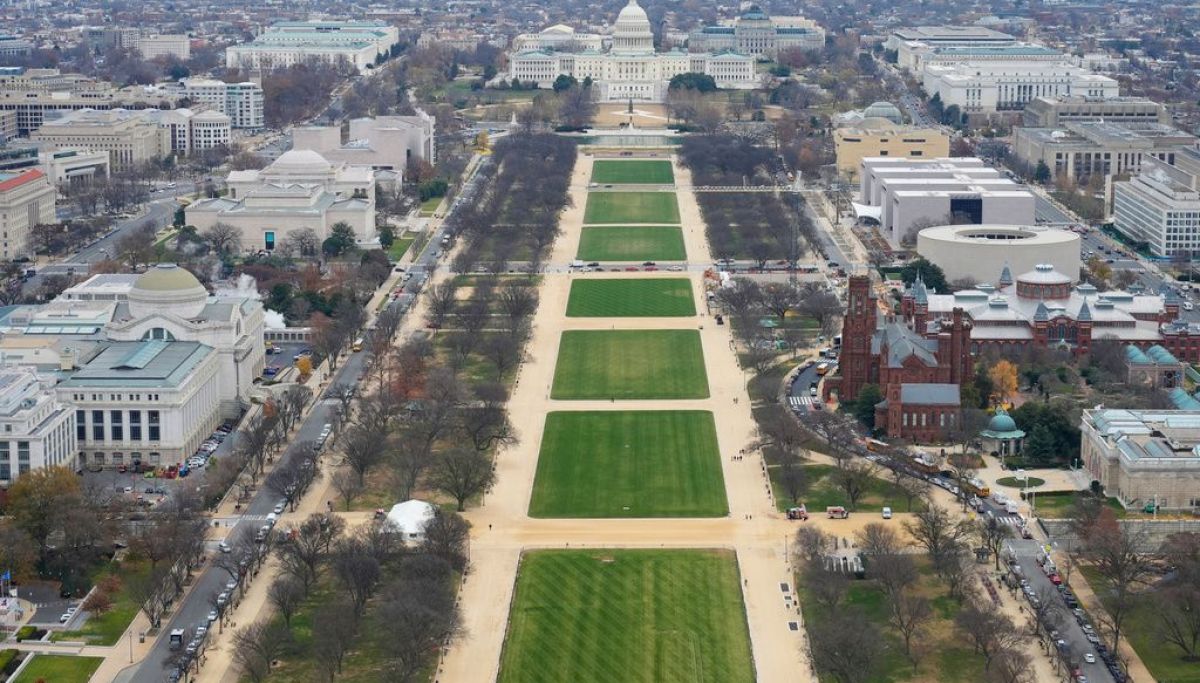
Cover image from washingtonexaminer.com, which was analyzed for this article
The 'Rededicate 250' event featured conservative Christian leaders, cabinet officials, and a Trump video message as part of America's 250th anniversary. Critics on the left decry church-state blurring while right-leaning outlets frame it as a celebration of faith and heritage.
PoliticalOS
Sunday, May 17, 2026 — Politics
The Rededicate 250 rally placed senior Trump officials alongside predominantly evangelical speakers on federal ceremonial ground, reviving long-standing questions about the permissible scope of government involvement in religious expression. Readers should weigh the event’s stated goal of honoring founding-era prayer traditions against the demographic narrowness of its platform and the absence of comparable scale in recent decades.
What outlets missed
Most coverage omitted the precise speaker demographics—fourteen of twenty faith leaders were evangelical Protestants—leaving readers without a clear count of religious representation. Few reports examined the event’s explicit tie to the 1776 Continental Congress “Day of Humiliation, Fasting and Prayer” or compared its nine-hour duration and cabinet-level participation to prior National Day of Prayer observances. Details on the public-private partnership structure and absence of direct federal funding were also largely absent, as were reactions from non-Abrahamic religious communities.
Rededicate 250 Draws Crowds to National Mall for Anniversary Prayer
Thousands assembled on the National Mall on Sunday for Rededicate 250, a daylong gathering of prayer and speeches marking the approach of America's 250th anniversary. Organizers described the event as a national jubilee focused on the role of religious belief in the nation's founding and continued stability.
President Donald Trump addressed the crowd by video, while Defense Secretary Pete Hegseth, Secretary of State Marco Rubio, House Speaker Mike Johnson, and evangelist Franklin Graham spoke in person. Bishop Robert Barron of the Diocese of Winona-Rochester delivered remarks on the historical link between America's Christian heritage and the constitutional guarantee of religious freedom for all citizens.
Barron noted that the God referenced in the Declaration of Independence serves as the source of rights that apply equally to every person. He argued that clearer recognition of the country's biblical foundations strengthens rather than restricts the free exercise of religion for minority faiths. This view aligns with the event's central claim that shared cultural assumptions about human dignity have long supported the legal framework protecting individual conscience.
The program centered on three themes: the miracles that shaped the nation's history, ongoing testimonies of personal renewal, and a collective call for renewed commitment to faith and ordered liberty. Attendance estimates reached the tens of thousands, with participants arriving from across the country. The event formed part of broader preparations for the semiquincentennial celebrations scheduled for July 4, 2026.
Critics have labeled the gathering an expression of Christian nationalism, pointing to the predominance of evangelical speakers among the roughly 20 faith leaders listed. Organizers countered that the program simply recalls the explicit references to divine providence found in founding documents and early national practice. Similar public acknowledgments of religious influence have appeared at earlier anniversaries without altering the constitutional bar on an established church.
Data from long-term surveys show that countries whose legal systems rest on Judeo-Christian assumptions about individual worth have sustained higher levels of religious pluralism and economic mobility than those built on purely secular or collectivist premises. The Rededicate 250 proceedings emphasized this pattern through historical references rather than policy prescriptions.
Trump administration officials framed the day as an opportunity to recall the cultural preconditions that made self-government viable. Hegseth described the republic's endurance as tied to repeated returns to the principle that rights originate outside the state. Graham urged participants to treat the anniversary as a prompt for personal and national recommitment rather than partisan display.
The event concluded with music and prayer segments scheduled to run until 6 p.m. Organizers said future activities tied to the 250th anniversary would continue the focus on the intellectual sources of American institutions.
You just read Conservative's take. Want to read what actually happened?
More in Politics

Trump at 32% Approval as Gas Prices Test GOP Midterm Hopes
NYT/Siena polling showed Trump's approval at historic lows around 32 percent with Democrats leading by double digits in key districts. Early voting has surged in battleground states.

Record Early Voting Hits Battlegrounds, Shifting Partisan Shares
AP analysis found hundreds of thousands more early ballots than in 2022 in states including Texas, Ohio, Kansas, Maine, and North Carolina, shifting partisan dynamics.

Trump Backs Marshall in Kansas Senate Race Tightened by Farm Costs
President Trump rallied in deep-red Kansas for GOP Sen. Roger Marshall in a competitive race, announcing an $8 billion farm fuel relief program amid high diesel prices. Democrats see an opening to end 94 years of GOP dominance in the state.

Trump Pauses Russia Sanctions Amid Ukraine Tensions and Missile Strikes
Trump waived sanctions on Russia and floated trilateral talks with Putin and Xi as part of ending the Ukraine war, while tensions rose with Zelenskyy over Starlink and arms. Bipartisan senators engaged Zelenskyy amid the shifts.
The Compass
You just read five takes on one story.
What's your take? Find your political shape in a few minutes.
Take the test