
Southern States Redraw Maps After Court Limits Racial Districts

Cover image from slate.com, which was analyzed for this article
South Carolina's Supreme Court and governor's special session, alongside fights in Georgia and Alabama, highlight ongoing gerrymandering disputes over Black voting districts. Democrats accuse Republicans of diluting minority representation, while courts intervene. SCOTUS cleared Alabama's map.
PoliticalOS
Thursday, May 14, 2026 — Politics
The Callais decision removed the requirement for additional majority-Black districts and triggered immediate special sessions in multiple states. The resulting maps will determine whether Republicans gain several House seats in 2026 while facing new lawsuits testing the limits of partisan line-drawing under the Equal Protection Clause.
What outlets missed
Most coverage omitted the precise holding in Callais that race cannot predominate in map-drawing without satisfying strict scrutiny. Few noted the existing 6-1 Republican edge in South Carolina or the 9-5 edge in Georgia before the new sessions. Almost no outlet reported the estimated $2 million cost to South Carolina taxpayers for the special session or the fact that Alabama’s 2023 map had already been drawn after the 2023 Milligan decision and was only later blocked by a lower court.
Republican States Rush to Redraw Maps and Cut Black Representation Ahead of Midterms
The Supreme Court’s recent decision in Louisiana v. Callais has opened the door for Republican-led states to redraw congressional districts mid-decade, a move that is already reshaping the landscape for the 2026 midterms. Several southern states are now accelerating efforts to eliminate or weaken majority-Black districts that have long anchored Democratic strength in the House.
The ruling effectively narrowed the reach of the Voting Rights Act’s Section 2 protections, allowing states to argue that race-based districting violates equal protection principles. In the weeks since, Alabama, South Carolina, and Georgia have all advanced plans to adopt maps with fewer such districts, while Tennessee moved first with a map that drew an immediate legal challenge from the NAACP.
Alabama’s case illustrates the speed of the shift. The Court vacated a lower-court block on the state’s 2023 map, which contains only one majority-Black district rather than the two required under earlier rulings. Governor Kay Ivey has called a special primary for August, and state officials plan to use the new lines for the fall elections despite ongoing litigation. Primaries scheduled for May will still occur, but votes in affected districts will be discarded and replaced by the August results.
South Carolina’s Republican governor, Henry McMaster, is expected to call a special legislative session to finalize a new congressional map. Earlier attempts in the Senate stalled over procedural hurdles, but a simple majority will now suffice in the special session. The proposed changes target the state’s single majority-Black district, a seat long held by Democrats.
Georgia is following a similar path. Governor Brian Kemp announced that the legislature will convene on June 17, after primary runoffs, to redraw both congressional and state legislative boundaries for the 2028 cycle. Republicans there have argued that current lines were drawn with excessive attention to race, producing an inefficient allocation of Democratic voters.
The Virginia Supreme Court added another layer to the contest this week. The court struck down a voter-approved referendum that would have created an independent redistricting commission, ruling that procedural flaws in the legislative process “incurably taint” the referendum’s validity. The decision preserves a map-drawing process more favorable to the Republican-controlled legislature and removes one of the few institutional checks Democrats had hoped to establish in the state.
These moves mark a departure from the traditional ten-year redistricting cycle tied to the census. President Trump has publicly encouraged the effort, framing it as a necessary correction to maps that he and Republican leaders say overstate Democratic strength. Critics counter that the changes amount to a targeted reduction in Black electoral influence at a moment when House control remains narrowly contested.
Legal challenges are already proliferating. Civil-rights groups are preparing suits in multiple states, and some lower courts have signaled willingness to scrutinize whether the new maps comply with remaining Voting Rights Act standards. The timeline, however, favors the states: primaries and filing deadlines are approaching quickly, and courts are reluctant to halt elections already in motion.
The cumulative effect is a structural advantage for Republicans that extends beyond any single district. By consolidating minority voters into fewer seats or dispersing them across Republican-leaning ones, the new maps can convert narrow statewide vote margins into larger congressional majorities. Democrats, meanwhile, are left to litigate under tighter deadlines and with fewer institutional tools to push back.
The pattern now visible across the South suggests that mid-decade redistricting will remain a live front in the struggle for House control, with courts and state legislatures racing to set the boundaries before voters reach the polls.
You just read Liberal's take. Want to read what actually happened?
More in Politics
Trump at 32% Approval as Gas Prices Test GOP Midterm Hopes
NYT/Siena polling showed Trump's approval at historic lows around 32 percent with Democrats leading by double digits in key districts. Early voting has surged in battleground states.

Record Early Voting Hits Battlegrounds, Shifting Partisan Shares
AP analysis found hundreds of thousands more early ballots than in 2022 in states including Texas, Ohio, Kansas, Maine, and North Carolina, shifting partisan dynamics.
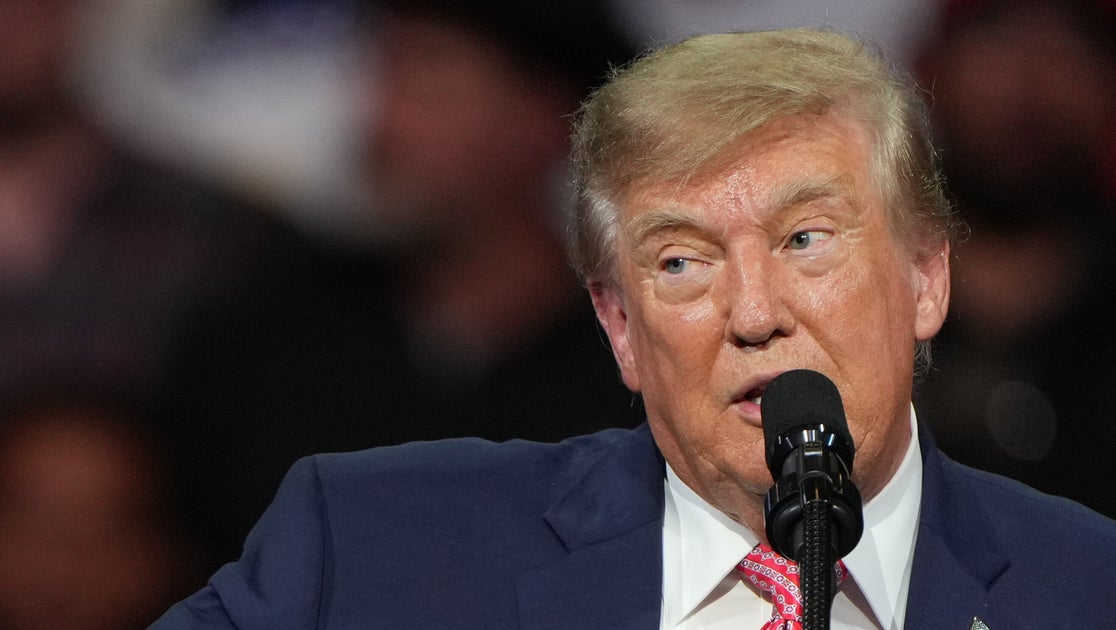
Trump Backs Marshall in Kansas Senate Race Tightened by Farm Costs
President Trump rallied in deep-red Kansas for GOP Sen. Roger Marshall in a competitive race, announcing an $8 billion farm fuel relief program amid high diesel prices. Democrats see an opening to end 94 years of GOP dominance in the state.

Trump Pauses Russia Sanctions Amid Ukraine Tensions and Missile Strikes
Trump waived sanctions on Russia and floated trilateral talks with Putin and Xi as part of ending the Ukraine war, while tensions rose with Zelenskyy over Starlink and arms. Bipartisan senators engaged Zelenskyy amid the shifts.
The Compass
You just read five takes on one story.
What's your take? Find your political shape in a few minutes.
Take the test