
Gallup Poll Finds Republican Same-Sex Marriage Support at 37%
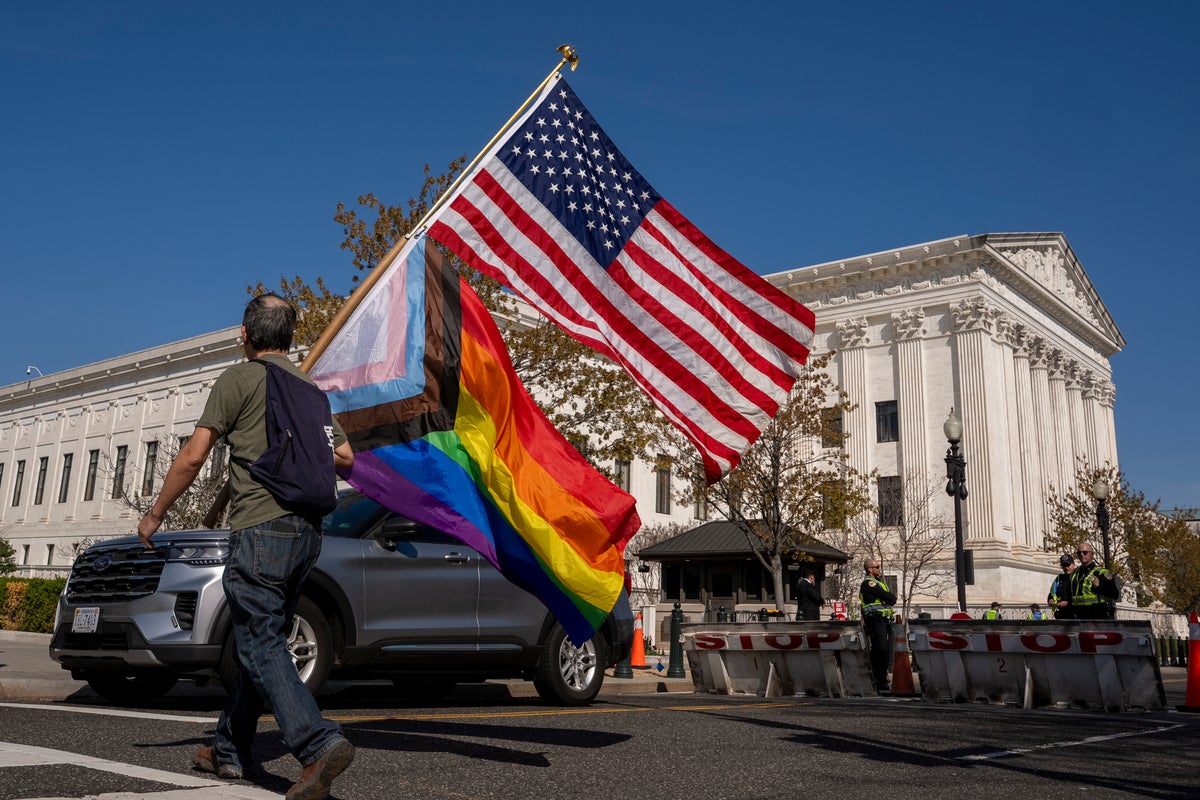
Cover image from independent.co.uk, which was analyzed for this article
A new survey shows an 18-point decline in GOP backing for same-sex marriage since 2022, part of broader cooling on LGBTQ+ issues. Polls also indicate shifting American attitudes on transgender policies.
PoliticalOS
Wednesday, June 3, 2026 — Politics
National support for same-sex marriage has leveled off at 65 percent after years of growth, driven entirely by an 18-point drop among Republicans to 37 percent. The legal status of such marriages remains unchanged under the 2015 Supreme Court ruling, yet state-level challenges continue on both sides.
What outlets missed
Gallup placed the 2026 Republican figure near its 2016 level and framed the result as a widening party divide rather than an abrupt collapse. No major outlet supplied the full historical table showing Republican support rising from 22 percent in 2010 to 44 percent in 2021 before the recent drop. Legislative efforts to protect same-sex marriage in roughly the same number of states as those seeking bans received only passing mention.
Support for Same-Sex Marriage Declines Slightly in Latest Gallup Survey
A new Gallup poll shows that American support for legal same-sex marriage has fallen modestly for the first time in years. Overall backing stands at 65 percent of adults, down from 71 percent in both 2022 and 2023. The shift traces almost entirely to Republican respondents, whose approval dropped to 37 percent.
Gallup has tracked the question since the mid-1990s. In 1996 only 27 percent of adults favored legal recognition. Approval rose steadily for more than two decades, reaching roughly seven in ten adults by the early 2020s. The same pattern held for views on the morality of same-sex relations, which climbed from 40 percent in 2001 to near 70 percent before leveling off.
Republican support had followed the national trend upward until recently. It reached 55 percent in 2021 and 2022 before falling back to levels last seen around 2015. Democratic and independent responses remained largely unchanged, with majorities in both groups continuing to endorse legality and moral acceptability.
The survey, conducted in May, also asked about the morality of gay and lesbian relationships. Thirty-five percent of Republicans called such relations morally acceptable, a figure that aligns with the decline in marriage support. Broader questions on LGBTQ policies show similar partisan gaps, though those items were not the focus of the current release.
Gallup analyst Jeffrey Jones noted that earlier gains occurred across party lines but that movement has reversed among Republicans. He pointed to the 2024 campaign period as one possible influence on attitudes. Federal policy changes since then, including limits on certain diversity programs and restrictions tied to transgender issues, have kept the topic in public debate.
Long-term data indicate that public opinion on marriage evolved over more than twenty years before the recent plateau. The current dip remains small in national terms yet marks the first sustained reversal in the Republican subgroup after years of convergence. Future surveys will show whether the pattern holds or returns to prior trends.
You just read Conservative's take. Want to read what actually happened?
More in Politics

Trump Defends Ramaswamy Ad Using Estranged Mother in Ohio Race
President Trump defended a GOP nominee's ad featuring a Democratic opponent's estranged mother, calling it powerful, while drawing criticism from some Republicans including Ohio Gov. Mike DeWine. The ad has sparked internal GOP tensions ahead of midterms.
Federal Raid Targets Omar Amid Unresolved Name and Marriage Allegations
Agents searched Rep. Ilhan Omar's DC residence over immigration fraud allegations; she called it bizarre. Reports and commentary questioned her birth name and past marriage details.

Supreme Court Upholds New Hampshire Student ID Voting Ban
The Supreme Court upheld New Hampshire's ban on student IDs as valid voter identification just before midterms, affecting a tight Senate race.
Early Voting Hits 21 Million as Most Trust Midterm Accuracy
Millions have already voted early as parties make final appeals amid $1.4 billion in ad spending; polls show confidence in election accuracy.
The Compass
You just read five takes on one story.
What's your take? Find your political shape in a few minutes.
Take the test