
Gallup Poll Finds Republican Same-Sex Marriage Support at 37%
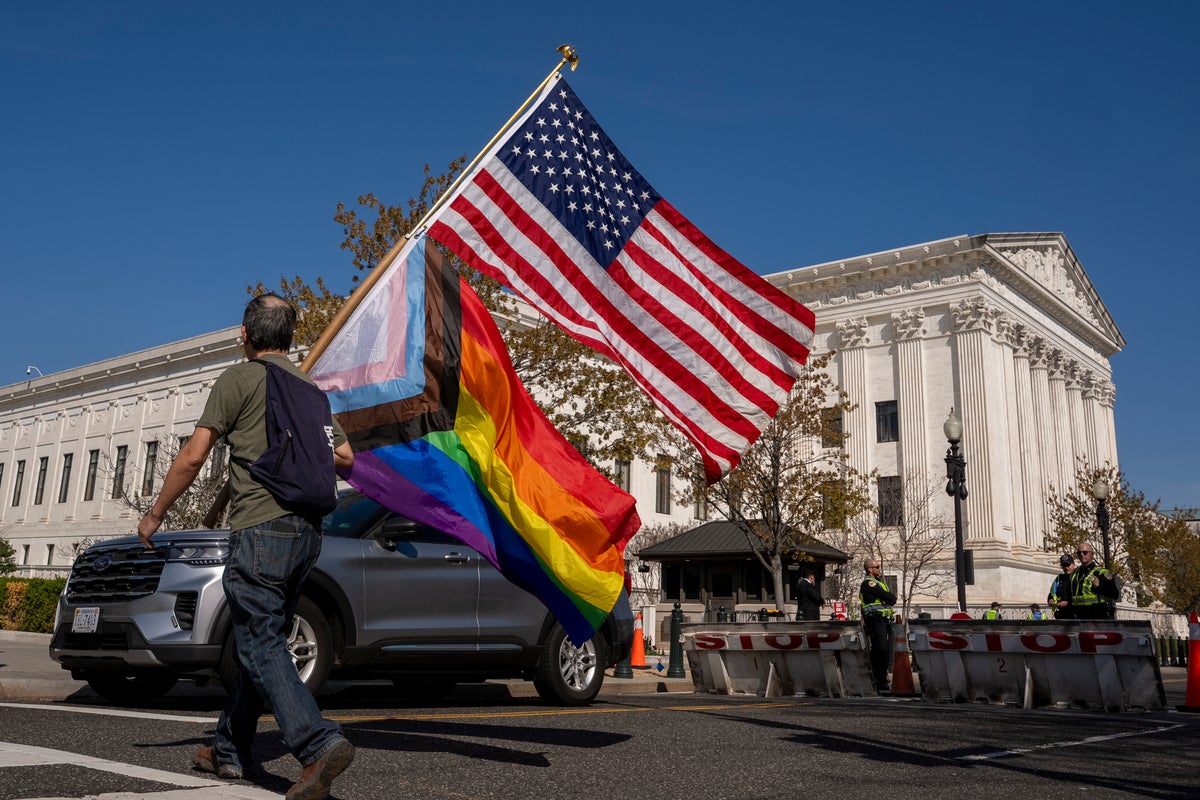
Cover image from independent.co.uk, which was analyzed for this article
A new survey shows an 18-point decline in GOP backing for same-sex marriage since 2022, part of broader cooling on LGBTQ+ issues. Polls also indicate shifting American attitudes on transgender policies.
PoliticalOS
Wednesday, June 3, 2026 — Politics
National support for same-sex marriage has leveled off at 65 percent after years of growth, driven entirely by an 18-point drop among Republicans to 37 percent. The legal status of such marriages remains unchanged under the 2015 Supreme Court ruling, yet state-level challenges continue on both sides.
What outlets missed
Gallup placed the 2026 Republican figure near its 2016 level and framed the result as a widening party divide rather than an abrupt collapse. No major outlet supplied the full historical table showing Republican support rising from 22 percent in 2010 to 44 percent in 2021 before the recent drop. Legislative efforts to protect same-sex marriage in roughly the same number of states as those seeking bans received only passing mention.
Support for Same-Sex Marriage Shows First Dip in Decades as Partisan Gaps Widen
A new Gallup survey finds that American support for same-sex marriage has declined modestly for the first time in more than twenty years, falling to 65 percent from 71 percent in both 2022 and 2023. The shift is concentrated almost entirely among Republicans, whose backing dropped to 37 percent. Democrats and independents held steady at high levels of support, underscoring how the issue has become another marker of deepening partisan division rather than a source of broad national consensus.
The May poll also recorded a parallel softening on the moral acceptability of gay and lesbian relations. Only 35 percent of Republicans now view those relationships as morally acceptable. National figures on that question remain higher, but the Republican decline has pulled the overall average down after years of steady gains. Gallup has tracked these attitudes since the mid-1990s, when just 27 percent of adults favored legal recognition of same-sex marriage. Support rose gradually through the 2000s and accelerated after the 2015 Supreme Court decision in Obergefell v. Hodges. The recent reversal ends a long period of upward movement that once appeared durable across party lines.
Gallup analyst Jeffrey Jones noted that Republican attitudes had tracked the national trend upward until recently. He pointed to the 2024 presidential campaign as one possible influence, when Republican candidates emphasized cultural issues including restrictions on transgender participation in sports and access to medical care. Since taking office, the Trump administration has moved to scale back federal diversity initiatives and has issued directives limiting transgender individuals’ access to certain federal programs and documents. These steps have occurred alongside continued Republican appointments of openly gay officials, illustrating the party’s uneven approach to LGBTQ issues.
The data arrive against a backdrop of state-level activity on related questions. Several Republican-led states have enacted limits on gender-affirming care for minors and on classroom discussion of sexual orientation. Democratic-led states have moved in the opposite direction, expanding legal protections and funding. The Gallup findings suggest these state differences now align closely with national opinion splits rather than cutting across them.
Independent support has remained largely unchanged, hovering near two-thirds. That stability indicates the national decline is not the product of a broad public rethinking but of one party moving away from positions it had gradually adopted. The pattern mirrors trends on other cultural questions where Republican voters have consolidated around more traditional views while Democratic voters have moved further in the opposite direction.
Advocates on both sides interpret the numbers differently. Groups favoring expanded LGBTQ rights see the Republican retreat as evidence that political leadership can reverse earlier gains. Conservative organizations argue the poll reflects a healthy correction after rapid social change. Neither reading alters the core finding that overall public acceptance has stopped rising and that the partisan distance on the issue has grown measurably in the last three years.
You just read Liberal's take. Want to read what actually happened?
More in Politics

Trump at 32% Approval as Gas Prices Test GOP Midterm Hopes
NYT/Siena polling showed Trump's approval at historic lows around 32 percent with Democrats leading by double digits in key districts. Early voting has surged in battleground states.

Record Early Voting Hits Battlegrounds, Shifting Partisan Shares
AP analysis found hundreds of thousands more early ballots than in 2022 in states including Texas, Ohio, Kansas, Maine, and North Carolina, shifting partisan dynamics.

Trump Backs Marshall in Kansas Senate Race Tightened by Farm Costs
President Trump rallied in deep-red Kansas for GOP Sen. Roger Marshall in a competitive race, announcing an $8 billion farm fuel relief program amid high diesel prices. Democrats see an opening to end 94 years of GOP dominance in the state.

Trump Pauses Russia Sanctions Amid Ukraine Tensions and Missile Strikes
Trump waived sanctions on Russia and floated trilateral talks with Putin and Xi as part of ending the Ukraine war, while tensions rose with Zelenskyy over Starlink and arms. Bipartisan senators engaged Zelenskyy amid the shifts.
The Compass
You just read five takes on one story.
What's your take? Find your political shape in a few minutes.
Take the test