
Trump Announces 3-Day Russia-Ukraine Ceasefire and Prisoner Swap
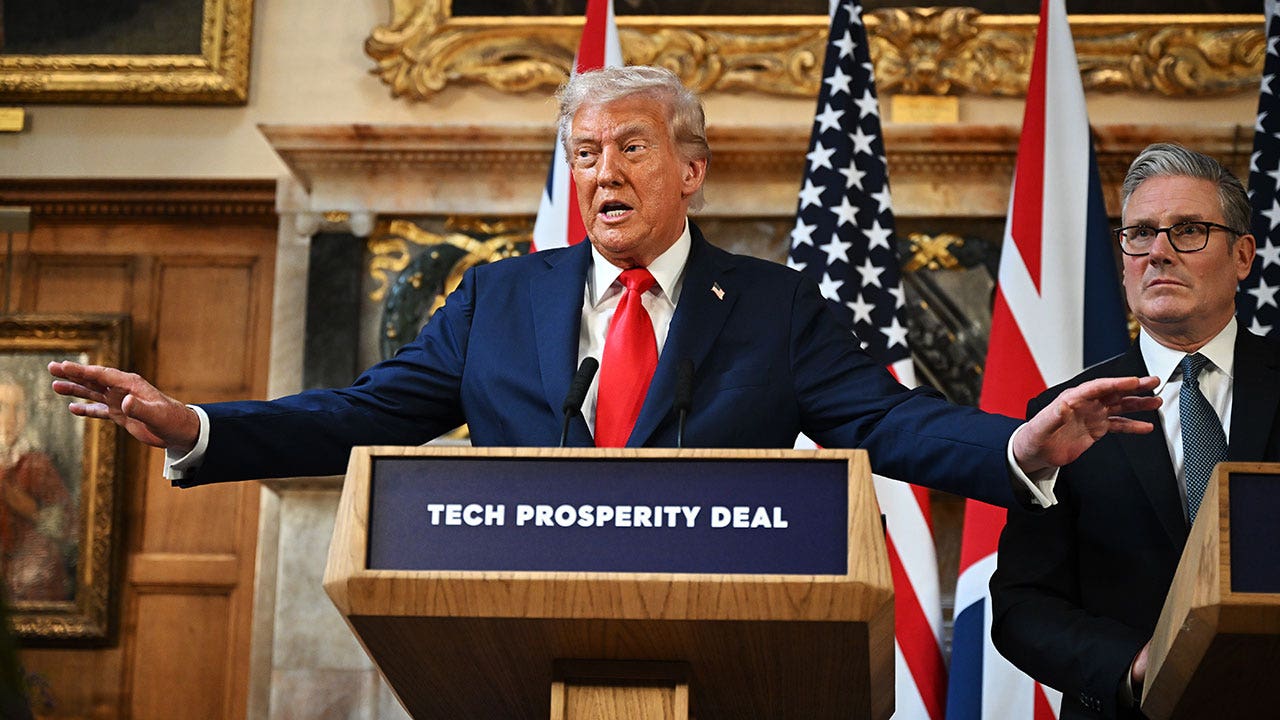
Cover image from foxnews.com, which was analyzed for this article
President Trump announced a three-day ceasefire between Russia and Ukraine starting May 9, including a prisoner swap, amid ongoing diplomacy. The move was hailed as a diplomatic win but met with skepticism on enforcement. It coincides with Russia's Victory Day celebrations.
PoliticalOS
Friday, May 8, 2026 — Politics
The three-day ceasefire and prisoner swap represent the first mutual pause in fighting since the full-scale invasion, secured through U.S. mediation and tied to Victory Day symbolism, with explicit buy-in from Zelenskyy, Putin and their aides. Its immediate test will be whether both sides actually halt attacks amid fresh mutual accusations of violations during previous short truces. Readers should understand this as a limited, fragile diplomatic opening rather than a breakthrough, occurring against a backdrop of entrenched territorial disputes and ongoing broader negotiations that have yet to yield a comprehensive settlement.
What outlets missed
Most outlets underplayed the immediate mutual accusations of ceasefire violations that erupted within hours of the prior unilateral pauses, including specific tallies of attacks and drone incidents reported by both defense ministries. Few captured the full sequence showing Russia's unilateral May 8-9 pause preceded Trump's announcement, with Ukraine's earlier ignored proposal providing precedent that short holiday truces have repeatedly failed to hold. Details on Russia's scaled-back Victory Day events, explicit threats of missile strikes on Kyiv, and the concurrent Chornobyl wildfire complicated by landmines appeared in only one or two reports, diminishing readers' sense of the fragile security environment. Confirmations from Zelenskyy and Yuri Ushakov establishing bilateral buy-in via the Putin-Trump call were omitted or downplayed by several Trump-centric or highly skeptical outlets alike.
Trump Secures Three Day Ceasefire and Prisoner Swap in Ukraine War
President Donald Trump announced Friday that Russia and Ukraine have agreed to a three-day ceasefire starting tomorrow, a rare mutual pause in a grinding four-year conflict that has killed hundreds of thousands and drained American resources at a staggering rate. The deal includes the exchange of one thousand prisoners from each side and comes after weeks of dueling accusations that both nations were violating separate holiday truces.
In a Truth Social post, Trump described the agreement as a direct result of his personal request to the leaders of both countries. He wrote that the ceasefire runs May 9 through May 11, tying it to Russia’s Victory Day commemorations marking the Soviet Union’s defeat of Nazi Germany. Ukraine, Trump noted, was also a major participant in that victory, a historical fact often lost amid today’s propaganda from both sides. He added that the pause halts all kinetic activity and that talks to end the larger war are progressing.
Ukrainian President Volodymyr Zelenskyy quickly confirmed the arrangement on social media, saying his government had secured Moscow’s agreement through American mediation for both the ceasefire and the one-thousand-for-one-thousand prisoner swap. Russian presidential aide Yuri Ushakov told state media the deal followed a recent phone conversation between Trump and Vladimir Putin in which the two leaders recalled their nations’ shared alliance against the Nazis in World War II. Both Putin and Zelenskyy signed off on the American proposal.
This is the first mutual ceasefire since the war began in February 2022. Previous attempts at holiday pauses collapsed immediately. Russia had declared a unilateral two-day truce for Victory Day. Ukraine countered with calls for an indefinite ceasefire that Moscow dismissed. Each side spent the past week accusing the other of fresh attacks, with Moscow’s mayor reporting overnight drone strikes and Russian officials threatening massive retaliation against Kyiv if the Red Square parade was disrupted. Ukrainian officials in turn accused Russian forces of shelling their positions despite the supposed pause.
The scaled-back nature of this year’s Victory Day events in Moscow reveals the toll the war has taken. For the first time in decades the parade will feature no tanks, missiles or heavy military hardware, only marching soldiers. Authorities in both Moscow and St. Petersburg warned residents of mobile internet outages for security reasons. Foreign attendance is minimal, limited to a handful of leaders from Belarus, Malaysia, Laos and a few others. The once-grand celebration has become a muted, anxious affair.
The human and financial cost of this conflict cannot be ignored. Estimates put combined casualties above two million. Entire cities have been reduced to rubble. Europe’s energy prices spiked, American taxpayers shipped hundreds of billions of dollars in weapons and aid with little public accounting, and the war settled into a bloody stalemate that benefited defense contractors and Washington foreign policy ideologues while ordinary people on all sides paid the price. For years the approved narrative in much of Western media was that any talk of negotiation amounted to appeasement. Ceasefire proposals were ignored or ridiculed until Trump returned to office and began pressing both sides directly.
Trump’s approach stands in sharp contrast to the previous administration’s strategy of pouring fuel on the fire while promising eventual victory. During his campaign he vowed to end the war quickly. That did not happen in twenty-four hours as he once quipped, but this week’s agreement shows the value of personal diplomacy over endless escalation. Both Putin and Zelenskyy, leaders who rarely agree on anything, responded to Trump’s direct intervention.
Whether this three-day pause becomes the beginning of the end, as Trump hopes, remains to be seen. Skeptics on both the left and right have watched too many broken promises and temporary halts in fighting to declare victory. Yet the prisoner swap alone will bring a thousand families on each side some measure of relief. It is hard to argue against even a brief stop to the killing.
The war in Ukraine has been a tragedy from the start, one that exposed the limits of military solutions to deep ethnic, political and security disputes. It also exposed how much of official Washington preferred prolonging the conflict to admitting that endless proxy wars come with real costs. Trump’s willingness to speak directly to both capitals and extract concessions where others failed represents the kind of pragmatic deal-making that used to be standard in American foreign policy before ideology took over.
For one weekend at least the guns will fall silent. That is not peace, but it is progress. If the talks Trump mentioned continue in the same spirit, it may mark the first real off-ramp in a war that should have ended long ago. Americans, having funded so much of it, have every right to expect their president to keep pushing until the killing stops for good.
You just read America First's take. Want to read what actually happened?
More in Politics

Trump Defends Ramaswamy Ad Using Estranged Mother in Ohio Race
President Trump defended a GOP nominee's ad featuring a Democratic opponent's estranged mother, calling it powerful, while drawing criticism from some Republicans including Ohio Gov. Mike DeWine. The ad has sparked internal GOP tensions ahead of midterms.
Federal Raid Targets Omar Amid Unresolved Name and Marriage Allegations
Agents searched Rep. Ilhan Omar's DC residence over immigration fraud allegations; she called it bizarre. Reports and commentary questioned her birth name and past marriage details.

Supreme Court Upholds New Hampshire Student ID Voting Ban
The Supreme Court upheld New Hampshire's ban on student IDs as valid voter identification just before midterms, affecting a tight Senate race.
Early Voting Hits 21 Million as Most Trust Midterm Accuracy
Millions have already voted early as parties make final appeals amid $1.4 billion in ad spending; polls show confidence in election accuracy.
The Compass
You just read five takes on one story.
What's your take? Find your political shape in a few minutes.
Take the test