
Trump Announces 3-Day Russia-Ukraine Ceasefire and Prisoner Swap
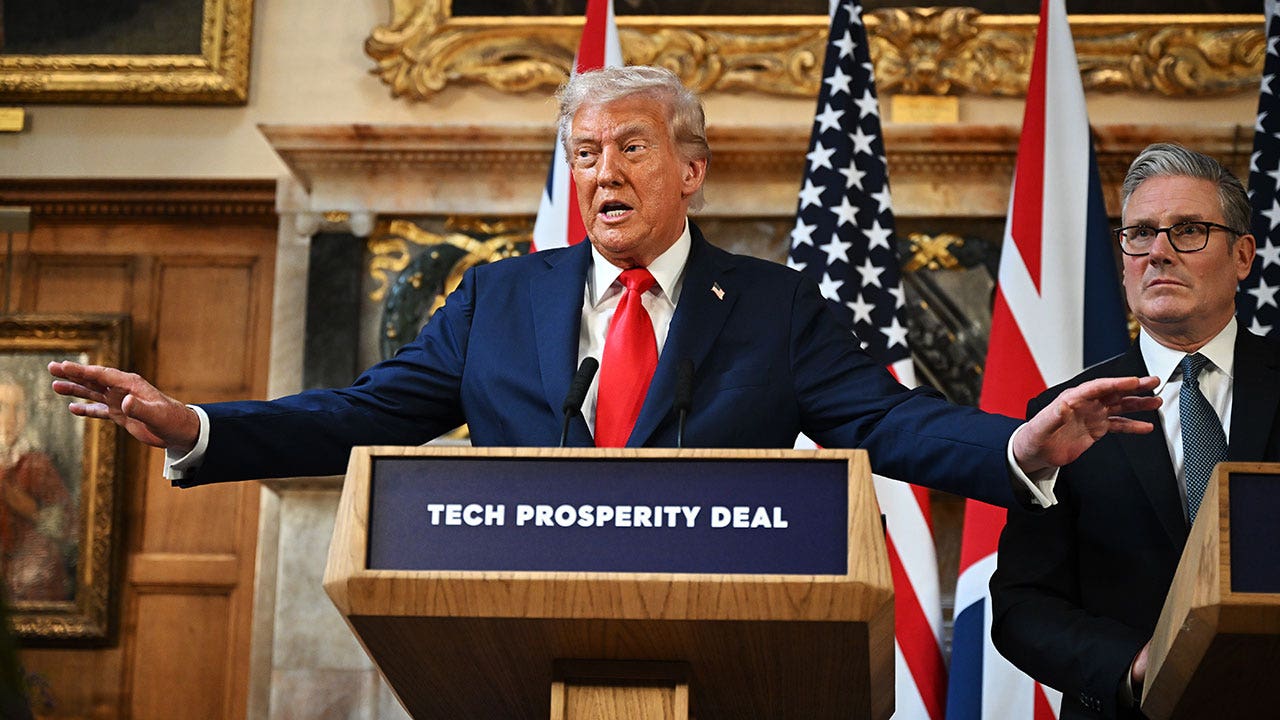
Cover image from foxnews.com, which was analyzed for this article
President Trump announced a three-day ceasefire between Russia and Ukraine starting May 9, including a prisoner swap, amid ongoing diplomacy. The move was hailed as a diplomatic win but met with skepticism on enforcement. It coincides with Russia's Victory Day celebrations.
PoliticalOS
Friday, May 8, 2026 — Politics
The three-day ceasefire and prisoner swap represent the first mutual pause in fighting since the full-scale invasion, secured through U.S. mediation and tied to Victory Day symbolism, with explicit buy-in from Zelenskyy, Putin and their aides. Its immediate test will be whether both sides actually halt attacks amid fresh mutual accusations of violations during previous short truces. Readers should understand this as a limited, fragile diplomatic opening rather than a breakthrough, occurring against a backdrop of entrenched territorial disputes and ongoing broader negotiations that have yet to yield a comprehensive settlement.
What outlets missed
Most outlets underplayed the immediate mutual accusations of ceasefire violations that erupted within hours of the prior unilateral pauses, including specific tallies of attacks and drone incidents reported by both defense ministries. Few captured the full sequence showing Russia's unilateral May 8-9 pause preceded Trump's announcement, with Ukraine's earlier ignored proposal providing precedent that short holiday truces have repeatedly failed to hold. Details on Russia's scaled-back Victory Day events, explicit threats of missile strikes on Kyiv, and the concurrent Chornobyl wildfire complicated by landmines appeared in only one or two reports, diminishing readers' sense of the fragile security environment. Confirmations from Zelenskyy and Yuri Ushakov establishing bilateral buy-in via the Putin-Trump call were omitted or downplayed by several Trump-centric or highly skeptical outlets alike.
Trump Announces Limited Ceasefire in grinding Russia-Ukraine War
President Donald Trump announced Friday that Russia and Ukraine had agreed to a three-day ceasefire beginning this weekend, the first mutual halt in fighting since the full-scale invasion more than four years ago. The pause, which Trump presented as a personal diplomatic achievement, will run from May 9 through May 11 and includes the exchange of 1,000 prisoners of war from each side.
In a post on Truth Social, Trump described the truce as a suspension of “all kinetic activity” timed to coincide with Russia’s Victory Day commemorations marking the Soviet Union’s defeat of Nazi Germany in World War II. He noted that Ukraine, which suffered enormous losses during that earlier conflict, also has historical claims on the date. “Hopefully, it is the beginning of the end of a very long, deadly, and hard fought War,” Trump wrote, adding that broader negotiations to end the conflict “are getting closer and closer every day.”
Ukrainian President Volodymyr Zelenskyy quickly confirmed the arrangement on X, saying it emerged from negotiations mediated by the United States. He framed the prisoner exchange as a concrete humanitarian step, instructing his team to prepare for the return of Ukrainians held in Russian captivity. Russian officials offered a similar account. Kremlin aide Yuri Ushakov told reporters the agreement followed a recent phone call between Trump and Vladimir Putin in which the two leaders recalled their countries’ shared alliance during World War II and discussed a temporary truce around the holiday.
The announcement comes after weeks of dueling accusations. Russia had declared a unilateral two-day ceasefire for May 8-9, while Ukraine proposed an indefinite pause beginning earlier in the month. Both sides claimed the other continued attacks, including overnight drone strikes on Moscow. Russian authorities warned of retaliatory strikes on Kyiv if the Victory Day parade in Red Square was disrupted and advised foreign diplomats to leave the Ukrainian capital. This year’s parade will be notably subdued, with no heavy military hardware on display for the first time in decades, a reflection of how the grinding war has forced Russia to scale back its traditional celebrations.
The brief truce offers a momentary breather in a conflict that has killed or wounded more than two million people and redrawn the map of Europe. What began as a anticipated swift Russian victory has settled into a brutal war of attrition, with neither side able to deliver a decisive blow. Ukraine’s innovative drone strikes and Western-supplied weapons have slowed Russian advances, but at enormous cost to both nations’ economies, demographics and infrastructure.
Trump’s involvement reflects a shift in American posture since he returned to office. During his campaign he promised to end the war within 24 hours, a boast that gave way to months of alternating pressure on both capitals. The current effort appears to blend personal diplomacy with Putin and sustained negotiations involving both leaders. Friday’s agreement suggests that approach can produce limited results, particularly on prisoner swaps, an issue Zelenskyy has consistently prioritized as a matter of national honor.
Yet the three-day window is modest. Ceasefires in this war have historically been fragile, often collapsing under accusations of violations within hours. Russian state media framed the pause as a goodwill gesture tied to the holiday rather than a fundamental policy change. Ukrainian officials, while welcoming any pause that brings people home, have long argued that only a just and lasting settlement, one that respects Ukraine’s sovereignty and provides credible security guarantees, can end the fighting.
The announcement also lands as Trump juggles multiple international crises. Reports from the region suggest his administration remains entangled in a separate, self-initiated conflict with Iran that shows little sign of resolution, raising questions about bandwidth and strategic coherence. At home, critics from both parties have noted the gap between Trump’s sweeping promises on Ukraine and the incremental, holiday-timed progress now on offer.
For soldiers in the trenches and families awaiting prisoners, the weekend may bring tangible relief. A thousand families on each side could see loved ones return. Internet outages planned in Russian cities for security during the celebrations underscore the persistent tension beneath the temporary calm. Moscow’s decision to limit the scale of Victory Day events, including barring most foreign dignitaries, reveals how the war has constrained even its rituals of national pride.
Whether this ceasefire becomes the bridge to something larger remains uncertain. Trump’s message struck an optimistic note, casting the agreement as evidence that sustained talks are narrowing differences on core issues. Zelenskyy’s government continues to insist any deal must include the withdrawal of Russian forces from occupied territory and a pathway for Ukraine to integrate with Western security structures. Putin’s circle has shown little public flexibility on those points.
For now, the battlefield will fall quiet for three days in acknowledgment of a shared history from a previous century’s cataclysm. That pause, however brief, offers a reminder of how much both nations once sacrificed together and how far apart they have drifted. The test will come Monday, when the guns are expected to resume, and diplomats must determine whether the modest trust built over a holiday weekend can be expanded into a framework capable of ending the largest European conflict since 1945.
You just read Liberal's take. Want to read what actually happened?
More in Politics

Trump at 32% Approval as Gas Prices Test GOP Midterm Hopes
NYT/Siena polling showed Trump's approval at historic lows around 32 percent with Democrats leading by double digits in key districts. Early voting has surged in battleground states.

Record Early Voting Hits Battlegrounds, Shifting Partisan Shares
AP analysis found hundreds of thousands more early ballots than in 2022 in states including Texas, Ohio, Kansas, Maine, and North Carolina, shifting partisan dynamics.

Trump Backs Marshall in Kansas Senate Race Tightened by Farm Costs
President Trump rallied in deep-red Kansas for GOP Sen. Roger Marshall in a competitive race, announcing an $8 billion farm fuel relief program amid high diesel prices. Democrats see an opening to end 94 years of GOP dominance in the state.

Trump Pauses Russia Sanctions Amid Ukraine Tensions and Missile Strikes
Trump waived sanctions on Russia and floated trilateral talks with Putin and Xi as part of ending the Ukraine war, while tensions rose with Zelenskyy over Starlink and arms. Bipartisan senators engaged Zelenskyy amid the shifts.
The Compass
You just read five takes on one story.
What's your take? Find your political shape in a few minutes.
Take the test