
Supreme Court Weighs Privacy Against Geofence Warrants in Robbery Case
Cover image from nbcnews.com, which was analyzed for this article
Supreme Court examines if police require warrants for cell location records to track criminals. Privacy advocates push back against broad access; law enforcement defends tool efficacy. Ruling could redefine surveillance bounds.
PoliticalOS
Monday, April 27, 2026 — Politics
The Supreme Court must decide whether geofence warrants, which compel tech companies to search location data from everyone near a crime scene, violate the Fourth Amendment or represent a permissible evolution of investigative tools. Lower courts found this particular warrant valid given its narrow scope and supporting evidence from bank video, yet the technique's ability to sweep up innocent bystanders raises legitimate questions about mass digital searches. A ruling either way will shape police access to the constant location records created by modern smartphones, even as Google's own policy changes may reduce the tool's practical availability.
What outlets missed
Both outlets underplayed the precise parameters of the warrant in this case, a 150-meter radius over approximately one hour that returned data on just 19 accounts before narrowing, facts that lower courts cited when finding probable cause. They also gave short shrift to the Eastern District of Virginia and Fourth Circuit rulings that explicitly upheld the geofence warrant as lawful, procedural history that shows multiple layers of judicial review before the Supreme Court step. The scale of the tool's real-world use, more than 11,000 geofence warrants received by Google in 2020 alone according to its transparency reports, received almost no attention despite illustrating why the stakes extend far beyond one Virginia bank robbery. Finally, neither story fully reconciled Google's policy shift, under which Location History now defaults to on-device storage, with the company's simultaneous amicus argument that such digital records still deserve Fourth Amendment safeguards.
Supreme Court Weighs sweeping digital searches in major test of privacy rights
The Supreme Court returns to the intersection of technology and the Fourth Amendment on Monday with arguments in a case that could reshape how law enforcement uses one of its most potent new investigative tools. At issue is the constitutionality of geofence warrants, requests that compel technology companies like Google to turn over location data on every device that happened to be within a defined geographic area during a specified window of time.
The dispute stems from a 2019 armed robbery at the Call Federal Credit Union in Midlothian, Virginia. A man entered the bank shortly before 5 p.m., displayed a firearm, and left with $195,000. Local police had no immediate suspect. A detective eventually obtained a geofence warrant from a federal magistrate judge directing Google to identify any devices whose Location History setting placed them near the bank around the time of the crime.
Google responded with data on 19 devices. After further narrowing, investigators focused on Okello Chatrie, whose phone data showed it was in the vicinity shortly before the robbery and then moved away soon after. Chatrie was arrested, pleaded guilty to federal armed robbery and firearms charges, and was sentenced to nearly 12 years in prison. He preserved his right to challenge the warrant, arguing that the government's dragnet collection of location information from innocent bystanders violated the Fourth Amendment's protection against unreasonable searches.
The case, Chatrie v. United States, arrives at the high court after lower courts split on the question. It represents the latest effort by the justices to adapt constitutional principles written in the era of quill pens and physical trespass to a world of constant digital surveillance. In 2018's Carpenter v. United States, the Court held that police generally need a warrant to obtain historical cell-site location information from wireless carriers, recognizing that such data can provide an intimate portrait of a person's movements over time. Geofence warrants raise related but distinct questions because they cast a wider net across anyone in a particular place rather than targeting a specific phone number.
Law enforcement officials have come to rely heavily on these warrants as smartphones and location services have proliferated. The technique has been used in investigations ranging from bank heists to arsons to protests. Proponents argue it provides a focused way to generate leads when traditional methods fail. The Justice Department contends in its brief that Chatrie had no reasonable expectation of privacy in his movements during a two-hour public window because he had voluntarily enabled Google's Location History feature, which powers services like Maps and requires users to opt in. Officials also note that the process includes multiple layers of judicial review, including a three-step protocol in which Google first provides anonymized data before any identifying information is disclosed.
Critics, including privacy advocates and some lower court judges, counter that geofence warrants function like the digital equivalent of a general warrant, the very abuse the Fourth Amendment was written to prevent. Rather than identifying a suspect and then seeking evidence of that person's movements, police first collect information on everyone in a radius and then work backward to identify potential suspects. In densely populated areas or during large public events, the warrants can sweep up data from hundreds or even thousands of devices, creating what amounts to a virtual dragnet.
The opt-in nature of Google's location services, the government argues, distinguishes this case from Carpenter. But privacy scholars note that many users enable these features without fully understanding the scope of data collection or realizing that it could later be accessed by police. Location History can reveal not only where someone was at a precise moment but patterns of movement that expose sensitive information about religious practices, medical visits, political activity or personal relationships.
The Supreme Court's eventual ruling could have far-reaching consequences. An endorsement of geofence warrants would likely accelerate their use, giving police a powerful investigative instrument in an era when physical evidence is increasingly supplemented or replaced by digital trails. A decision imposing stricter limits could force law enforcement to develop more targeted approaches and might encourage technology companies to reconsider how they design and retain location data.
The arguments come at a time of broader societal reckoning with the trade-offs between security and privacy in the smartphone age. Americans carry devices that continuously record their movements, often in ways that feel invisible. Law enforcement has adapted more quickly than the legal system, using warrants that treat vast pools of location data as a routine resource rather than an exceptional intrusion. How the justices reconcile those technological realities with constitutional commands will help determine whether the Fourth Amendment remains a meaningful check on government power or fades into irrelevance in the digital public square.
Several justices have signaled skepticism in past technology cases about allowing law enforcement techniques to outpace constitutional safeguards. Yet the Court has also shown deference to the practical needs of police when confronted with serious crimes. In Chatrie's case, the underlying offense was unambiguous and the eventual evidence against him substantial. The constitutional question, however, reaches far beyond one bank robbery to the everyday realities of a society in which private companies hold detailed records of nearly everyone's comings and goings.
A decision is expected by the end of the Court's current term. Whatever the outcome, the case underscores a central tension of modern governance: as technology makes it possible to know more about individuals than ever before, the legal system must decide how much of that knowledge the government is entitled to access without individualized suspicion. The resolution will shape not only future criminal investigations but the practical scope of privacy that Americans can expect when they step outside their homes with a phone in their pocket.
You just read Liberal's take. Want to read what actually happened?
More in Politics
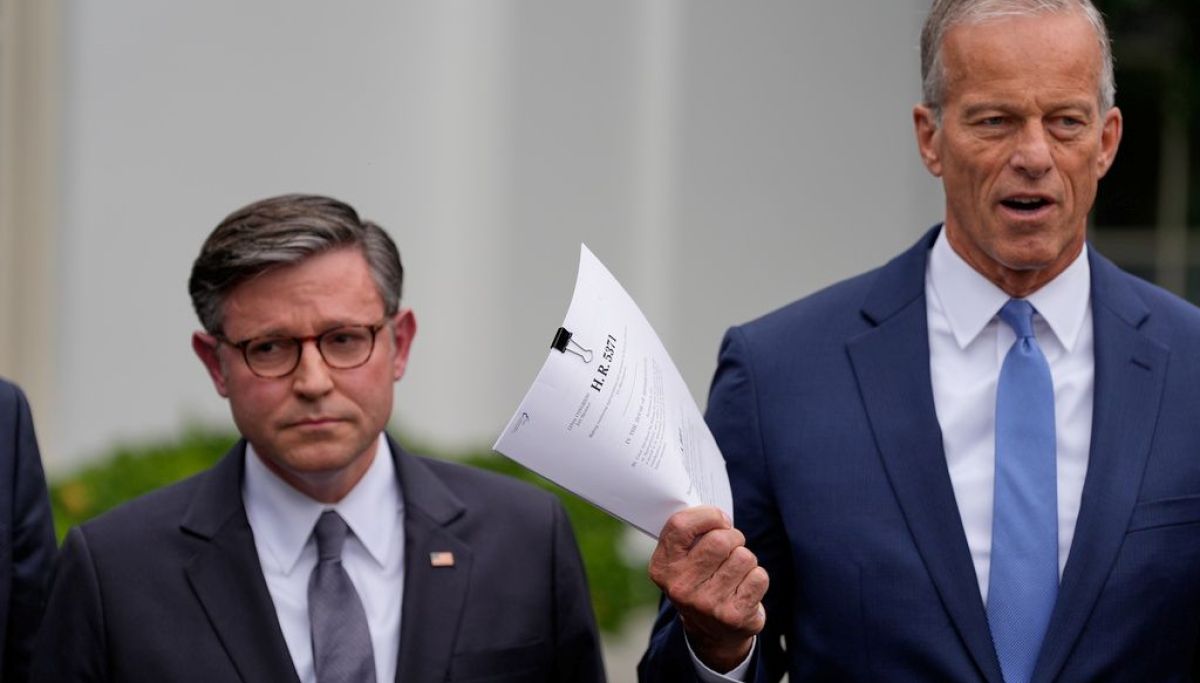
Trump at 32% Approval as Gas Prices Test GOP Midterm Hopes
NYT/Siena polling showed Trump's approval at historic lows around 32 percent with Democrats leading by double digits in key districts. Early voting has surged in battleground states.

Record Early Voting Hits Battlegrounds, Shifting Partisan Shares
AP analysis found hundreds of thousands more early ballots than in 2022 in states including Texas, Ohio, Kansas, Maine, and North Carolina, shifting partisan dynamics.
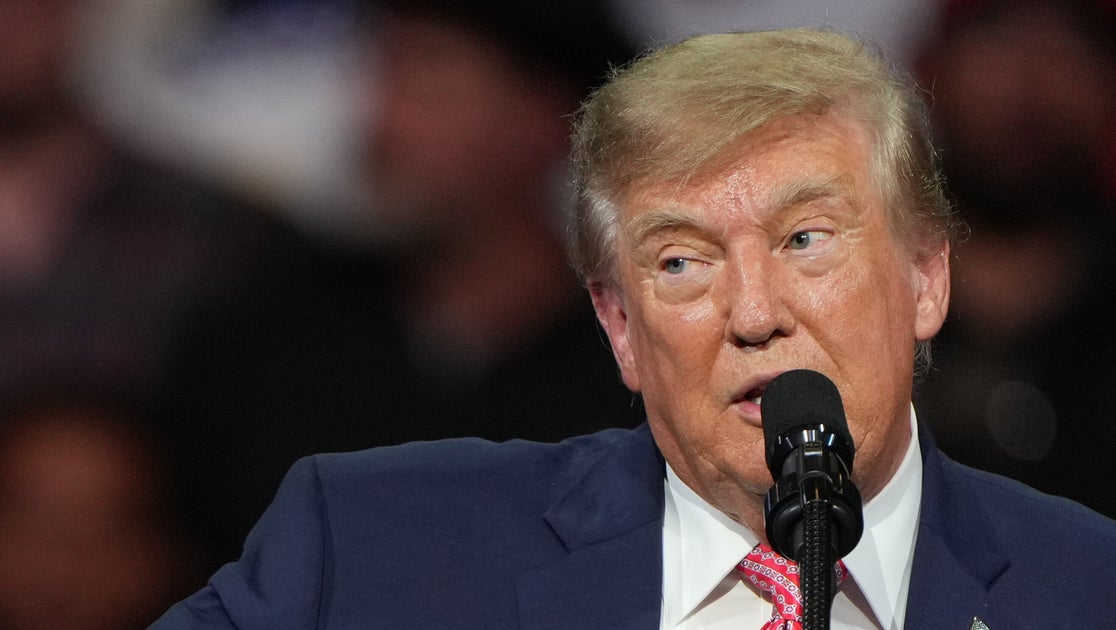
Trump Backs Marshall in Kansas Senate Race Tightened by Farm Costs
President Trump rallied in deep-red Kansas for GOP Sen. Roger Marshall in a competitive race, announcing an $8 billion farm fuel relief program amid high diesel prices. Democrats see an opening to end 94 years of GOP dominance in the state.

Trump Pauses Russia Sanctions Amid Ukraine Tensions and Missile Strikes
Trump waived sanctions on Russia and floated trilateral talks with Putin and Xi as part of ending the Ukraine war, while tensions rose with Zelenskyy over Starlink and arms. Bipartisan senators engaged Zelenskyy amid the shifts.
The Compass
You just read five takes on one story.
What's your take? Find your political shape in a few minutes.
Take the test