
Supreme Court Weighs Privacy Against Geofence Warrants in Robbery Case
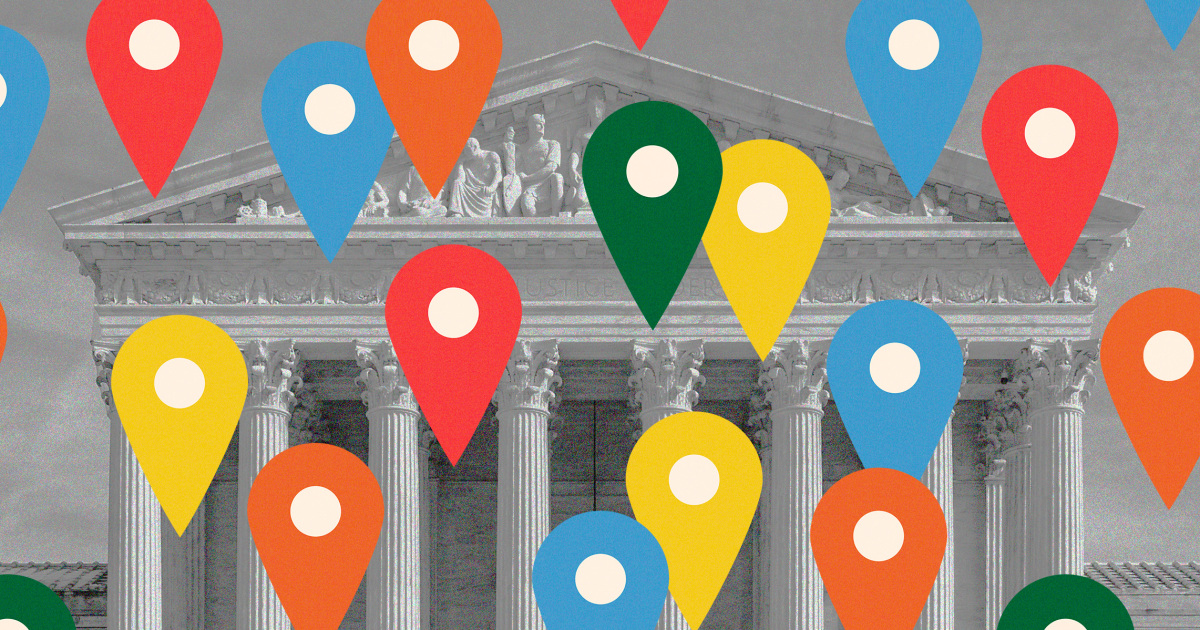
Cover image from nbcnews.com, which was analyzed for this article
Supreme Court examines if police require warrants for cell location records to track criminals. Privacy advocates push back against broad access; law enforcement defends tool efficacy. Ruling could redefine surveillance bounds.
PoliticalOS
Monday, April 27, 2026 — Politics
The Supreme Court must decide whether geofence warrants, which compel tech companies to search location data from everyone near a crime scene, violate the Fourth Amendment or represent a permissible evolution of investigative tools. Lower courts found this particular warrant valid given its narrow scope and supporting evidence from bank video, yet the technique's ability to sweep up innocent bystanders raises legitimate questions about mass digital searches. A ruling either way will shape police access to the constant location records created by modern smartphones, even as Google's own policy changes may reduce the tool's practical availability.
What outlets missed
Both outlets underplayed the precise parameters of the warrant in this case, a 150-meter radius over approximately one hour that returned data on just 19 accounts before narrowing, facts that lower courts cited when finding probable cause. They also gave short shrift to the Eastern District of Virginia and Fourth Circuit rulings that explicitly upheld the geofence warrant as lawful, procedural history that shows multiple layers of judicial review before the Supreme Court step. The scale of the tool's real-world use, more than 11,000 geofence warrants received by Google in 2020 alone according to its transparency reports, received almost no attention despite illustrating why the stakes extend far beyond one Virginia bank robbery. Finally, neither story fully reconciled Google's policy shift, under which Location History now defaults to on-device storage, with the company's simultaneous amicus argument that such digital records still deserve Fourth Amendment safeguards.
Supreme Court Scrutinizes Geofence Warrants in Fourth Amendment Challenge
WASHINGTON — The Supreme Court will hear arguments Monday in a case that puts a fast-growing law enforcement surveillance tool under intense constitutional review, with significant implications for how far police can go in harvesting digital location data from ordinary Americans without individualized suspicion.
The dispute, Chatrie v. United States, stems from an armed robbery on May 20, 2019, at the Call Federal Credit Union in Midlothian, Virginia. At 4:50 p.m., a man walked in holding a cell phone, handed a teller a note demanding cash, brandished a gun, and ordered the manager to open the safe. He left with $195,000. Local detectives had few leads. Rather than relying on traditional investigative methods, they obtained what is known as a geofence warrant, a request approved by a federal judge that compelled Google to turn over information on any cell phones that had been physically present near the bank during a set time window.
Google responded with data on 19 users. Investigators narrowed their focus to Okello Chatrie, whose phone had Google’s Location History feature enabled, the setting that powers services such as Google Maps. The information showed Chatrie’s device was in or near the credit union ten minutes before the robbery and left the area shortly afterward. He was arrested, pleaded guilty to federal charges of armed robbery and brandishing a firearm, and received a sentence of nearly 12 years in prison. Chatrie preserved his right to appeal the lawfulness of the geofence warrant itself, arguing that the government’s actions violated his Fourth Amendment right to be free from unreasonable searches and seizures.
Geofence warrants have become an increasingly important instrument for prosecutors and police as smartphones and location-tracking services have proliferated. The technique allows investigators to draw a virtual boundary around a crime scene and demand that technology companies identify every device that crossed into that digital fence during a specified period, even if authorities have no particular suspect in mind at the outset. The tool has been used in investigations ranging from bank heists to other serious crimes across the country. Its growing prominence is exactly why the Supreme Court’s review matters: a ruling against the government could sharply limit a tactic that has helped solve cases when conventional evidence is lacking.
The Justice Department defends the practice. In its brief to the justices, the government argues that Chatrie had no reasonable expectation of privacy in “two hours of public movements” because he had voluntarily opted into sharing his location data with Google. Officials emphasize that obtaining the warrant required a three-step process before a magistrate judge, providing judicial oversight. “The Court has made clear that an individual lacks a reasonable expectation of privacy in information that he ‘assumed the risk’ of sharing with others, including about his short-term public movements,” the brief states. “The warrant here sought movement information visible to anyone near petitioner.”
Chatrie’s legal challenge contends that such warrants are fundamentally different from traditional ones. Rather than specifying a particular person or place to be searched, geofence requests function like digital dragnet operations that sweep up location records from potentially dozens or hundreds of innocent bystanders whose only connection to a crime is that they happened to be nearby with their location services turned on. Privacy advocates have long warned that this reverses the normal order of criminal investigation: instead of starting with a suspect and seeking evidence, police start with a location and demand evidence about everyone who was there. The Fourth Amendment, they argue, was written precisely to prohibit such general warrants that allow indiscriminate rummaging through people’s private affairs.
This case represents the latest chapter in the Supreme Court’s ongoing struggle to apply 18th-century constitutional protections to 21st-century technology. Previous rulings have recognized that digital records can reveal far more intimate details about a person’s life than physical searches ever could. Yet the justices have also shown deference to law enforcement needs when public safety is at stake. How the court reconciles those impulses here will shape police practices for years.
The outcome could force investigators to develop probable cause before casting such wide digital nets, or it could greenlight an expanded role for tech companies as de facto data suppliers to law enforcement. For millions of Americans whose phones constantly track and store their movements, often without them fully understanding the downstream consequences, the decision will clarify whether that information remains theirs or becomes a standing invitation for government review whenever a crime occurs nearby.
The arguments arrive at a moment when location-enabled devices are ubiquitous. What began as a convenience for mapping apps has quietly become one of the most potent surveillance tools available to authorities. Whether the Supreme Court views that development as an inevitable evolution of policing or a dangerous expansion of state power beyond what the Constitution permits will be the central question when the justices take the bench Monday. The ruling, expected later this year, could either rein in or legitimize a practice that has already reshaped how criminal cases are built in the digital age.
You just read Progressive's take. Want to read what actually happened?
More in Politics
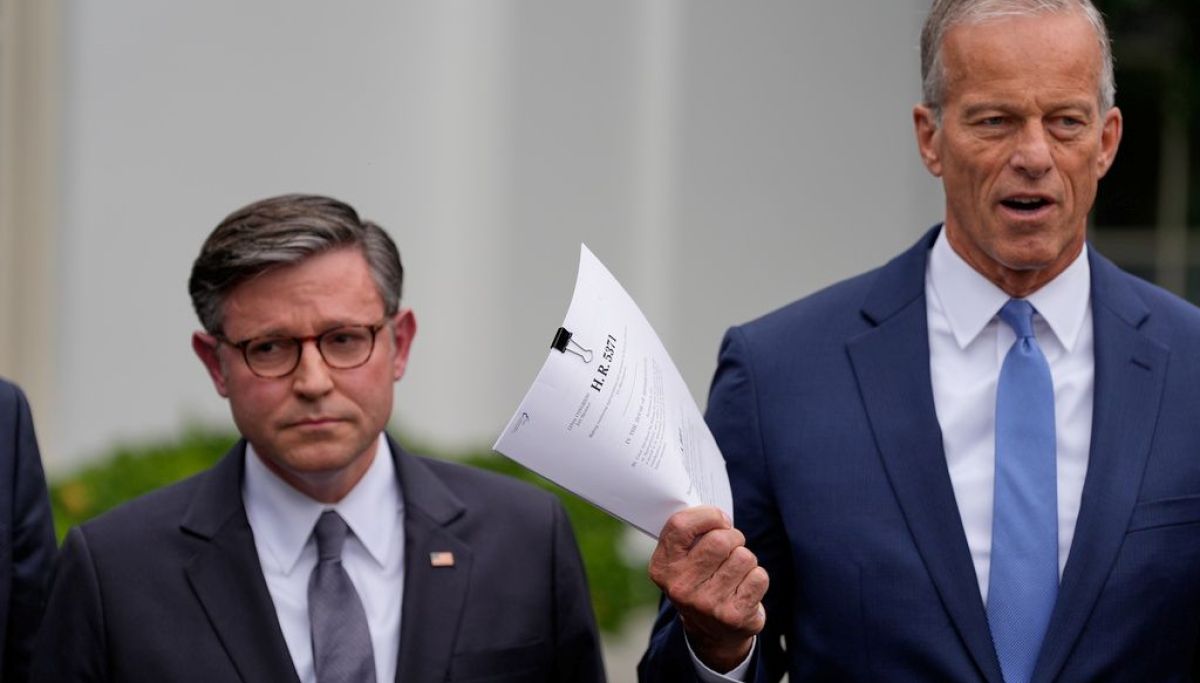
Trump at 32% Approval as Gas Prices Test GOP Midterm Hopes
NYT/Siena polling showed Trump's approval at historic lows around 32 percent with Democrats leading by double digits in key districts. Early voting has surged in battleground states.

Record Early Voting Hits Battlegrounds, Shifting Partisan Shares
AP analysis found hundreds of thousands more early ballots than in 2022 in states including Texas, Ohio, Kansas, Maine, and North Carolina, shifting partisan dynamics.
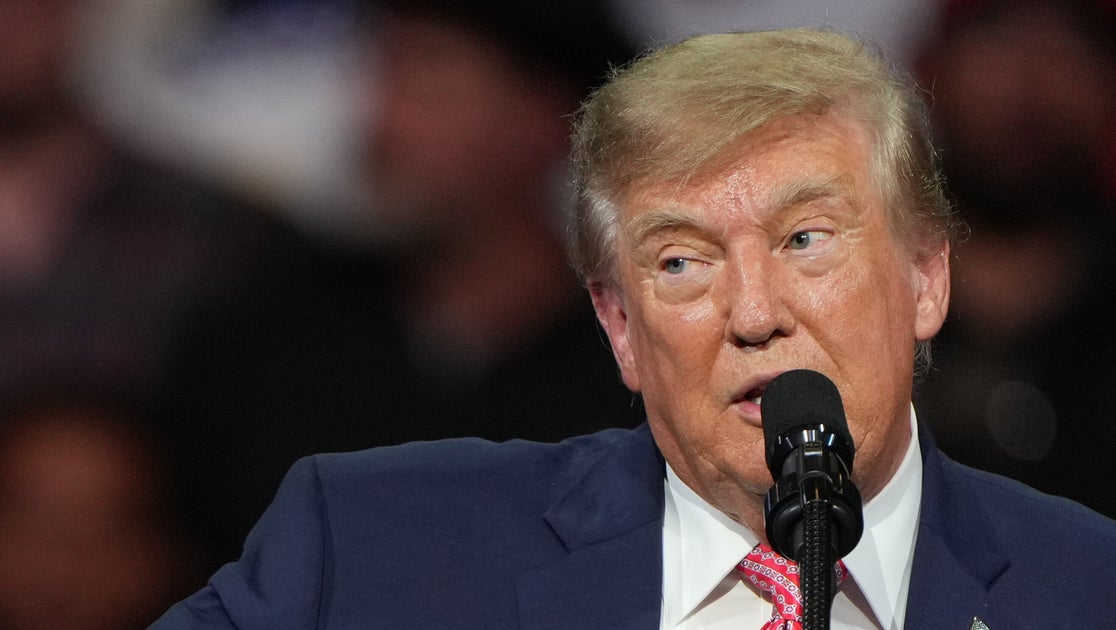
Trump Backs Marshall in Kansas Senate Race Tightened by Farm Costs
President Trump rallied in deep-red Kansas for GOP Sen. Roger Marshall in a competitive race, announcing an $8 billion farm fuel relief program amid high diesel prices. Democrats see an opening to end 94 years of GOP dominance in the state.

Trump Pauses Russia Sanctions Amid Ukraine Tensions and Missile Strikes
Trump waived sanctions on Russia and floated trilateral talks with Putin and Xi as part of ending the Ukraine war, while tensions rose with Zelenskyy over Starlink and arms. Bipartisan senators engaged Zelenskyy amid the shifts.
The Compass
You just read five takes on one story.
What's your take? Find your political shape in a few minutes.
Take the test