
SCOTUS Redistricting Ruling Prompts Map Redraws in South
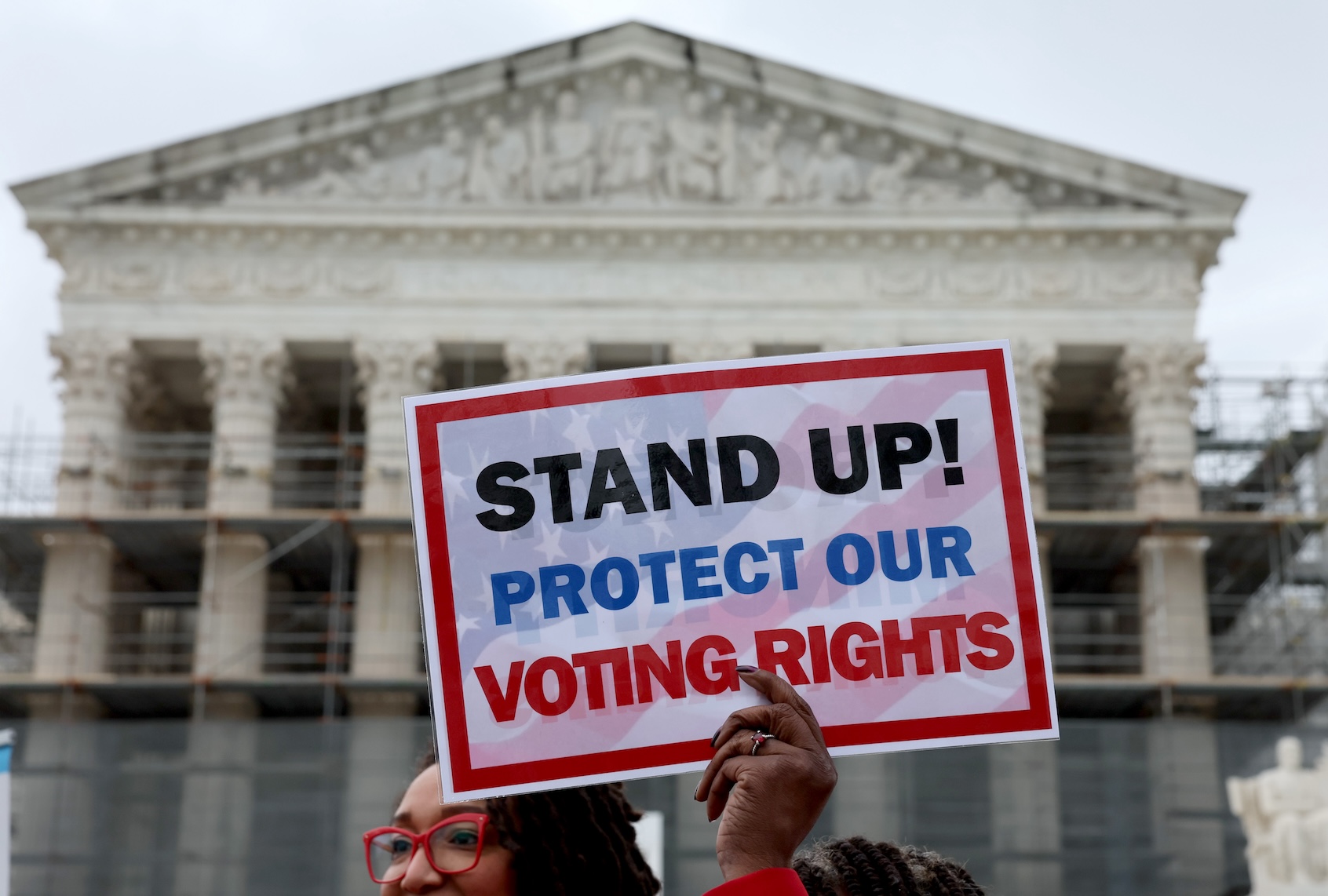
Cover image from salon.com, which was analyzed for this article
The Supreme Court decision in a key voting case could reduce Black representation in multiple districts. Legal experts debate effects on future elections and redistricting.
PoliticalOS
Saturday, May 16, 2026 — Politics
The ruling requires states to justify any predominant use of race in district lines under equal-protection standards. Multiple Southern states are already revising maps at congressional, state, and local levels. The extent of any reduction in majority-Black districts will depend on how lower courts apply the new precedent in pending cases.
What outlets missed
The Court’s opinion centered on whether race was the predominant factor in Louisiana’s map without adequate justification under equal-protection doctrine, not a wholesale rewrite of Section 2 standards. No outlet detailed the vote breakdown or the narrow tailoring analysis that formed the core of the holding. Local election impacts in counties such as DeSoto, Mississippi, received little attention despite their direct connection to ongoing Section 2 litigation. The decision’s potential interaction with state constitutional limits on redistricting was omitted entirely.
Supreme Court Limits Racial Gerrymandering in Louisiana Voting Map Case
The Supreme Court ruling in Louisiana v. Callais has altered the criteria for claims under Section 2 of the Voting Rights Act, requiring stronger evidence of intentional racial discrimination rather than statistical disparities alone in district maps. Southern states including Louisiana have begun adjusting congressional and local boundaries in response, suspending some elections temporarily to comply with the new standard.
The decision stems from challenges to Louisiana's congressional map, which previously created an additional majority-Black district to address voting patterns. Lower courts had upheld aspects of the map under earlier interpretations of the Voting Rights Act, but the Supreme Court narrowed the test for proving dilution of minority votes. States must now demonstrate that race was not the predominant factor in drawing lines, shifting focus toward traditional districting principles such as compactness, contiguity, and political boundaries.
Critics of the prior approach argue that majority-minority districts often concentrate minority voters into a few safe seats, reducing their influence in surrounding areas where broader coalitions form. Data from past redistricting cycles shows this packing effect can limit overall responsiveness, as representatives in heavily skewed districts face less pressure to address cross-racial economic concerns like job growth or school performance. Thomas Sowell has long noted similar patterns in race-based policies, where engineered outcomes substitute for addressing cultural and behavioral factors that shape voter priorities.
Republican-led legislatures in the region have moved quickly to redraw maps emphasizing geographic and partisan realities over racial targets. In Louisiana, this includes revisiting districts in Baton Rouge and New Orleans suburbs, where population shifts have already altered demographics. Local elections stand to see the most immediate changes, as municipal and school board maps face parallel scrutiny. Officials there report plans to align boundaries with recent census data rather than maintaining racial percentages that courts previously scrutinized.
Black voters in these states have not uniformly opposed the adjustments. Some community leaders point out that competitive districts encourage candidates to compete on policy substance, such as crime reduction or infrastructure spending, instead of assuming bloc loyalty. Historical voting records indicate rising support among minority voters for candidates emphasizing school choice and criminal justice reform, trends that predate the Callais decision and reflect individual assessments of results over identity quotas.
The ruling does not eliminate protections against outright disenfranchisement. It instead requires plaintiffs to show concrete barriers to ballot access rather than infer discrimination from map shapes alone. This standard aligns with longstanding legal skepticism toward group entitlements in electoral design, a position consistent with color-blind interpretations of the Fifteenth Amendment.
Broader effects may include more stable partisan balances in statehouses, as maps drawn without mandatory racial balancing reduce opportunities for one party to lock in advantages through demographic engineering. Analysts tracking turnout data note that minority participation has risen steadily in districts without racial mandates, driven by economic conditions and candidate quality rather than engineered safe seats.
States continue to litigate specific map proposals, with deadlines for the next election cycle approaching. The process highlights trade-offs between explicit racial engineering and neutral criteria that treat voters as individuals regardless of ancestry.
You just read Conservative's take. Want to read what actually happened?
More in Politics

Trump Defends Ramaswamy Ad Using Estranged Mother in Ohio Race
President Trump defended a GOP nominee's ad featuring a Democratic opponent's estranged mother, calling it powerful, while drawing criticism from some Republicans including Ohio Gov. Mike DeWine. The ad has sparked internal GOP tensions ahead of midterms.
Federal Raid Targets Omar Amid Unresolved Name and Marriage Allegations
Agents searched Rep. Ilhan Omar's DC residence over immigration fraud allegations; she called it bizarre. Reports and commentary questioned her birth name and past marriage details.

Supreme Court Upholds New Hampshire Student ID Voting Ban
The Supreme Court upheld New Hampshire's ban on student IDs as valid voter identification just before midterms, affecting a tight Senate race.
Early Voting Hits 21 Million as Most Trust Midterm Accuracy
Millions have already voted early as parties make final appeals amid $1.4 billion in ad spending; polls show confidence in election accuracy.
The Compass
You just read five takes on one story.
What's your take? Find your political shape in a few minutes.
Take the test