
SCOTUS Redistricting Ruling Prompts Map Redraws in South
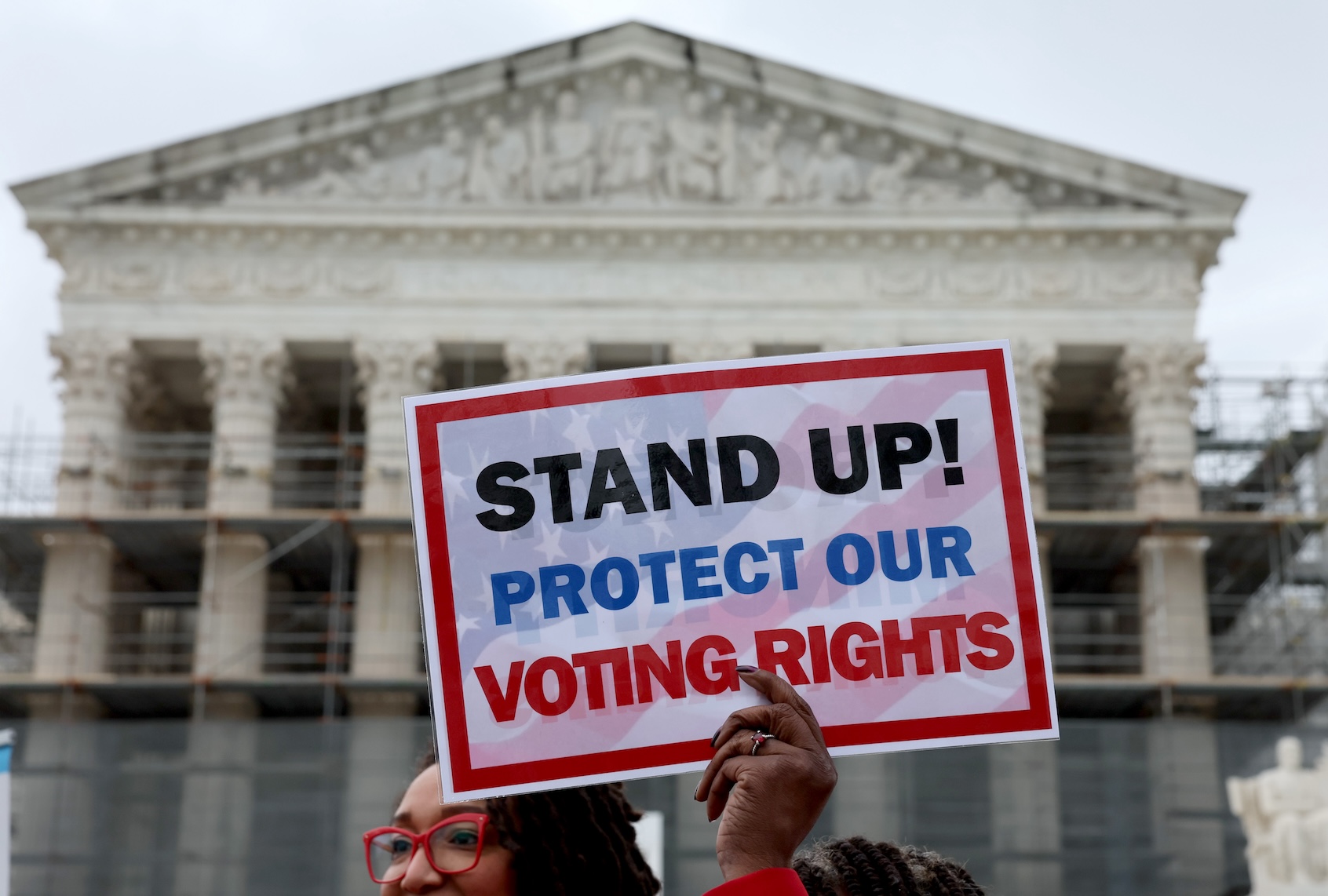
Cover image from salon.com, which was analyzed for this article
The Supreme Court decision in a key voting case could reduce Black representation in multiple districts. Legal experts debate effects on future elections and redistricting.
PoliticalOS
Saturday, May 16, 2026 — Politics
The ruling requires states to justify any predominant use of race in district lines under equal-protection standards. Multiple Southern states are already revising maps at congressional, state, and local levels. The extent of any reduction in majority-Black districts will depend on how lower courts apply the new precedent in pending cases.
What outlets missed
The Court’s opinion centered on whether race was the predominant factor in Louisiana’s map without adequate justification under equal-protection doctrine, not a wholesale rewrite of Section 2 standards. No outlet detailed the vote breakdown or the narrow tailoring analysis that formed the core of the holding. Local election impacts in counties such as DeSoto, Mississippi, received little attention despite their direct connection to ongoing Section 2 litigation. The decision’s potential interaction with state constitutional limits on redistricting was omitted entirely.
Supreme Court Ends Forced Racial Gerrymandering With Callais Ruling
The Supreme Court has delivered a long overdue correction to the Voting Rights Act by raising the bar for claims of racial discrimination in district maps. In Louisiana v. Callais, the justices rejected the old standard that treated any map without enough minority majority districts as suspect. States no longer face automatic pressure to engineer voting lines around skin color to satisfy federal demands.
The decision arrives as Republican led states in the South move to redraw districts ahead of the midterms. Critics from the left immediately warned of lost Black representation, but that claim rests on the assumption that voters of one race must be packed into specific districts to have a voice. This approach turned elections into a racial head count rather than a contest of ideas and candidates.
Louisiana provided the clearest example. Previous maps created districts explicitly designed to guarantee Black majorities in certain areas. The Court found that such race conscious line drawing went beyond what Section 2 of the Voting Rights Act requires. Going forward, plaintiffs must show clear evidence of intentional discrimination rather than simply pointing to election results that do not match demographic percentages.
Local elections stand to feel the change first. City councils, school boards, and state legislatures across the region have long operated under the same rules that rewarded the creation of majority minority seats. Removing that requirement lets map drawers focus on compact, community based districts instead of stretching lines to capture enough minority voters. The result is fewer oddly shaped districts built solely for racial balance.
Democrats and civil rights groups argue the ruling will lock minority voters out of power. Yet this view treats Black Americans as a monolithic bloc that can only succeed when given safe seats. In practice, candidates who appeal across racial lines have won in diverse districts for years. The Callais standard simply stops courts from demanding race as the primary factor in every map.
Republican states now have room to draw lines that reflect actual population shifts without constant federal second guessing. This restores some measure of state authority over elections, an area the Constitution assigns to legislatures rather than judges or advocacy groups. Past enforcement of the Voting Rights Act often produced the opposite outcome, with courts effectively dictating outcomes to match activist preferences.
The broader pattern fits a consistent judicial turn away from race based remedies. After the end of race conscious college admissions and corporate diversity mandates, the Court has applied similar logic to voting. Equal protection under the law does not require proportional results for every demographic group. Treating voters as individuals rather than racial categories aligns with the original text of the Fifteenth Amendment.
Opponents will continue to frame the decision as an attack on minority rights. That language has become routine whenever any policy moves away from explicit racial preferences. The data from states that already adopted color blind maps shows minority candidates remain competitive when they build broad support. The Callais ruling simply removes the thumb on the scale that forced racial sorting in the first place.
You just read America First's take. Want to read what actually happened?
More in Politics

Trump at 32% Approval as Gas Prices Test GOP Midterm Hopes
NYT/Siena polling showed Trump's approval at historic lows around 32 percent with Democrats leading by double digits in key districts. Early voting has surged in battleground states.

Record Early Voting Hits Battlegrounds, Shifting Partisan Shares
AP analysis found hundreds of thousands more early ballots than in 2022 in states including Texas, Ohio, Kansas, Maine, and North Carolina, shifting partisan dynamics.

Trump Backs Marshall in Kansas Senate Race Tightened by Farm Costs
President Trump rallied in deep-red Kansas for GOP Sen. Roger Marshall in a competitive race, announcing an $8 billion farm fuel relief program amid high diesel prices. Democrats see an opening to end 94 years of GOP dominance in the state.

Trump Pauses Russia Sanctions Amid Ukraine Tensions and Missile Strikes
Trump waived sanctions on Russia and floated trilateral talks with Putin and Xi as part of ending the Ukraine war, while tensions rose with Zelenskyy over Starlink and arms. Bipartisan senators engaged Zelenskyy amid the shifts.
The Compass
You just read five takes on one story.
What's your take? Find your political shape in a few minutes.
Take the test