
SCOTUS Redistricting Ruling Prompts Map Redraws in South
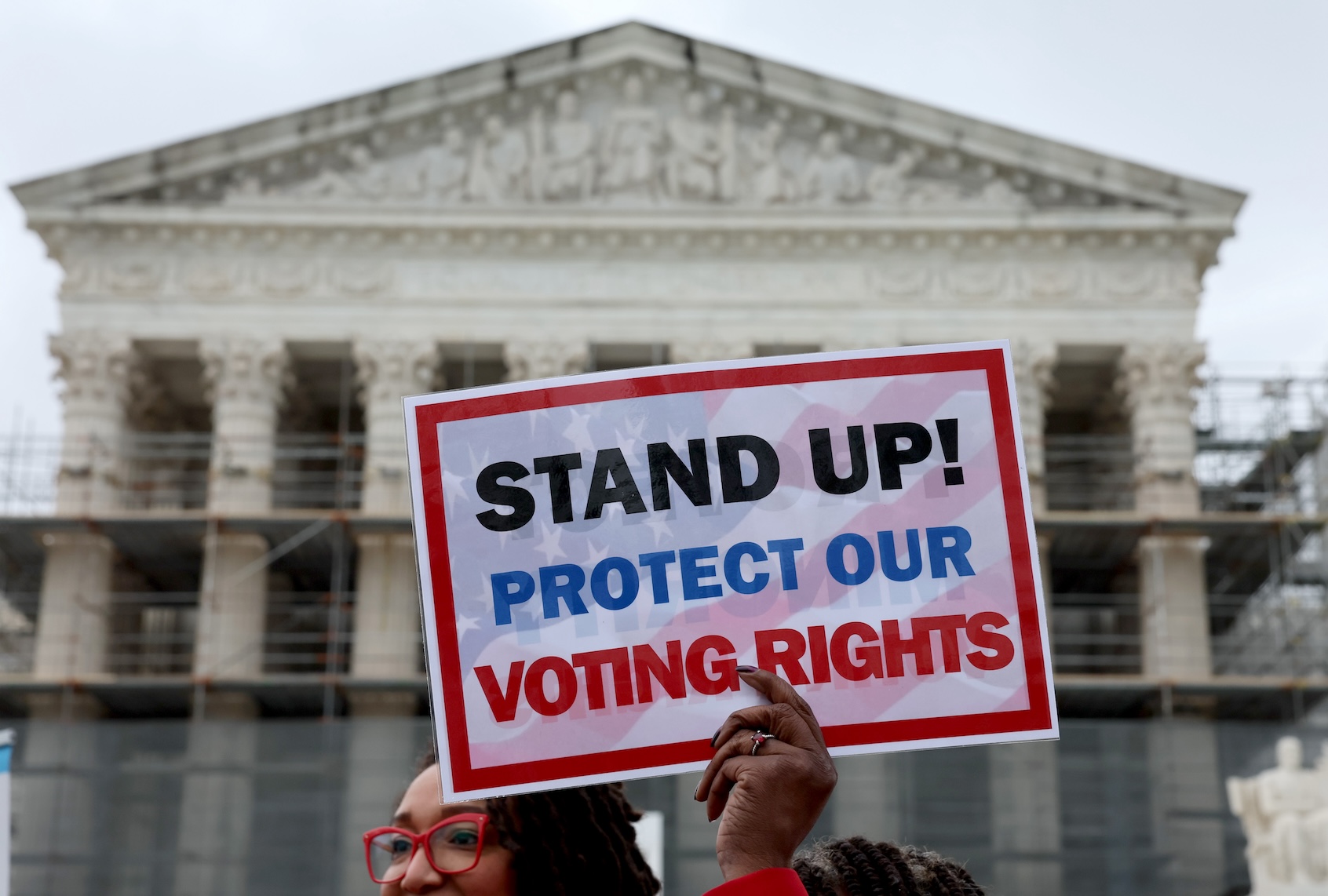
Cover image from salon.com, which was analyzed for this article
The Supreme Court decision in a key voting case could reduce Black representation in multiple districts. Legal experts debate effects on future elections and redistricting.
PoliticalOS
Saturday, May 16, 2026 — Politics
The ruling requires states to justify any predominant use of race in district lines under equal-protection standards. Multiple Southern states are already revising maps at congressional, state, and local levels. The extent of any reduction in majority-Black districts will depend on how lower courts apply the new precedent in pending cases.
What outlets missed
The Court’s opinion centered on whether race was the predominant factor in Louisiana’s map without adequate justification under equal-protection doctrine, not a wholesale rewrite of Section 2 standards. No outlet detailed the vote breakdown or the narrow tailoring analysis that formed the core of the holding. Local election impacts in counties such as DeSoto, Mississippi, received little attention despite their direct connection to ongoing Section 2 litigation. The decision’s potential interaction with state constitutional limits on redistricting was omitted entirely.
Supreme Court Voting Rights Ruling Paves Way for Reduced Minority Representation in Southern Governments
The Supreme Court’s decision in Louisiana v. Callais has altered the legal standard for challenging electoral maps under Section 2 of the Voting Rights Act, requiring plaintiffs to meet a higher bar when demonstrating that district lines dilute minority voting power. The change has prompted Republican-led states in the South to pause some local elections and redraw maps, a move that civil rights groups say will reduce the number of districts where Black voters form a majority.
In Louisiana, state officials have already moved to adjust congressional and state legislative boundaries. Similar steps are under consideration in Alabama, Georgia, and Mississippi. The new standard shifts focus from the overall effect of a map on minority voters to a narrower test centered on intent and specific forms of discrimination, making successful challenges more difficult according to voting rights lawyers.
Local elections stand to feel the effects first. School boards, county commissions, and city councils often operate with smaller districts that have allowed Black voters to elect candidates of choice in recent decades. Redrawing those lines without the previous level of Section 2 protection could consolidate minority populations into fewer districts or spread them across majority-white ones, lowering the total number of seats held by Black representatives. Data from the Census Bureau shows that Black residents comprise roughly 32 percent of Louisiana’s population and higher shares in several other Southern states, yet their share of elected offices at the local level has grown only modestly since the 2010s.
Republican strategists argue the ruling restores a color-blind approach to redistricting and prevents courts from engaging in racial balancing. They point to recent election results in which Black candidates have won in districts that are not majority-Black, suggesting that the prior maps overemphasized race at the expense of other community interests. Democratic officials and advocacy groups counter that the decision removes a key safeguard against maps that predictably disadvantage minority voters, especially in states where one party controls the legislature and the governor’s office.
The ripple effects extend beyond any single election cycle. With state governments gaining greater latitude to design districts, the party in power can create structural advantages that persist for a decade or longer. Academic studies of previous redistricting cycles indicate that even modest reductions in minority-opportunity districts can shift the partisan balance of state legislatures by several seats, altering committee control and the fate of legislation on issues from education funding to criminal justice.
Civil rights organizations have urged lower courts to apply the new standard narrowly while exploring alternative legal avenues, including challenges under state constitutions. Some analysts expect renewed litigation focused on proving discriminatory intent through legislative records or expert testimony on voting patterns. Others note that turnout and coalition-building strategies may become more important for minority voters seeking representation in newly configured districts.
The decision arrives as states prepare for the 2026 midterms and subsequent redistricting rounds. Its full impact will depend on how lower courts interpret the revised evidentiary requirements and whether Congress considers statutory responses. For now, the ruling has accelerated map-drawing activity in several states and left advocates for expanded minority representation assessing a narrower set of legal tools.
You just read Liberal's take. Want to read what actually happened?
More in Politics
Trump at 32% Approval as Gas Prices Test GOP Midterm Hopes
NYT/Siena polling showed Trump's approval at historic lows around 32 percent with Democrats leading by double digits in key districts. Early voting has surged in battleground states.

Record Early Voting Hits Battlegrounds, Shifting Partisan Shares
AP analysis found hundreds of thousands more early ballots than in 2022 in states including Texas, Ohio, Kansas, Maine, and North Carolina, shifting partisan dynamics.

Trump Backs Marshall in Kansas Senate Race Tightened by Farm Costs
President Trump rallied in deep-red Kansas for GOP Sen. Roger Marshall in a competitive race, announcing an $8 billion farm fuel relief program amid high diesel prices. Democrats see an opening to end 94 years of GOP dominance in the state.

Trump Pauses Russia Sanctions Amid Ukraine Tensions and Missile Strikes
Trump waived sanctions on Russia and floated trilateral talks with Putin and Xi as part of ending the Ukraine war, while tensions rose with Zelenskyy over Starlink and arms. Bipartisan senators engaged Zelenskyy amid the shifts.
The Compass
You just read five takes on one story.
What's your take? Find your political shape in a few minutes.
Take the test