
Supreme Court Tightens Voting Rights Proof Standard, Reshaping Maps
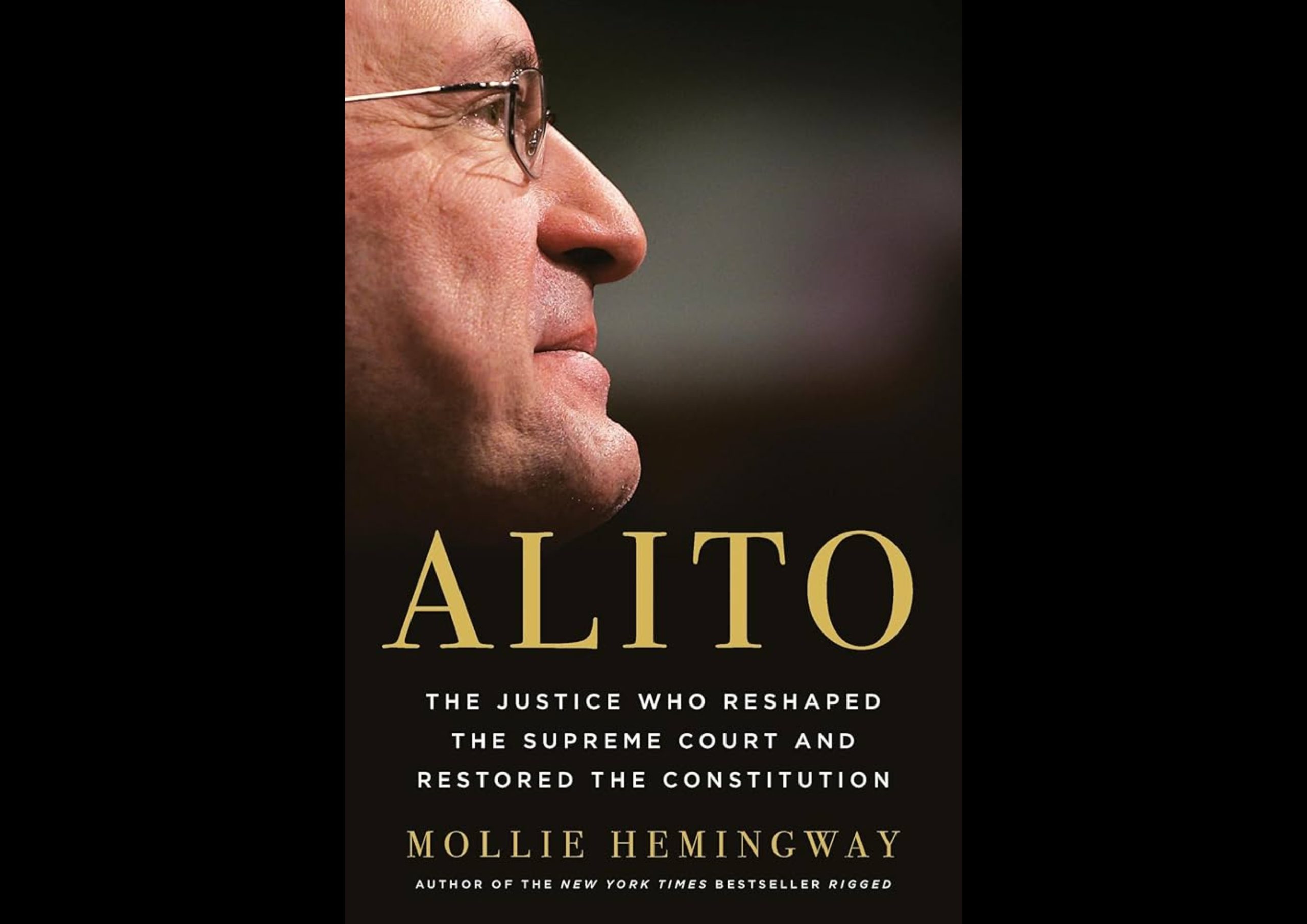
Cover image from freebeacon.com, which was analyzed for this article
The Supreme Court's voting rights ruling reveals a deep clash over racism's role in America, with critics arguing the court overly trusts the nation not to be racist. Justice Alito emphasized substantive matters in his approach.
PoliticalOS
Sunday, May 3, 2026 — Politics
The Supreme Court has raised the bar for proving racial discrimination in redistricting, requiring evidence that race predominated and that mapmakers acted with discriminatory intent. This 6-3 decision in Louisiana v. Callais does not eliminate the Voting Rights Act but limits race-based district drawing that violates equal protection principles. The central unresolved question is whether measurable increases in Black voter participation reflect genuine progress or mask subtler barriers that remain difficult to prove in court.
What outlets missed
Most coverage omitted that the challengers in Louisiana v. Callais were non-Black voters arguing the second majority-Black district violated the 14th Amendment by making race the predominant factor over traditional redistricting criteria such as compactness and communities of interest. The ruling did not invalidate Section 2 of the Voting Rights Act itself; it applied an intent-plus-effects standard to one specific irregularly shaped map. Analyses also underplayed Alito's detailed discussion of Black voter turnout data from recent presidential elections, which he presented as evidence of substantive progress even while acknowledging historical barriers. Coverage further downplayed the 2019 Rucho v. Common Cause precedent that removed federal courts from policing partisan gerrymanders, making the race-versus-party entanglement harder to adjudicate. Finally, few outlets noted that Louisiana legislators drew the challenged map under prior court pressure, creating a feedback loop the Supreme Court sought to end.
Supreme Court Ruling Reflects Alito’s Textual Approach to Voting Rights Act
WASHINGTON — The Supreme Court on Wednesday clarified the evidentiary standard for claims of racial discrimination in legislative redistricting, requiring plaintiffs to show intentional disadvantage to a racial group rather than relying primarily on statistical outcomes that could arise from ordinary partisan map drawing. The 6-3 decision in Louisiana v. Callais leaves Section 2 of the Voting Rights Act intact but limits its application in ways that recognize the profound changes in American political life since 1965.
Justice Samuel Alito wrote the majority opinion. He emphasized that courts must distinguish between racial motivation and the routine sorting of voters by political preference, a line that has blurred in recent litigation. The ruling aligns with Alito’s long-standing judicial philosophy, described in Mollie Hemingway’s new biography as “practical originalism.” Hemingway’s book, released this week, portrays the justice as a careful institutionalist who has steadily reshaped the Roberts Court by insisting that constitutional text and historical meaning should guide decisions even when elite opinion demands otherwise. That approach was on display here. The majority rejected the view that any disparity in racial voting patterns must trigger judicial intervention absent clear evidence of discriminatory purpose.
The case involved Louisiana’s congressional map, which features one majority-Black district out of six. Plaintiffs argued that a second such district should have been drawn to reflect the state’s Black population share. Lower courts had sided with them under an expansive reading of the Voting Rights Act. Alito’s opinion holds that such claims now require proof that race, rather than politics, drove the mapmakers’ choices. Without that showing, federal judges may not redraw maps to achieve proportional racial outcomes.
Justice Elena Kagan dissented sharply for the three liberal justices. She argued that the majority’s intent requirement would prove “well-nigh impossible” to satisfy in modern politics, where overt racism has largely vanished from public discourse. Kagan suggested that discrimination has simply grown more sophisticated, hiding behind neutral-sounding criteria. The dissent echoed a broader critique that America cannot yet be trusted to manage its electoral rules without constant federal supervision.
That pessimism contrasts with the historical record the majority implicitly recognized. When Congress passed the Voting Rights Act in 1965, Southern Democrats such as Mississippi Senator James Eastland and Alabama Governor George Wallace openly championed racial segregation. Those attitudes produced literacy tests, poll taxes, and outright violence that kept Black voter registration rates in the single digits across much of the Deep South. The Act dismantled those barriers. Black registration and turnout surged. By the early 21st century, Black Americans held mayoral offices, state legislative seats, and congressional seats throughout the former Confederacy. The nation’s first Black president won two terms with substantial White support.
Hemingway’s account of Alito’s career places this decision in a larger pattern. Republican presidents had appointed eight of the nine justices who decided Planned Parenthood v. Casey in 1992, yet the Court reaffirmed Roe v. Wade’s core holding. The book chronicles repeated disappointments for judicial conservatives until a newer generation of originalist thinkers, including Alito, began insisting on textual fidelity over elite consensus. Alito’s opinions in high-profile cases have often drawn intense criticism, including protests outside his home and threats that required heightened security. Hemingway argues that such pressure tests a justice’s willingness to follow the law where it leads.
The current ruling continues that trajectory. It rejects the assumption that disparate racial results in elections must be presumed unlawful. This stance tracks arguments long advanced by scholars who note that voter behavior reflects a complex mix of education, income, family structure, religion, and policy preferences. Treating every gap as evidence of racism risks turning the Voting Rights Act into a permanent quota system rather than a safeguard against intentional exclusion. Political parties already engage in aggressive map drawing to maximize partisan advantage. Converting those disputes into racial claims has produced an explosion of litigation that threatens to undermine public confidence in electoral outcomes.
Liberal commentators responded predictably. Writing in The Guardian, Jamil Smith suggested the decision rests on a naive faith that the country has transcended its racial past. He recalled the 1901 farewell speech of Rep. George H. White, the last Black member of Congress before a long drought enforced by Jim Crow laws. White predicted that Black Americans would one day return to power “phoenix-like.” They did, but only after the nation confronted unambiguous legal barriers. Smith views the Voting Rights Act as an indispensable constraint on a society still prone to discrimination. The Supreme Court, in his telling, has now removed that constraint based on an overly optimistic reading of social change.
Yet the data since 1965 tell a different story. Black elected officials number in the thousands. Southern legislatures include substantial Black representation. Voter ID laws, once denounced as modern poll taxes, have been implemented in dozens of states with minimal evidence of widespread disenfranchisement. Turnout gaps between racial groups have narrowed in many elections. These trends do not prove racism has disappeared; they do suggest it no longer defines the core machinery of American democracy in the way it once did.
The majority’s demand for intentionality restores an important guardrail. It prevents Section 2 from becoming a roving warrant for federal judges to second-guess every legislative map that fails to maximize minority opportunity districts. Such an approach would effectively constitutionalize racial proportionality, a concept foreign to the 15th Amendment’s text and to the original Voting Rights Act.
Alito, now in his 16th year on the Court and showing no inclination to retire, continues to exert outsized influence. Hemingway’s biography arrives at an opportune moment, illustrating how one justice’s temperament and intellect have helped steer the institution away from results-oriented jurisprudence toward a more modest, evidence-based role. The Louisiana decision exemplifies that method. It acknowledges past sins without allowing them to dictate perpetual remedial rules untethered from actual proof of wrongdoing.
Whether the ruling will reduce racial gerrymandering litigation remains to be seen. Several states face ongoing map challenges. What is clear is that the Court has drawn a clearer line between remedying intentional discrimination and managing political outcomes through race-based presumptions. In doing so, it affirms that American voters and their representatives can, in most cases, be trusted to navigate electoral competition without assuming bad faith at every turn. That trust may be unfashionable in certain quarters, but it reflects a realistic assessment of how far the country has come.
You just read Conservative's take. Want to read what actually happened?
More in Politics

Trump at 32% Approval as Gas Prices Test GOP Midterm Hopes
NYT/Siena polling showed Trump's approval at historic lows around 32 percent with Democrats leading by double digits in key districts. Early voting has surged in battleground states.

Record Early Voting Hits Battlegrounds, Shifting Partisan Shares
AP analysis found hundreds of thousands more early ballots than in 2022 in states including Texas, Ohio, Kansas, Maine, and North Carolina, shifting partisan dynamics.

Trump Backs Marshall in Kansas Senate Race Tightened by Farm Costs
President Trump rallied in deep-red Kansas for GOP Sen. Roger Marshall in a competitive race, announcing an $8 billion farm fuel relief program amid high diesel prices. Democrats see an opening to end 94 years of GOP dominance in the state.

Trump Pauses Russia Sanctions Amid Ukraine Tensions and Missile Strikes
Trump waived sanctions on Russia and floated trilateral talks with Putin and Xi as part of ending the Ukraine war, while tensions rose with Zelenskyy over Starlink and arms. Bipartisan senators engaged Zelenskyy amid the shifts.
The Compass
You just read five takes on one story.
What's your take? Find your political shape in a few minutes.
Take the test