
Supreme Court Tightens Voting Rights Proof Standard, Reshaping Maps
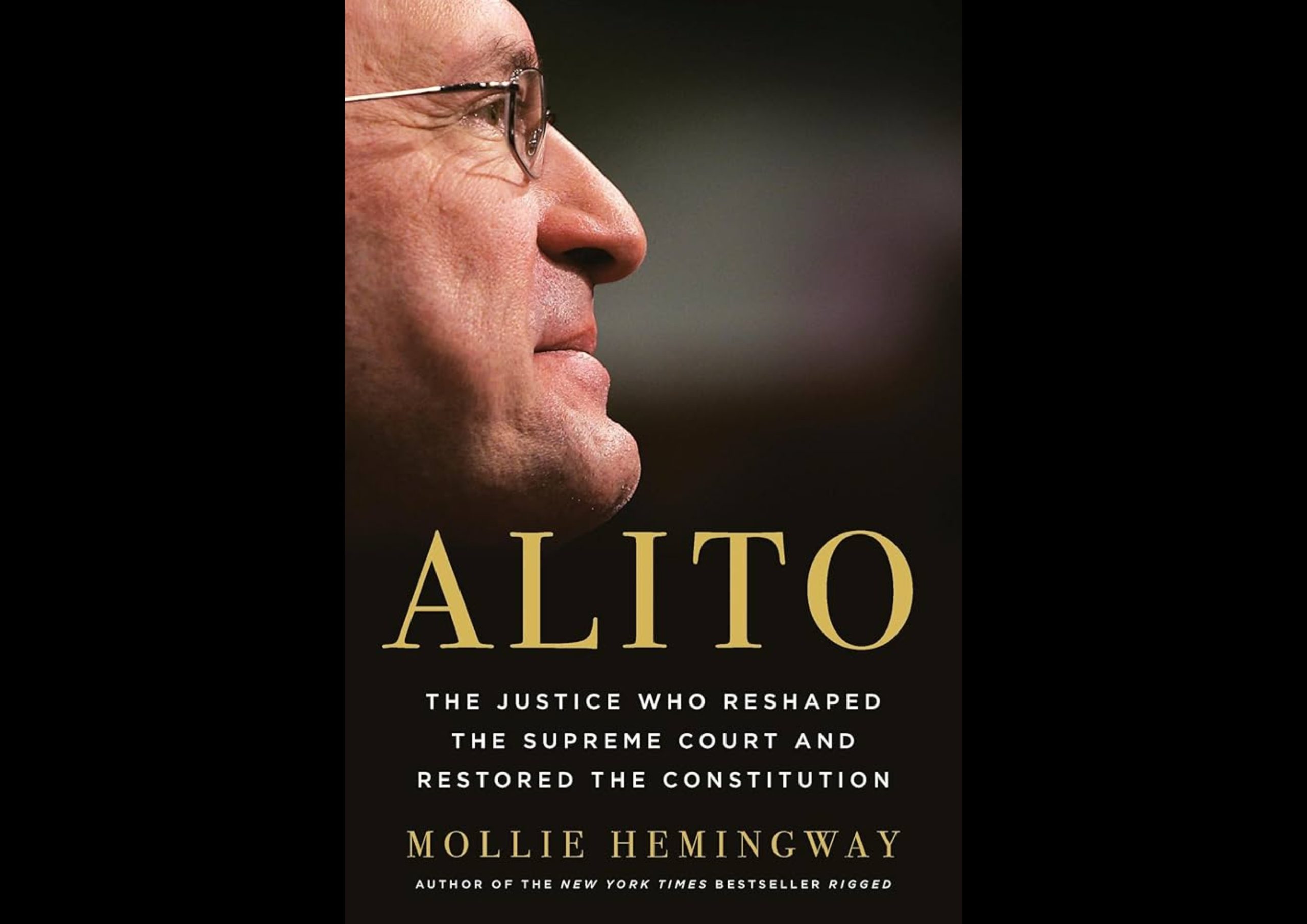
Cover image from freebeacon.com, which was analyzed for this article
The Supreme Court's voting rights ruling reveals a deep clash over racism's role in America, with critics arguing the court overly trusts the nation not to be racist. Justice Alito emphasized substantive matters in his approach.
PoliticalOS
Sunday, May 3, 2026 — Politics
The Supreme Court has raised the bar for proving racial discrimination in redistricting, requiring evidence that race predominated and that mapmakers acted with discriminatory intent. This 6-3 decision in Louisiana v. Callais does not eliminate the Voting Rights Act but limits race-based district drawing that violates equal protection principles. The central unresolved question is whether measurable increases in Black voter participation reflect genuine progress or mask subtler barriers that remain difficult to prove in court.
What outlets missed
Most coverage omitted that the challengers in Louisiana v. Callais were non-Black voters arguing the second majority-Black district violated the 14th Amendment by making race the predominant factor over traditional redistricting criteria such as compactness and communities of interest. The ruling did not invalidate Section 2 of the Voting Rights Act itself; it applied an intent-plus-effects standard to one specific irregularly shaped map. Analyses also underplayed Alito's detailed discussion of Black voter turnout data from recent presidential elections, which he presented as evidence of substantive progress even while acknowledging historical barriers. Coverage further downplayed the 2019 Rucho v. Common Cause precedent that removed federal courts from policing partisan gerrymanders, making the race-versus-party entanglement harder to adjudicate. Finally, few outlets noted that Louisiana legislators drew the challenged map under prior court pressure, creating a feedback loop the Supreme Court sought to end.
Supreme Court Rejects Demands for Racial Gerrymandering in Voting Rights Case
The Supreme Court delivered a firm reminder this week that the Constitution does not require endless racial scorekeeping in American elections. In a 6-3 decision, the justices ruled that challengers attacking legislative maps under the Voting Rights Act must prove intentional discrimination against a racial group rather than simply pointing to outcomes they dislike. The majority opinion, written by a conservative bloc that included Justice Samuel Alito, effectively tightened the standards for federal courts to redraw electoral districts based on race. Liberals reacted with familiar outrage, insisting the ruling proves the Court naively trusts America not to be racist. The dissent, led by Justice Elena Kagan, called the new bar for proof “well-nigh impossible,” suggesting that without aggressive judicial intervention, Black voters will be systematically frozen out of power.
This case, Louisiana v. Callais, centered on whether states must continue drawing districts that prioritize race above traditional criteria like compactness and community interests. The conservative majority concluded that the Voting Rights Act, while still on the books, cannot be twisted into a perpetual mandate for racial engineering. The decision lands at a moment when public fatigue with identity politics is unmistakable. For decades, activists and Democratic map-drawers have used Section 2 of the Act as a blunt instrument to demand majority-minority districts, often producing bizarrely shaped maps that treat voters as demographic blocks rather than citizens with shared concerns. The Court’s message is clear. Overt racism of the Jim Crow era is gone, and the law should reflect that reality instead of assuming yesterday’s pathologies still define American life.
The ruling perfectly captures the jurisprudence of Samuel Alito, the subject of Mollie Hemingway’s new book “Alito. The Justice Who Reshaped the Supreme Court and Restored the Constitution.” Hemingway, a sharp chronicler of institutional battles in Washington, portrays Alito as the steady hand who applies “practical originalism” without regard for elite approval. Unlike previous generations of Republican-appointed justices who wilted under pressure, Alito has shown the fortitude to interpret the Constitution as written even when every major media outlet, law school, and corporate boardroom screams that the sky is falling. Hemingway’s account doubles as both biography and a postmortem on GOP judicial failures. She reminds readers that when the Court reaffirmed abortion rights in Planned Parenthood v. Casey, eight of the nine justices had been appointed by Republican presidents. That history of disappointment makes Alito’s consistency stand out. He does not mistake public relations for judging.
The left’s response to Wednesday’s decision followed a predictable script. In The Guardian, columnist Jamil Smith argued that the six conservative justices naively believe America has “changed so much” that the Voting Rights Act’s special protections are no longer needed. Smith, invoking the painful history of Reconstruction and the Selma marches, insists the country cannot be trusted to protect Black voting rights without constant federal oversight. The New York Times framed the case as a “clash over the reality of racism,” suggesting that while politicians no longer utter the crude slurs of George Wallace or James Eastland, discrimination has simply gone underground, hiding inside normal partisan map-drawing. Both outlets portray the ruling as a retreat from hard-won civil rights rather than a recognition that times have changed.
Yet the data and the country’s broader trajectory tell a different story. Black voter registration and turnout in the South have soared since 1965. Black elected officials serve at every level of government. Interracial marriage is commonplace. Corporate America falls over itself to celebrate diversity. The notion that subtle racism lurks behind every legislative boundary line has become an all-purpose justification for racial preferences that would have astonished the original sponsors of the Voting Rights Act. Those sponsors sought to end blatant disenfranchisement, not to create a permanent regime of racial gerrymandering that entrenches the very divisions it claims to heal. When courts force states to maximize Black voting strength by carving out safe Democratic seats, they are not advancing colorblind justice. They are institutionalizing race as the central fact of political life.
Alito’s approach, as Hemingway details, rests on a simple proposition. Judges must have the courage to apply the Constitution even when the fashionable institutions demand surrender. The justice has faced protests at his home, leaks from the Court, and relentless media campaigns portraying him as an extremist. None of it has deterred him from asking the basic question at the heart of these cases. Does the text and history of the law support what activists are demanding? Too often the answer has been no, whether on abortion, administrative power, or now racial districting.
The Court’s decision does not eliminate Section 2 of the Voting Rights Act. It simply insists that claims of racial harm must be backed by evidence of intent, not statistical disparities that can be manufactured in countless ways. This returns some measure of authority to elected legislatures and reduces the incentive for perpetual litigation aimed at racial quotas in politics. Democrats who have grown dependent on court-drawn maps to maintain their advantages will now have to persuade actual voters rather than sympathetic judges.
Critics will call this regression. A clearer-eyed view sees it as maturity. America has made remarkable progress since 1965 precisely because it rejected the old system of racial hierarchy. Treating every political disagreement as a potential reincarnation of Bull Connor does not honor that progress. It cheapens it. Justice Alito and his colleagues have signaled that the Constitution’s promise of equal protection applies to all citizens, not just those who can claim historical grievance. In an age of identity obsession, that straightforward principle sounds almost revolutionary. The elites may panic, but most Americans will recognize common sense when they see it.
You just read America First's take. Want to read what actually happened?
More in Politics
Trump at 32% Approval as Gas Prices Test GOP Midterm Hopes
NYT/Siena polling showed Trump's approval at historic lows around 32 percent with Democrats leading by double digits in key districts. Early voting has surged in battleground states.

Record Early Voting Hits Battlegrounds, Shifting Partisan Shares
AP analysis found hundreds of thousands more early ballots than in 2022 in states including Texas, Ohio, Kansas, Maine, and North Carolina, shifting partisan dynamics.
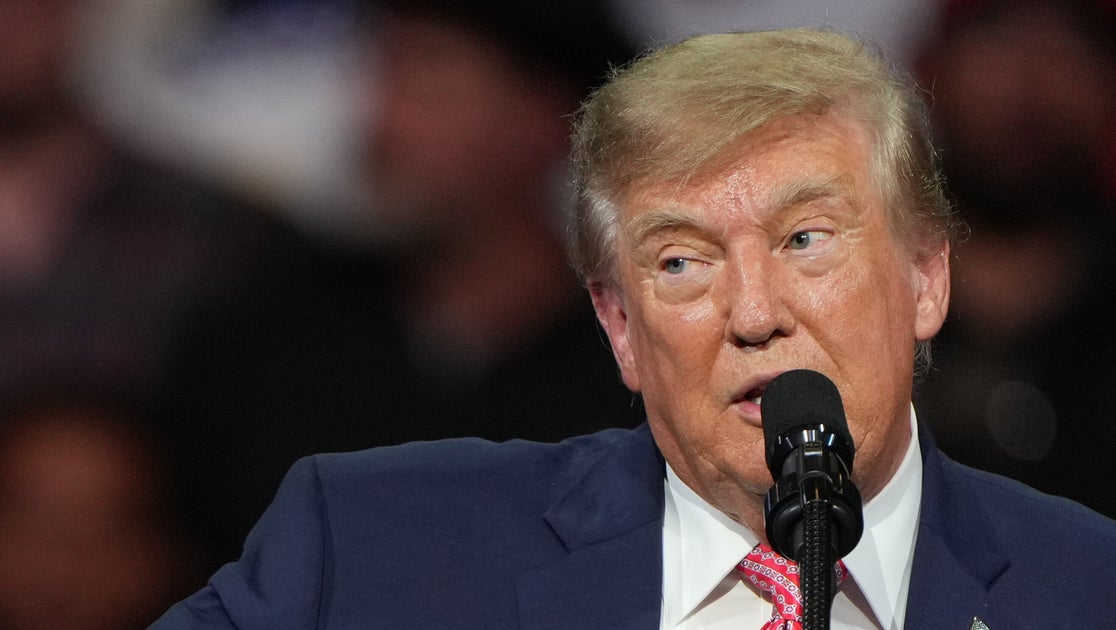
Trump Backs Marshall in Kansas Senate Race Tightened by Farm Costs
President Trump rallied in deep-red Kansas for GOP Sen. Roger Marshall in a competitive race, announcing an $8 billion farm fuel relief program amid high diesel prices. Democrats see an opening to end 94 years of GOP dominance in the state.

Trump Pauses Russia Sanctions Amid Ukraine Tensions and Missile Strikes
Trump waived sanctions on Russia and floated trilateral talks with Putin and Xi as part of ending the Ukraine war, while tensions rose with Zelenskyy over Starlink and arms. Bipartisan senators engaged Zelenskyy amid the shifts.
The Compass
You just read five takes on one story.
What's your take? Find your political shape in a few minutes.
Take the test