
Supreme Court Tightens Voting Rights Proof Standard, Reshaping Maps
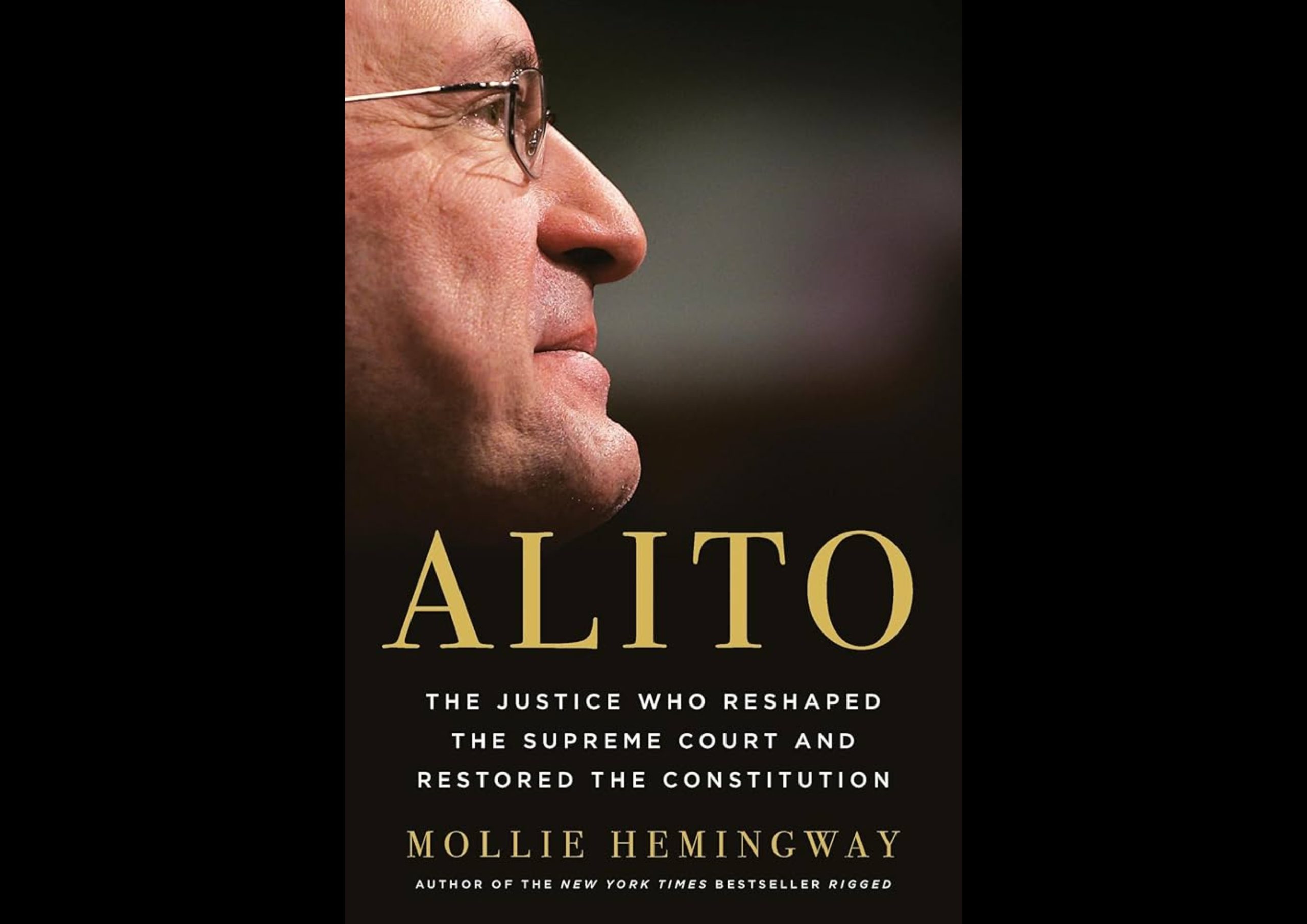
Cover image from freebeacon.com, which was analyzed for this article
The Supreme Court's voting rights ruling reveals a deep clash over racism's role in America, with critics arguing the court overly trusts the nation not to be racist. Justice Alito emphasized substantive matters in his approach.
PoliticalOS
Sunday, May 3, 2026 — Politics
The Supreme Court has raised the bar for proving racial discrimination in redistricting, requiring evidence that race predominated and that mapmakers acted with discriminatory intent. This 6-3 decision in Louisiana v. Callais does not eliminate the Voting Rights Act but limits race-based district drawing that violates equal protection principles. The central unresolved question is whether measurable increases in Black voter participation reflect genuine progress or mask subtler barriers that remain difficult to prove in court.
What outlets missed
Most coverage omitted that the challengers in Louisiana v. Callais were non-Black voters arguing the second majority-Black district violated the 14th Amendment by making race the predominant factor over traditional redistricting criteria such as compactness and communities of interest. The ruling did not invalidate Section 2 of the Voting Rights Act itself; it applied an intent-plus-effects standard to one specific irregularly shaped map. Analyses also underplayed Alito's detailed discussion of Black voter turnout data from recent presidential elections, which he presented as evidence of substantive progress even while acknowledging historical barriers. Coverage further downplayed the 2019 Rucho v. Common Cause precedent that removed federal courts from policing partisan gerrymanders, making the race-versus-party entanglement harder to adjudicate. Finally, few outlets noted that Louisiana legislators drew the challenged map under prior court pressure, creating a feedback loop the Supreme Court sought to end.
Supreme Court Ruling Tests Whether Racism in Voting Has Truly Faded
The Supreme Court on Wednesday narrowed the practical power of the Voting Rights Act, ruling that challenges to electoral maps must clear a high bar of proving intentional racial discrimination rather than relying on evidence of disparate impact. The 6-3 decision in Louisiana v. Callais did not erase Section 2 of the landmark 1965 law, but it significantly weakened its ability to block maps that dilute minority voting strength without an explicit paper trail of bias. Justice Elena Kagan, writing for the liberal dissenters, called the new standard “well-nigh impossible” to meet in an era when politicians rarely announce racist intent.
The majority opinion, authored by Justice Samuel Alito, rests on a core premise: that the country has changed enough since 1965 that the extraordinary remedial powers once needed to overcome Jim Crow no longer fit modern realities. Alito argued that courts must now demand clearer evidence of purposeful racial targeting, distinguishing it from the ordinary partisan wrangling that defines redistricting. The decision reflects a long-standing conservative view that the Voting Rights Act, once a targeted scalpel against overt disenfranchisement, has become an overly broad tool that injects race too deeply into routine electoral mechanics.
That framing sits in tension with the historical record and the lived experience of many Black voters. The law was passed after decades of systematic exclusion, from poll taxes and literacy tests to the outright violence that met civil rights marchers in Selma. As one observer noted, the phoenix-like return of Black political participation came not because the nation spontaneously reformed but because federal power constrained its worst instincts. Wednesday’s ruling removes some of that constraint, betting that overt racism has receded and that remaining disparities are better explained by politics than by race.
This is not an abstract legal dispute. It lands in a nation where voting maps are drawn with sophisticated software that can target demographic clusters with surgical precision. Plaintiffs in these cases often present statistical evidence showing that mapmakers cracked or packed minority communities in ways that consistently weaken their electoral influence. Under the Court’s new rule, such patterns may prove insufficient unless plaintiffs can also unearth smoking-gun evidence of intent, something modern actors have learned to avoid stating aloud.
The decision underscores a deeper philosophical divide on the Roberts Court about the nature of contemporary racism. Conservatives, including Alito, see a country that has made genuine progress and worry that an expansive Voting Rights Act now functions as racial gerrymandering by another name. Liberals counter that the absence of George Wallace-style rhetoric does not mean the absence of discrimination; it simply means discrimination has grown more sophisticated, cloaked in the language of traditional districting principles or partisan advantage. The Court’s conservative majority has now sided decisively with the former view.
The ruling arrives at a moment when Alito’s influence on the Court appears at its zenith. A new biography by Mollie Hemingway, “Alito: The Justice Who Reshaped the Supreme Court and Restored the Constitution,” portrays him as the steady intellectual force behind the Court’s turn toward “practical originalism.” Hemingway argues that Alito has shown the courage to follow the Constitution’s text even when it invites elite condemnation, media storms, and threats of violence. The book recounts the long Republican history of judicial disappointment, from the 1992 Casey decision reaffirming Roe v. Wade, which was handed down by a Court dominated by GOP appointees, to the gradual realization that only justices with Alito’s temperament could be counted on to deliver lasting change.
Hemingway’s account reads like a playbook for the current moment. Where earlier Republican nominees sometimes wilted under institutional pressure, Alito is depicted as willing to overrule flawed precedents and restore what he sees as the proper constitutional order. The Voting Rights Act decision fits this narrative: a methodical narrowing of a statute that, in the conservative view, had drifted beyond its original moorings. Yet the book’s celebration of such “courage” also highlights the stakes. When the Court dismantles tools designed to protect minority voting power, it does so in the name of colorblind constitutionalism, even as evidence of persistent racial polarization in American politics remains abundant.
Kagan’s dissent warned that the majority’s approach will leave racial gerrymandering claims effectively unprovable in all but the rarest cases. That prediction echoes earlier dissents in which she has accused the conservative majority of willfully ignoring social reality. The liberal justices have repeatedly argued that the Court’s decisions on race, from affirmative action to voting rights, assume a post-racial America that does not yet exist.
Whether the country has truly transcended its history of racial exclusion in voting is an empirical question as much as a legal one. The Court has now placed its institutional weight on one side of that debate. By raising the evidentiary bar so high, it has signaled that it trusts state legislatures and mapmakers to police themselves, and trusts the broader electorate to punish overt racial vote suppression at the ballot box. Many Americans, recalling the long struggle that produced the Voting Rights Act in the first place, will see that trust as dangerously naive. The law may remain on the books, but its protective force has been substantially diminished at a time when voting rules remain fiercely contested across the country.
This outcome was not inevitable. It reflects decades of deliberate conservative legal strategy, patient appointments, and a jurisprudence that prioritizes textualism and original meaning over what some justices view as judicially managed racial balancing. Alito has emerged as a central figure in that project. How the rest of American democracy adapts to a Voting Rights Act stripped of some of its former potency will test whether the Court’s confidence in the country’s racial progress is justified, or whether the old constraints were there for a reason.
You just read Liberal's take. Want to read what actually happened?
More in Politics
Trump at 32% Approval as Gas Prices Test GOP Midterm Hopes
NYT/Siena polling showed Trump's approval at historic lows around 32 percent with Democrats leading by double digits in key districts. Early voting has surged in battleground states.

Record Early Voting Hits Battlegrounds, Shifting Partisan Shares
AP analysis found hundreds of thousands more early ballots than in 2022 in states including Texas, Ohio, Kansas, Maine, and North Carolina, shifting partisan dynamics.
Trump Backs Marshall in Kansas Senate Race Tightened by Farm Costs
President Trump rallied in deep-red Kansas for GOP Sen. Roger Marshall in a competitive race, announcing an $8 billion farm fuel relief program amid high diesel prices. Democrats see an opening to end 94 years of GOP dominance in the state.

Trump Pauses Russia Sanctions Amid Ukraine Tensions and Missile Strikes
Trump waived sanctions on Russia and floated trilateral talks with Putin and Xi as part of ending the Ukraine war, while tensions rose with Zelenskyy over Starlink and arms. Bipartisan senators engaged Zelenskyy amid the shifts.
The Compass
You just read five takes on one story.
What's your take? Find your political shape in a few minutes.
Take the test