
Supreme Court Narrows Path for Minority Voting Protections
Cover image from npr.org, which was analyzed for this article
After a key Supreme Court decision, states are exploring state-level voting rights laws and redistricting as alternatives for protecting minority voting access.
PoliticalOS
Friday, June 5, 2026 — Politics
The Supreme Court has curtailed the practical reach of Section 2 of the Voting Rights Act in redistricting disputes. States now pursue narrower alternatives whose effectiveness will vary sharply by partisan control and future litigation. No single approach currently on the table restores the nationwide scope previously available under federal law.
What outlets missed
Neither outlet quoted or summarized the majority’s equal-protection analysis that formed the core of the Callais holding. Alabama officials’ statements defending the practical effects of the retained maps received no direct coverage. The precise statutory language of pending state voting rights bills and the text of the new federal lawsuit against Illinois’ law were omitted, leaving readers without primary documents against which to weigh competing claims.
Supreme Court Decision and Dark Money Surge Weaken Protections for Minority Voters
The U.S. Supreme Court has permitted Alabama to implement a congressional map that a lower court determined intentionally discriminates against Black voters, further eroding federal safeguards under the Voting Rights Act. The ruling in the Louisiana v. Callais case has left minority communities with few viable nationwide tools to challenge racial gerrymandering, particularly in Southern states where voting patterns remain sharply divided along racial lines.
Legal experts say the decision renders Section 2 of the Voting Rights Act, which prohibits voting practices that discriminate on the basis of race, nearly impossible to enforce in practice. Wilfred Codrington III, a constitutional law professor at Yeshiva University's Cardozo School of Law, noted that the bulk of Black Americans reside in former Confederate states, where efforts to limit minority political power have intensified. Remaining options such as state-level voting rights laws or strategic map-drawing in Democratic-led states offer only partial relief and cannot replicate the broad federal protections once available.
New analysis from the progressive watchdog group True North Research reveals how conservative organizations tied to the case received substantial dark money support in the years leading up to the decision. Seven nonprofits linked to President Donald Trump, judicial architect Leonard Leo, or other prominent right-wing figures that filed briefs advocating a narrower interpretation of Section 2 collected nearly 105 million dollars through donor-advised funds between 2021 and 2024. That figure represents a sevenfold increase over the prior three-year period.
The Trump-aligned America First Legal Foundation, co-founded by Stephen Miller and Mark Meadows, alone received more than 58 million dollars during this span. These groups operated amid record inflows of anonymous contributions, raising questions about the influence of wealthy donors on efforts to reshape voting law. Critics argue that such funding streams helped build the legal and institutional pressure that culminated in the Court's recent moves against long-standing civil rights enforcement.
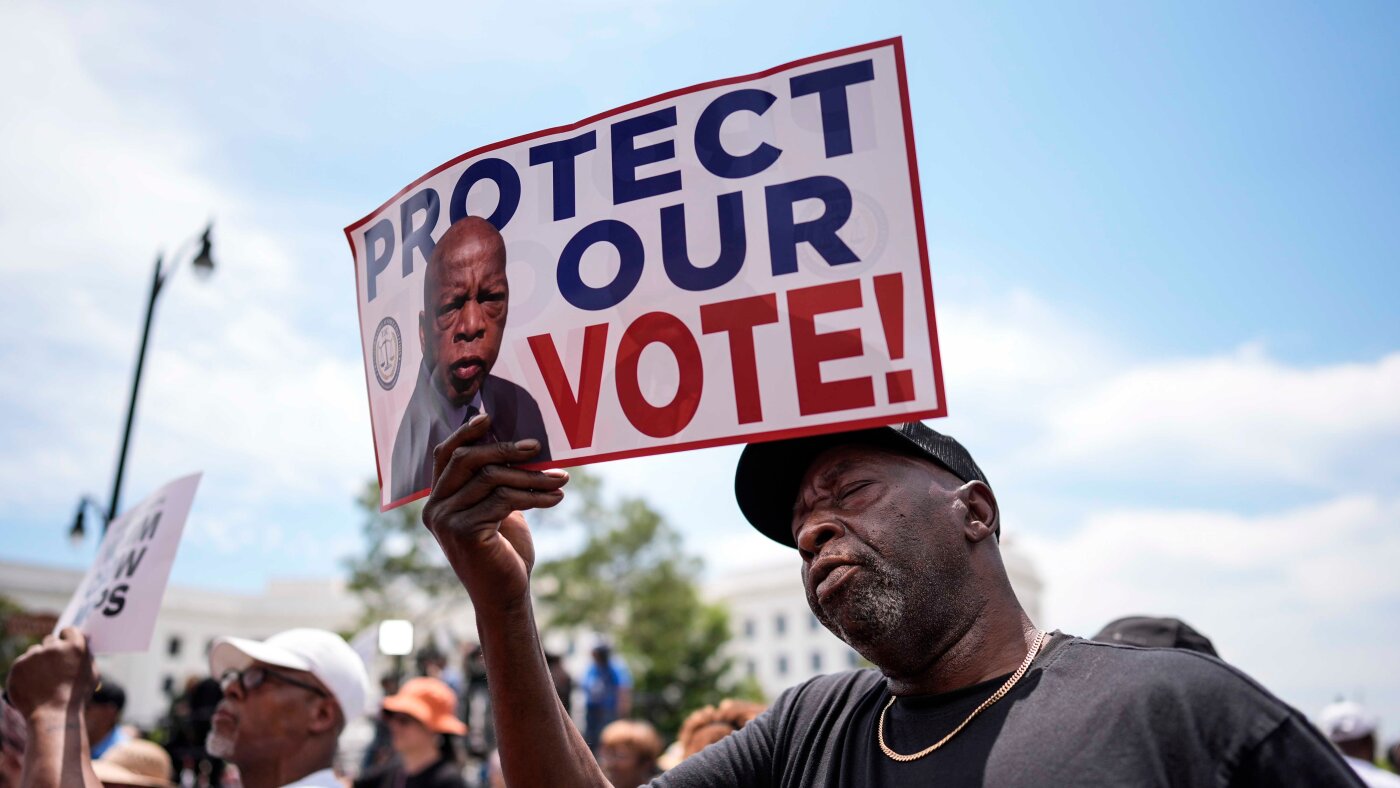
Minority voters now confront heightened barriers in states with Republican-controlled legislatures, where mapmakers have repeatedly drawn districts that dilute Black voting strength. Demonstrations in Alabama following the ruling underscored widespread alarm that the decision accelerates a pattern of retrenchment targeting communities of color. Without robust federal intervention, advocates warn that gains in minority representation achieved over decades could steadily reverse, leaving affected populations with diminished collective voice in Congress and statehouses alike.
You just read Progressive's take. Want to read what actually happened?
More in Politics

Trump Defends Ramaswamy Ad Using Estranged Mother in Ohio Race
President Trump defended a GOP nominee's ad featuring a Democratic opponent's estranged mother, calling it powerful, while drawing criticism from some Republicans including Ohio Gov. Mike DeWine. The ad has sparked internal GOP tensions ahead of midterms.
Federal Raid Targets Omar Amid Unresolved Name and Marriage Allegations
Agents searched Rep. Ilhan Omar's DC residence over immigration fraud allegations; she called it bizarre. Reports and commentary questioned her birth name and past marriage details.

Supreme Court Upholds New Hampshire Student ID Voting Ban
The Supreme Court upheld New Hampshire's ban on student IDs as valid voter identification just before midterms, affecting a tight Senate race.
Early Voting Hits 21 Million as Most Trust Midterm Accuracy
Millions have already voted early as parties make final appeals amid $1.4 billion in ad spending; polls show confidence in election accuracy.
The Compass
You just read five takes on one story.
What's your take? Find your political shape in a few minutes.
Take the test