
Senate Rejects Democrats' Fifth Bid to Limit Trump's Iran War Powers
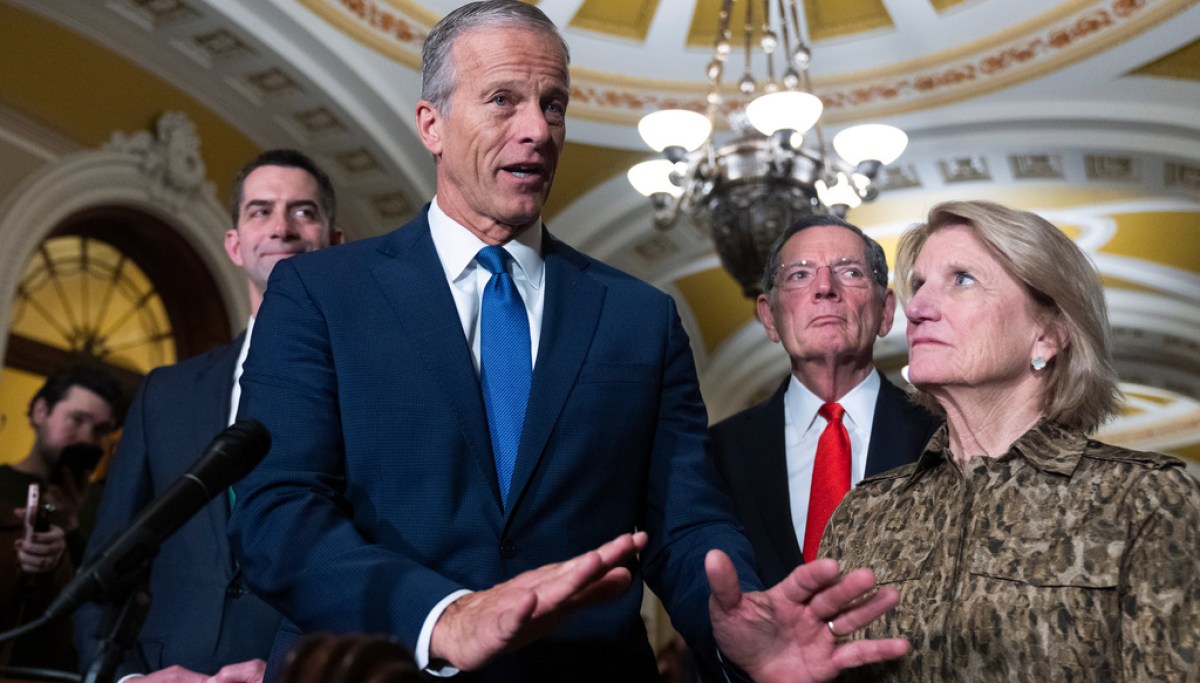
Cover image from washingtonexaminer.com, which was analyzed for this article
Republicans defeated the fifth Democratic attempt to restrict Trump's authority in the Iran conflict, affirming his flexibility. Votes underscore partisan divide on military actions. Ties into broader Hormuz and ceasefire debates.
PoliticalOS
Thursday, April 23, 2026 — Politics
Senate Republicans continue to back President Trump's flexibility to conduct operations against Iran, defeating Democratic resolutions for the fifth time. The 51-46 vote leaves the administration in charge as the War Powers Act 60-day limit nears, even as casualties mount, gas prices rise and cease-fire talks proceed. Readers should understand the constitutional tension remains unresolved along strict partisan lines.
What outlets missed
Most coverage omitted the approaching April 28 deadline under the War Powers Act, which will legally require the administration to obtain congressional authorization or withdraw forces. Reports also underplayed Sen. Lisa Murkowski's role in drafting potential authorizing legislation and her early acknowledgment that Trump should have sought Congress's approval from the start. The full sequence of Iranian retaliatory strikes on U.S. and allied targets after the initial Feb. 28 action received limited attention, as did details on third-party mediation involving Pakistan that preceded the cease-fire extension. Finally, the precise mechanics of Democratic plans for weekly votes and debates to keep the issue alive were rarely explained in full.
Senate Advances Funding for Border Enforcement While Rejecting Limits on Iran Policy
The Senate early Thursday cleared a budget resolution that would enable billions in dedicated funding for Immigration and Customs Enforcement and Customs and Border Protection, moving the Republican-led chamber closer to locking in resources for immigration enforcement through the remainder of President Donald Trump’s term. The 50-48 vote came after an overnight “vote-a-rama” that underscored deep divisions over national priorities at a time when border security and an unresolved conflict with Iran both demand attention.
Only two Republicans, Sens. Rand Paul of Kentucky and Lisa Murkowski of Alaska, opposed the measure. Sens. Chuck Grassley, R-Iowa, and Mark Warner, D-Va., did not vote. The resolution now heads to the House, where its prospects are unclear. If approved, it would open the door to using budget reconciliation to pass actual appropriations, a procedural route Republicans turned to after Democrats blocked straightforward funding bills that did not include stricter operational mandates for the agencies.
The procedural battle consumed much of Wednesday night and Thursday morning. Democrats offered repeated amendments focused on health-care costs rather than immigration. Senate Minority Leader Chuck Schumer criticized the GOP emphasis on border agencies, arguing Congress should address “out-of-pocket costs” instead of devoting “hundreds of billions of dollars into ICE and Border Patrol.” Republicans responded that the real obstacle has been Democratic insistence on attaching policy changes that weaken enforcement. Sen. John Barrasso of Wyoming said current Democrats have become “a rogue and radical party” whose approach amounts to “hostage-taking” on must-pass funding.
The resolution’s passage represents a concrete step toward restoring operational capacity at agencies long strained by record illegal crossings in prior years. ICE and CBP have reported persistent challenges in detention space, technology, and personnel. Supporters argue that predictable funding removes the uncertainty created by repeated short-term funding fights and signals to both smugglers and potential migrants that enforcement is a sustained priority rather than a political football. These practical considerations matter because the downstream costs of uncontrolled migration—welfare expenditures, strain on local services, and lost wages for American workers—have been documented across multiple government audits and academic studies. Securing the border is not an abstraction; it is a prerequisite for any rational immigration policy that distinguishes between legal entrants and those who bypass the system.
Parallel to the budget fight, the Senate again turned back Democratic efforts to constrain Trump’s authority regarding Iran. In a 51-46 vote Wednesday afternoon, senators rejected a war-powers resolution offered by Sen. Tammy Baldwin of Wisconsin that would have directed the removal of U.S. forces from hostilities absent explicit congressional approval. It was the fifth such attempt since early March. Paul again sided with Democrats; Sen. John Fetterman of Pennsylvania voted with Republicans.
Baldwin and Sen. Tammy Duckworth of Illinois described the Iran conflict, now in its eighth week, as “unnecessary, illegal and unwise,” citing the absence of a clear day-after plan and rising costs at home. Yet the votes showed sustained Republican reluctance to tie the president’s hands while fragile cease-fire talks continue. According to reporting by Maggie Haberman of The New York Times, Trump has grown visibly impatient with the war and would prefer to turn to other domestic matters. Haberman noted, however, that “wars are intractable” and that Iranian and Pakistani calculations may not align with the president’s desire for swift resolution. Intermediaries including Jared Kushner, special envoy Steve Witkoff, and Vice President JD Vance remain engaged in indirect diplomacy.
The twin developments illustrate the trade-offs Congress faces. Domestic border enforcement requires steady resources and political will; overseas conflicts require strategic patience and clear objectives. Republicans appear determined to fund the former through reconciliation if necessary, while maintaining flexibility on the latter. Democrats counter that both represent misplaced priorities that ignore pocketbook pressures facing families.
What happens next rests with the House and the negotiations that will shape the final appropriations package. For now, the Senate has established a marker: immigration enforcement agencies will not be left in budgetary limbo, and attempts to legislatively handcuff the commander-in-chief on Iran have so far failed. The outcome reflects a view that effective governance begins with controlling the physical border and preserving the executive’s latitude in national-security crises, even when the two issues compete for the same finite legislative calendar and public attention. How the House responds, and whether reconciliation produces durable policy changes or merely another round of temporary funding, will determine whether this week’s votes translate into measurable results on the ground.
You just read Conservative's take. Want to read what actually happened?
More in Politics
Trump at 32% Approval as Gas Prices Test GOP Midterm Hopes
NYT/Siena polling showed Trump's approval at historic lows around 32 percent with Democrats leading by double digits in key districts. Early voting has surged in battleground states.

Record Early Voting Hits Battlegrounds, Shifting Partisan Shares
AP analysis found hundreds of thousands more early ballots than in 2022 in states including Texas, Ohio, Kansas, Maine, and North Carolina, shifting partisan dynamics.

Trump Backs Marshall in Kansas Senate Race Tightened by Farm Costs
President Trump rallied in deep-red Kansas for GOP Sen. Roger Marshall in a competitive race, announcing an $8 billion farm fuel relief program amid high diesel prices. Democrats see an opening to end 94 years of GOP dominance in the state.

Trump Pauses Russia Sanctions Amid Ukraine Tensions and Missile Strikes
Trump waived sanctions on Russia and floated trilateral talks with Putin and Xi as part of ending the Ukraine war, while tensions rose with Zelenskyy over Starlink and arms. Bipartisan senators engaged Zelenskyy amid the shifts.
The Compass
You just read five takes on one story.
What's your take? Find your political shape in a few minutes.
Take the test