
Senate Rejects Democrats' Fifth Bid to Limit Trump's Iran War Powers
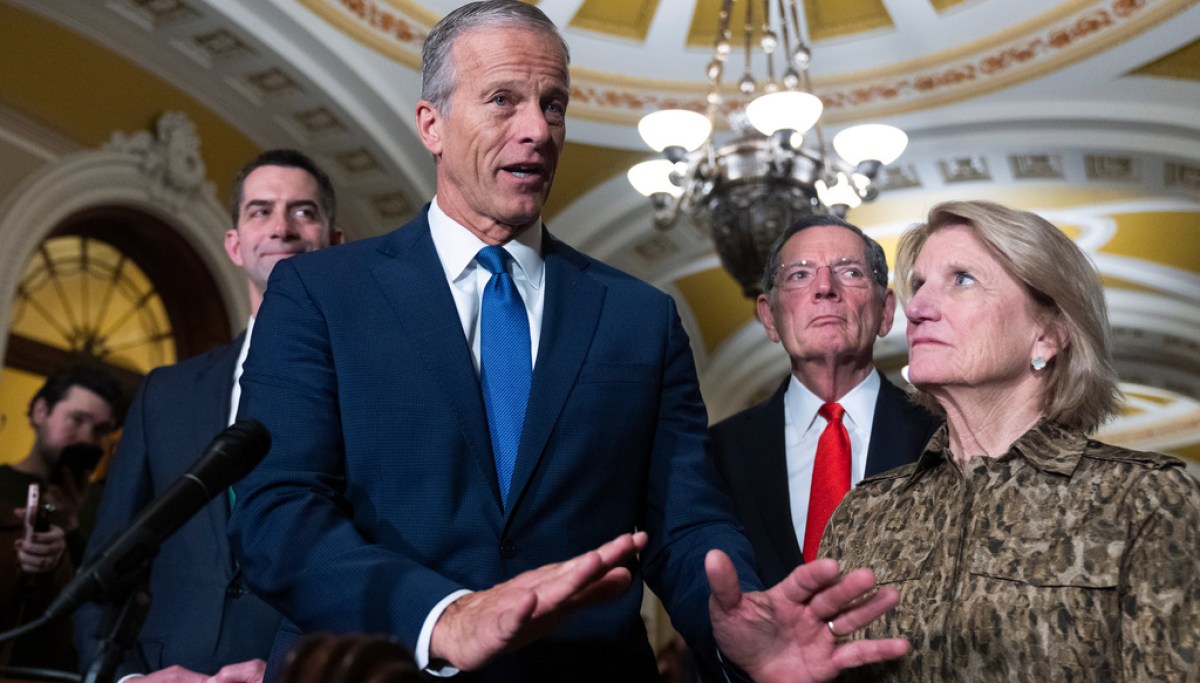
Cover image from washingtonexaminer.com, which was analyzed for this article
Republicans defeated the fifth Democratic attempt to restrict Trump's authority in the Iran conflict, affirming his flexibility. Votes underscore partisan divide on military actions. Ties into broader Hormuz and ceasefire debates.
PoliticalOS
Thursday, April 23, 2026 — Politics
Senate Republicans continue to back President Trump's flexibility to conduct operations against Iran, defeating Democratic resolutions for the fifth time. The 51-46 vote leaves the administration in charge as the War Powers Act 60-day limit nears, even as casualties mount, gas prices rise and cease-fire talks proceed. Readers should understand the constitutional tension remains unresolved along strict partisan lines.
What outlets missed
Most coverage omitted the approaching April 28 deadline under the War Powers Act, which will legally require the administration to obtain congressional authorization or withdraw forces. Reports also underplayed Sen. Lisa Murkowski's role in drafting potential authorizing legislation and her early acknowledgment that Trump should have sought Congress's approval from the start. The full sequence of Iranian retaliatory strikes on U.S. and allied targets after the initial Feb. 28 action received limited attention, as did details on third-party mediation involving Pakistan that preceded the cease-fire extension. Finally, the precise mechanics of Democratic plans for weekly votes and debates to keep the issue alive were rarely explained in full.
Senate Republicans Advance Immigration Funding While Shielding Trump’s Iran War from Congressional Checks
In an overnight session that stretched past 3 a.m., Senate Republicans pushed through a budget resolution that clears the way for billions of dollars in dedicated funding for Immigration and Customs Enforcement and Customs and Border Protection, using the fast-track process of reconciliation to bypass Democratic opposition. The 50-48 vote on the resolution early Thursday marks the first concrete step toward locking in immigration enforcement resources through the remainder of President Donald Trump’s term, even as the administration’s war with Iran enters its second month with no clear exit.
The procedural move, known in Senate parlance as a “vote-a-rama,” consumed the chamber for hours. Democrats offered amendments on unrelated domestic priorities, including measures to address rising health care costs. Senate Minority Leader Chuck Schumer sharply criticized the GOP focus. “Instead of pumping hundreds of billions of dollars into ICE and Border Patrol, Republicans should be working with Democrats to lower out-of-pocket costs,” he said. Republicans countered that Democrats had blocked straightforward funding for the agencies earlier, forcing the use of reconciliation. Senate Majority Whip John Barrasso argued that the real obstacle was “reckless Democrat hostage-taking.”
Sens. Rand Paul of Kentucky and Lisa Murkowski of Alaska broke with their party to vote no. Sens. Chuck Grassley, Republican of Iowa, and Mark Warner, Democrat of Virginia, did not cast votes. The resolution now heads to the House, where its fate is uncertain. If approved in some form, it would allow Republicans to draft actual spending legislation that cannot be filibustered, effectively cutting Democrats out of meaningful negotiations on one of the administration’s signature issues.
The late-night immigration vote came on the same day the Senate, for the fifth time since early March, rejected a Democratic effort to invoke the War Powers Resolution and require congressional approval for continued hostilities with Iran. That measure, offered by Sen. Tammy Baldwin of Wisconsin, failed on a mostly party-line 51-46 vote. Paul again joined Democrats in support. Sen. John Fetterman of Pennsylvania again sided with Republicans. Baldwin called the conflict “unnecessary, illegal and unwise,” noting that Trump had predicted it would end quickly but that it had instead dragged into its eighth week with no resolution in sight.
New York Times reporter Maggie Haberman, appearing on CNN, described Trump as increasingly impatient. “He’s clearly frustrated. He’s voicing that almost every day,” she said. “My sense is the president would like to just be done with this, and he has other things he’d like to focus on. But wars are intractable.” Haberman noted a gap between the president’s public desire to move on and the positions of Iranian and Pakistani interlocutors. Behind-the-scenes efforts involving Jared Kushner, special envoy Steve Witkoff and Vice President JD Vance are continuing, she said, but the path to any diplomatic off-ramp remains unclear.
The juxtaposition of the two sets of votes is striking. While congressional Republicans move aggressively to insulate and fund the administration’s domestic enforcement priorities, they have repeatedly declined to assert Congress’s constitutional role in matters of war. Sen. Tammy Duckworth, a Democrat and combat veteran from Illinois, said the pattern endangers troops and adds to inflationary pressures at home. “This wanna-be dictator keeps” plunging the nation deeper into a war of choice, she said in a statement, arguing that Republicans are shirking their oaths by repeatedly giving Trump a blank check.
The budget resolution itself does not appropriate specific sums, but it sets parameters that Republicans intend to use for roughly $140 billion in additional resources for ICE and CBP. That scale of spending, if realized, would represent a significant expansion of enforcement capacity at a time when the administration has promised large-scale deportations. Democrats have argued that such funding should come with policy guardrails and be balanced against other fiscal pressures, including the health care costs Schumer highlighted. Republicans counter that border security cannot wait and that Democratic demands for reform have simply been obstruction.
The procedural path chosen here echoes the 2017 effort to repeal the Affordable Care Act and the more recent use of reconciliation for other Trump priorities. By design, reconciliation limits debate and amendments, compressing complex policy choices into a single legislative vehicle. That efficiency comes at the cost of deliberation. The result is a Senate that can rapidly advance enforcement funding but appears paralyzed when asked to debate whether the United States should remain in an open-ended military conflict.
What emerges from the overnight session is a portrait of a Congress that is highly functional on partisan priorities and largely absent on questions of war and peace. The Iran conflict has already lasted far longer than the administration’s initial projections, with ripple effects on oil markets, global alliances and domestic prices. At the same time, the immigration funding blueprint signals a multiyear commitment to an enforcement-heavy approach that will shape how the country manages its borders long after the current headlines fade.
Whether the House accepts the Senate’s resolution unchanged or forces further negotiations remains to be seen. What is already clear is that Republicans have positioned themselves to deliver on two central Trump promises: tighter control over immigration and maximum flexibility for the president in foreign conflicts. Democrats, reduced to procedural protests and repeated failed votes on war powers, are left arguing that the national conversation is skewed toward enforcement and military action at the expense of health costs, congressional oversight and strategic coherence. The coming weeks will test whether that imbalance can be corrected or whether the patterns set in this week’s marathon session will define the rest of the Trump era.
You just read Liberal's take. Want to read what actually happened?
More in Politics

Trump at 32% Approval as Gas Prices Test GOP Midterm Hopes
NYT/Siena polling showed Trump's approval at historic lows around 32 percent with Democrats leading by double digits in key districts. Early voting has surged in battleground states.

Record Early Voting Hits Battlegrounds, Shifting Partisan Shares
AP analysis found hundreds of thousands more early ballots than in 2022 in states including Texas, Ohio, Kansas, Maine, and North Carolina, shifting partisan dynamics.

Trump Backs Marshall in Kansas Senate Race Tightened by Farm Costs
President Trump rallied in deep-red Kansas for GOP Sen. Roger Marshall in a competitive race, announcing an $8 billion farm fuel relief program amid high diesel prices. Democrats see an opening to end 94 years of GOP dominance in the state.

Trump Pauses Russia Sanctions Amid Ukraine Tensions and Missile Strikes
Trump waived sanctions on Russia and floated trilateral talks with Putin and Xi as part of ending the Ukraine war, while tensions rose with Zelenskyy over Starlink and arms. Bipartisan senators engaged Zelenskyy amid the shifts.
The Compass
You just read five takes on one story.
What's your take? Find your political shape in a few minutes.
Take the test