
Senate Passes Budget Resolution to Fund ICE, Border Patrol for Trump's Term
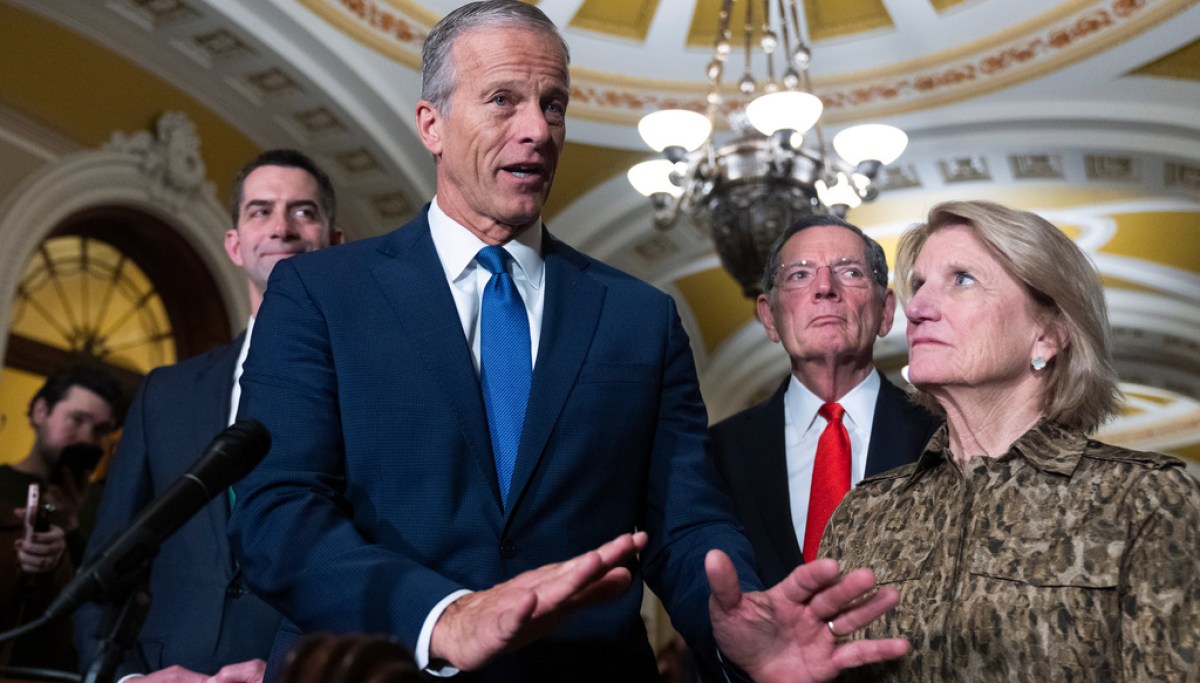
Cover image from washingtonexaminer.com, which was analyzed for this article
The Senate passed a budget resolution after a marathon vote-a-rama, allowing Republicans to fund ICE expansions and Border Patrol without Democratic support via reconciliation. This sets the stage for ongoing immigration enforcement through Trump's term, bypassing opposition attempts. Multiple outlets highlight the partisan maneuver amid spending debates.
PoliticalOS
Thursday, April 23, 2026 — Politics
Senate Republicans have used a budget maneuver to guarantee funding for immigration enforcement agencies through the end of President Trump's term, ending a prolonged partial shutdown of the Department of Homeland Security but deepening partisan rifts. The action came after Democrats refused to support appropriations without new limits on agent conduct following two high-profile deaths during enforcement operations. Readers should understand that reconciliation enables majority rule on spending but carries procedural limits, and the House must still act before any money is actually appropriated.
What outlets missed
Most coverage omitted that the two January deaths occurred during a large-scale Trump administration immigration enforcement operation known as Operation Metro Surge involving thousands of agents. Specifics around each incident, including claims of resistance, vehicle threats or seized weapons, appeared in only a subset of reports and could not be independently verified. Outlets also underplayed internal Republican unease about altering long-term appropriations norms through reconciliation and the fact that last year's tax and spending package had already provided substantial prior funding that sustained partial operations. Few noted the House GOP's explicit sequencing demands or the risk that adding non-germane provisions could trigger Byrd rule challenges. The precise payroll figures and exhaustion timeline cited by DHS officials varied without clear sourcing in several accounts.
Senate Republicans Advance ICE Funding Without Reforms as DHS Shutdown Drags On
Senate Republicans took a significant step early Thursday toward funding Immigration and Customs Enforcement and Customs and Border Protection for the remainder of President Donald Trump's term, using a procedural tool to bypass Democratic opposition and avoid policy changes sought after the fatal shootings of two U.S. citizens by federal agents. The 50-48 vote on a budget resolution came after an overnight "vote-a-rama" that highlighted the deep partisan divide over immigration enforcement and the record-length partial shutdown of the Department of Homeland Security.
The resolution, which passed shortly after 3:30 a.m., authorizes congressional committees to draft legislation providing about $70 billion to keep the two agencies operating for roughly three and a half years. It now heads to the House, where its fate is uncertain, though Republican leaders hope to pair it with a separate bipartisan measure that would reopen the rest of DHS. If successful, the plan would end the shutdown that began in mid-February, the longest partial closure of a major federal department in U.S. history.
Democrats have refused to support funding for ICE and CBP without new accountability measures, including requirements for body cameras on agents, restrictions on raids at sensitive sites like schools and hospitals, and independent oversight of enforcement operations. Their stance hardened after the deaths of two American citizens in incidents involving immigration agents earlier this year, which protesters and civil rights groups described as emblematic of overly aggressive tactics. Republicans dismissed those demands as attempts to "defund" law enforcement and instead turned to budget reconciliation, a process that allows passage with a simple majority and sidesteps the 60-vote filibuster threshold.
Senate Majority Leader John Thune of South Dakota framed the move as essential for national security. "We have a multistep process ahead of us, but at the end Republicans will have helped ensure that America's borders are secure and prevented Democrats from defunding these important agencies," he said. The approach mirrors how Republicans used reconciliation last year to advance Trump's tax and spending cuts without Democratic votes.
Democrats used the overnight session to force votes on amendments highlighting other national priorities, repeatedly trying to insert provisions addressing rising health care costs, prescription drug prices and energy burdens on families. Senate Minority Leader Chuck Schumer of New York accused Republicans of ignoring everyday economic pain. "Instead of pumping hundreds of billions of dollars into ICE and Border Patrol, Republicans should be working with Democrats to lower out-of-pocket costs," he said during the debate.
The vote-a-rama, a marathon of rapid amendments and procedural motions, stretched for about six hours and exposed the messaging priorities of both parties six months before midterm elections. Republicans emphasized border security and painted Democrats as soft on enforcement. Democrats countered that the GOP was prioritizing a costly expansion of agencies that have faced repeated criticism for lack of transparency and instances of excessive force.
Two Republicans, Senators Lisa Murkowski of Alaska and Rand Paul of Kentucky, broke with their party to vote against the resolution. Senators Chuck Grassley, a Republican from Iowa, and Mark Warner, a Democrat from Virginia, did not vote. The narrow margin underscored the procedural complexity ahead. Reconciliation bills must comply with strict rules enforced by the Senate parliamentarian, and the process involves multiple stages of committee drafting, additional amendment votes and potential legal challenges over what qualifies as budgetary.
The $70 billion figure would not only sustain current operations but effectively lock in funding levels through the end of Trump's presidency, giving the administration wide latitude to continue its immigration crackdown. President Trump has set a June 1 deadline for final passage, adding pressure on House Republicans who have so far shown reluctance to move on the Senate's broader DHS funding package until the budget process advances.
This latest maneuver comes after months of failed bipartisan talks. Negotiators had been close to a deal that would have funded all of DHS while including modest reforms, according to sources familiar with the discussions, but talks collapsed over Republican resistance to any limits on enforcement discretion. The resulting shutdown has furloughed thousands of DHS employees, delayed processing at ports of entry and strained other critical functions like disaster response coordination and cybersecurity operations.
Critics from immigrant advocacy groups and some government accountability organizations argue that bypassing reforms after the fatal incidents represents a missed opportunity to address systemic issues within ICE and CBP. Data from prior years shows high rates of complaints involving use of force, and the two recent deaths have reignited calls for independent review boards and greater transparency. Supporters of the Republican approach counter that the agencies are already overburdened and that additional restrictions would hamper their ability to carry out federal law.
The reconciliation path is familiar but rarely used for routine agency funding. Both parties have criticized it when in the minority, yet turned to it when holding power, reflecting the broader erosion of regular order in congressional budgeting. With slim majorities and polarized incentives, procedural workarounds have become the default for must-pass legislation.
What remains unclear is whether House Republicans will accept the Senate resolution as written or demand changes that could further delay resolution of the shutdown. Even if the funding bill ultimately passes, the underlying tensions over immigration enforcement, accountability and congressional dysfunction are likely to persist well beyond this immediate crisis. The episode illustrates how a single policy dispute, amplified by tragedy and partisan incentives, can paralyze large segments of government and force creative but contentious legislative detours.
You just read Liberal's take. Want to read what actually happened?
More in Politics
Trump at 32% Approval as Gas Prices Test GOP Midterm Hopes
NYT/Siena polling showed Trump's approval at historic lows around 32 percent with Democrats leading by double digits in key districts. Early voting has surged in battleground states.

Record Early Voting Hits Battlegrounds, Shifting Partisan Shares
AP analysis found hundreds of thousands more early ballots than in 2022 in states including Texas, Ohio, Kansas, Maine, and North Carolina, shifting partisan dynamics.
Trump Backs Marshall in Kansas Senate Race Tightened by Farm Costs
President Trump rallied in deep-red Kansas for GOP Sen. Roger Marshall in a competitive race, announcing an $8 billion farm fuel relief program amid high diesel prices. Democrats see an opening to end 94 years of GOP dominance in the state.

Trump Pauses Russia Sanctions Amid Ukraine Tensions and Missile Strikes
Trump waived sanctions on Russia and floated trilateral talks with Putin and Xi as part of ending the Ukraine war, while tensions rose with Zelenskyy over Starlink and arms. Bipartisan senators engaged Zelenskyy amid the shifts.
The Compass
You just read five takes on one story.
What's your take? Find your political shape in a few minutes.
Take the test