
Senate Passes $70B Bill Funding ICE and Border Patrol Through 2029

Cover image from npr.org, which was analyzed for this article
The Senate approved a major GOP-backed bill funding ICE and border enforcement through Trump's term, passing after debates over an unrelated settlement fund. The measure marks a legislative win amid internal Republican divisions.
PoliticalOS
Friday, June 5, 2026 — Politics
Republicans secured three years of funding for immigration enforcement agencies using reconciliation after Democrats refused to support the measure without new restrictions. The unrelated settlement fund remained the dominant point of contention inside both parties but did not alter the final outcome.
What outlets missed
Several reports omitted the precise statutory origin of the settlement fund as a May 2026 resolution of Trump v. IRS litigation. Few outlets listed the bill’s line-item allocations, such as $38.6 billion for ICE operations. The 76-day partial shutdown of DHS functions earlier in the year received inconsistent mention across accounts. No outlet independently verified whether the settlement fund remains legally active after Blanche’s testimony.
Senate Republicans pass immigration enforcement funding after marathon vote
The Senate approved a roughly $70 billion package early Friday to fund Immigration and Customs Enforcement and Customs and Border Protection through the end of President Trump's term. The 52-47 vote came after an 18-hour series of amendments that tested Republican unity and highlighted tensions over an unrelated administration proposal for a nearly $1.8 billion settlement fund.
Republicans used budget reconciliation to advance the measure, which requires only a simple majority and sidesteps the usual 60-vote threshold. The funding covers operations at ICE and Border Patrol for three and a half years, with allocations including $38.6 billion for ICE and $22.6 billion for Border Patrol. One Republican, Sen. Lisa Murkowski of Alaska, joined Democrats in opposition, citing concerns about bypassing the regular appropriations process.
The vote-a-rama exposed divisions within the Republican conference that had delayed action for weeks. Democrats had refused to support earlier versions of the spending during negotiations over a broader Department of Homeland Security bill, leading to an extended partial shutdown. Republicans framed their use of reconciliation as a response to that impasse, arguing Democrats had walked away to preserve an election-year issue.
Much of the overnight debate centered on the proposed settlement fund, which originated from an out-of-court resolution of a lawsuit President Trump filed against the government over the 2019 leak of his tax returns. The fund would provide payments to individuals who claim they were politically targeted by federal agencies. Democrats and several Republicans sought to add language blocking or redirecting the money, including an amendment from Sen. Bill Cassidy of Louisiana that would have steered payments toward law enforcement officers injured during the Jan. 6, 2021, Capitol attack. All such efforts failed, with Republicans defeating the proposals on narrow margins.
Acting Attorney General Todd Blanche had told Congress earlier in the week that the Justice Department would not proceed with the fund, a statement Senate Majority Leader John Thune cited as sufficient reassurance. Some Republicans remained uneasy, however, particularly those facing competitive races. Three GOP senators joined Democrats on one amendment targeting the fund, though the measure still fell short.
The package now moves to the House, where consideration could begin next week. The outcome underscores how procedural tools like reconciliation allow majority parties to advance priorities even when internal disagreements persist, while also illustrating the limits of those tools when unrelated controversies intrude on the legislative calendar.
You just read Liberal's take. Want to read what actually happened?
More in Politics
Trump at 32% Approval as Gas Prices Test GOP Midterm Hopes
NYT/Siena polling showed Trump's approval at historic lows around 32 percent with Democrats leading by double digits in key districts. Early voting has surged in battleground states.

Record Early Voting Hits Battlegrounds, Shifting Partisan Shares
AP analysis found hundreds of thousands more early ballots than in 2022 in states including Texas, Ohio, Kansas, Maine, and North Carolina, shifting partisan dynamics.
Trump Backs Marshall in Kansas Senate Race Tightened by Farm Costs
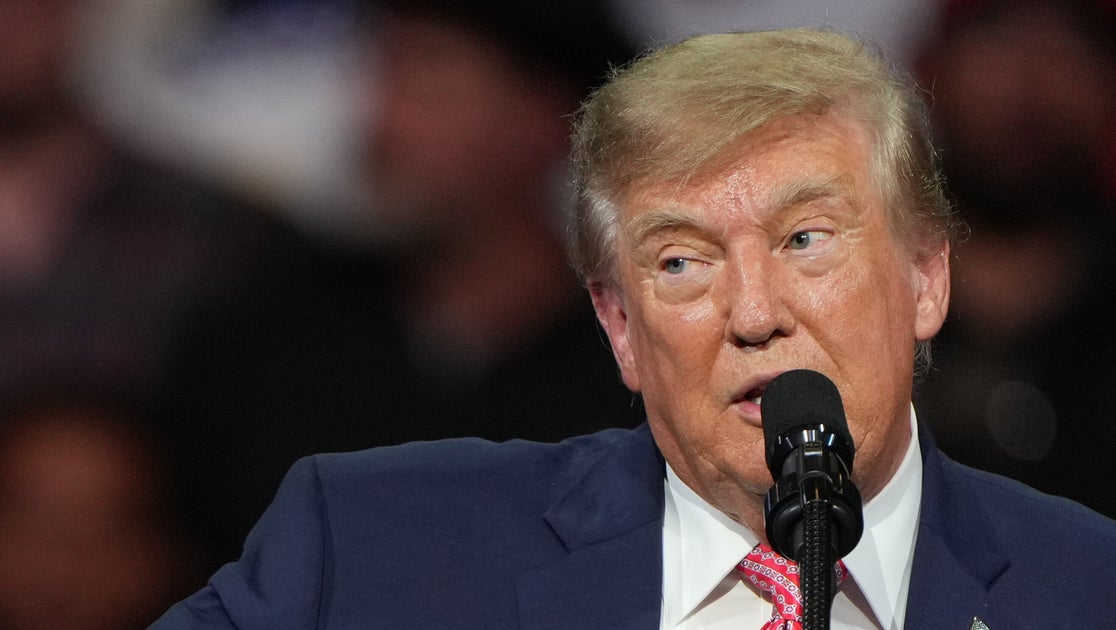
President Trump rallied in deep-red Kansas for GOP Sen. Roger Marshall in a competitive race, announcing an $8 billion farm fuel relief program amid high diesel prices. Democrats see an opening to end 94 years of GOP dominance in the state.

Trump Pauses Russia Sanctions Amid Ukraine Tensions and Missile Strikes
Trump waived sanctions on Russia and floated trilateral talks with Putin and Xi as part of ending the Ukraine war, while tensions rose with Zelenskyy over Starlink and arms. Bipartisan senators engaged Zelenskyy amid the shifts.
The Compass
You just read five takes on one story.
What's your take? Find your political shape in a few minutes.
Take the test