
Senate Votes to Withhold Pay During Future Shutdowns
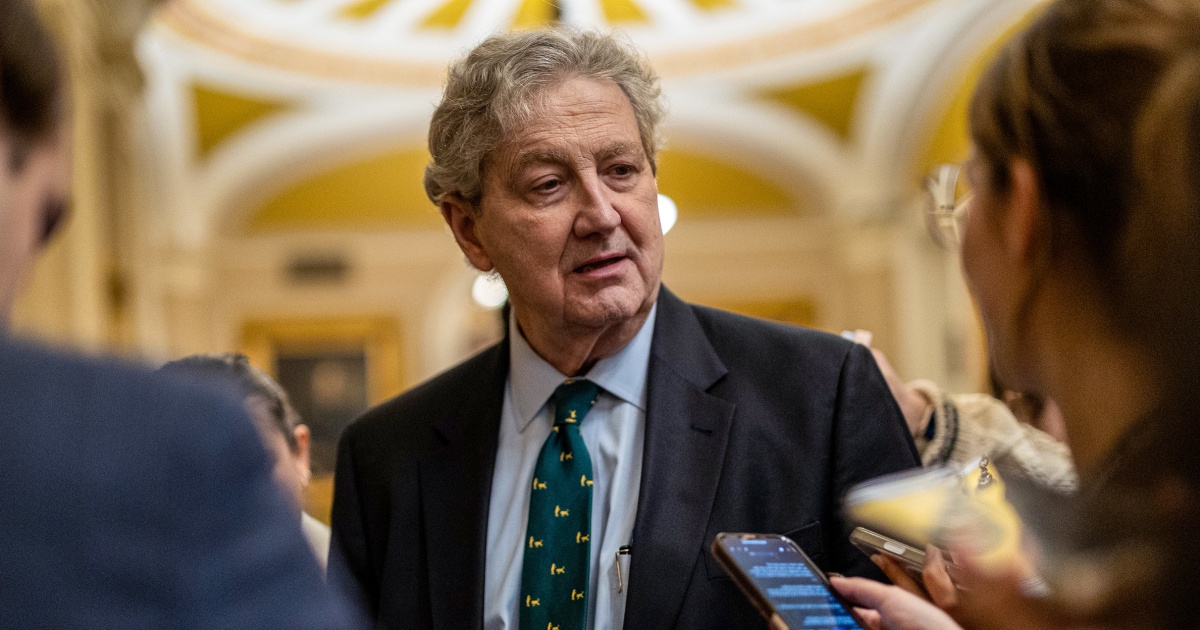
Cover image from nbcnews.com, which was analyzed for this article
Senators passed a bipartisan resolution to withhold their paychecks during future government shutdowns, following historic closures that left workers unpaid. The measure aims to ensure accountability. It passed unanimously.
PoliticalOS
Thursday, May 14, 2026 — Politics
The Senate has adopted a rule that will temporarily withhold its own pay during future shutdowns, yet the measure applies only to senators, begins after the 2026 election, and restores full back pay once funding returns. It creates a symbolic incentive for quicker resolutions without altering the underlying constitutional or procedural realities that produced recent record-length closures.
What outlets missed
Most coverage omitted that the resolution binds only the Senate and leaves House members untouched. Few noted the 27th Amendment forces the post-election start date, turning an apparent delay into a constitutional requirement rather than a choice. Outlets rarely clarified that senators receive full back pay once funding returns, making the measure a temporary deferral identical to the treatment of roughly two million federal workers. Specific triggers for the two recent shutdowns—ACA subsidy extensions in 2025 and immigration-enforcement disputes in 2026—were mentioned only sporadically, leaving readers without the policy disagreements that produced the impasses.
Senate Votes to Withhold Pay From Lawmakers in Future Shutdowns
Senators approved a resolution Thursday that withholds their salaries during any future government shutdown, applying the same financial pressure to lawmakers that federal workers have endured in recent record closures. The measure passed by unanimous consent after clearing a 99-0 procedural vote earlier in the week.
Sponsored by Sen. John Kennedy of Louisiana, the resolution directs the secretary of the Senate to hold lawmakers' compensation in escrow whenever appropriations lapse for one or more agencies. Pay would resume only after funding is restored. It takes effect the day after the November general election and applies solely to the Senate.
Kennedy described the step as necessary shared sacrifice. He noted on the floor that a 43-day full government shutdown last fall was followed three months later by a 76-day partial closure of the Department of Homeland Security. Both episodes left FBI agents, park rangers, CDC scientists, and congressional staff without paychecks. The senator argued that Congress should no longer treat shutdowns as routine tools for resolving disputes.
The recent lapses stemmed from disagreements over health care subsidies and immigration enforcement reforms. Federal employees generally receive back pay once funding resumes, a practice the new resolution extends to senators. Historical precedent under the Constitution has shielded lawmakers from pay interruptions even as other workers went without.
The unanimous support reflects frustration across party lines after shutdowns grew longer and more frequent. Lawmakers have acknowledged that repeated failures to pass appropriations on time shift real costs onto ordinary citizens and public servants. By linking their own compensation to timely budget decisions, the Senate seeks to alter incentives that have allowed funding gaps to persist.
The resolution does not require House approval or presidential signature. Similar ideas have surfaced in prior Congresses without advancing to this stage. Observers note that withholding pay alone may not prevent all future impasses, yet it removes one longstanding asymmetry in which elected officials escaped the direct effects of their own inaction.
Federal workers in affected agencies faced delayed mortgages, postponed medical appointments, and uncertainty over essential services during the recent closures. The new rule ensures senators encounter parallel constraints when negotiations stall. Whether this change reduces the frequency of shutdowns will depend on how future Congresses weigh political objectives against personal financial consequences.
You just read Conservative's take. Want to read what actually happened?
More in Politics

Trump at 32% Approval as Gas Prices Test GOP Midterm Hopes
NYT/Siena polling showed Trump's approval at historic lows around 32 percent with Democrats leading by double digits in key districts. Early voting has surged in battleground states.

Record Early Voting Hits Battlegrounds, Shifting Partisan Shares
AP analysis found hundreds of thousands more early ballots than in 2022 in states including Texas, Ohio, Kansas, Maine, and North Carolina, shifting partisan dynamics.

Trump Backs Marshall in Kansas Senate Race Tightened by Farm Costs
President Trump rallied in deep-red Kansas for GOP Sen. Roger Marshall in a competitive race, announcing an $8 billion farm fuel relief program amid high diesel prices. Democrats see an opening to end 94 years of GOP dominance in the state.

Trump Pauses Russia Sanctions Amid Ukraine Tensions and Missile Strikes
Trump waived sanctions on Russia and floated trilateral talks with Putin and Xi as part of ending the Ukraine war, while tensions rose with Zelenskyy over Starlink and arms. Bipartisan senators engaged Zelenskyy amid the shifts.
The Compass
You just read five takes on one story.
What's your take? Find your political shape in a few minutes.
Take the test