
Rhetoric Blame Game Ignites After Armed Breach at Correspondents' Dinner
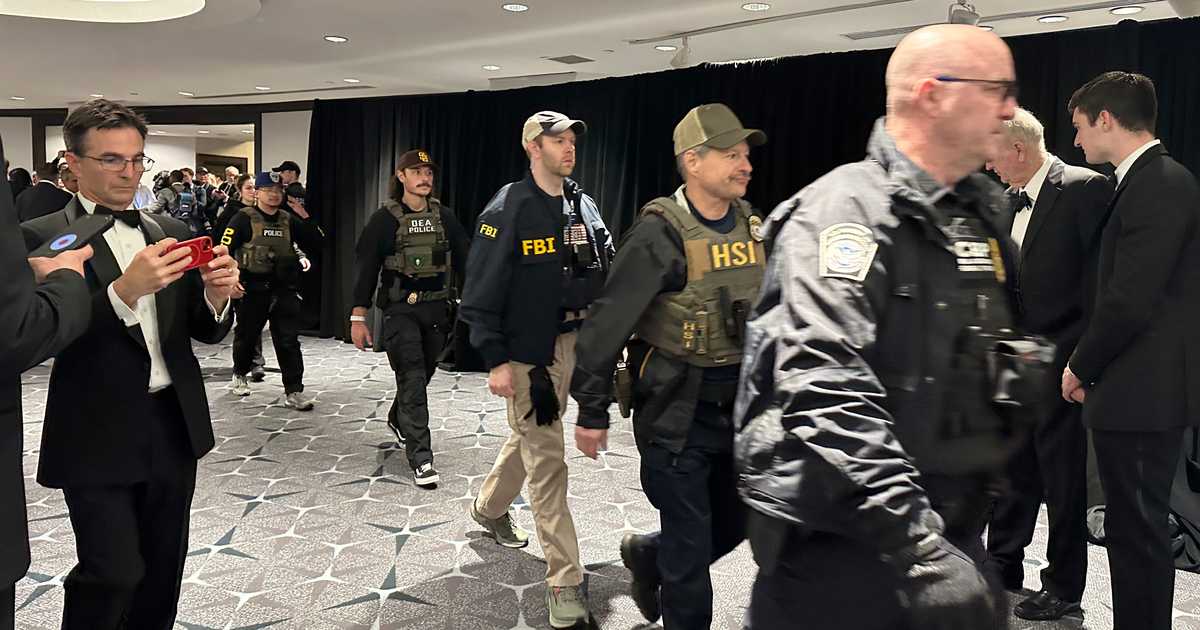
Cover image from townhall.com, which was analyzed for this article
Left-leaning sources slam Fox for blaming media in WHCD shooting coverage; Republicans counter by accusing Democrats of dangerous hate speech. Trump highlights risks amid calls for unity. Rhetoric wars escalate post-incident.
PoliticalOS
Monday, April 27, 2026 — Politics
The armed breach at the Correspondents' Dinner was a real security failure targeting Trump administration figures, yet it immediately became fuel for mutual accusations of dangerous speech rather than a shared examination of security and rhetoric. No outlet established that any single statement caused the attack, but both sides have archives of inflammatory language that each ignores in its own case. Readers should treat partisan claims about motive and blame as starting points for scrutiny, not settled conclusions, especially when key details like the suspect's writings appear in some reporting but not all.
What outlets missed
Multiple outlets underplayed the suspect's cross-aisle background, including his registration as a Republican paired with a donation to Kamala Harris's campaign, details reported by Fox and the LA Times but absent from partisan summaries on both sides. Coverage also gave short shrift to immediate "false flag" and "staged" conspiracy claims that flooded left-leaning platforms like Bluesky right after the breach, which Fox rebutted but others like Politico and Crooks and Liars largely ignored. The precise carve-out in the disputed DHS funding bill, exempting immigration enforcement while funding other operations, received minimal explanation despite Republicans tying it directly to Secret Service strain. Eyewitness context from Fox hosts actually inside the packed ballroom, describing the physical chaos and near-bloodbath risk, was minimized outside conservative coverage.
Republicans Link Media Rhetoric to Assassination Attempt at Correspondents Dinner
The White House Correspondents Dinner has long presented itself as a showcase for the First Amendment and a lighthearted gathering of journalists and officials. This year the event nearly ended in tragedy when a gunman opened fire in an apparent attempt on President Donald Trump's life forcing an early end to the proceedings. Trump according to accounts from those present urged the show to continue but security concerns prevailed. The episode has renewed debate over the connection between heated political language and real world violence with Republicans and conservative commentators arguing that years of inflammatory rhetoric from Democrats and their allies in the media have created a toxic environment.
Fox News analysts on the Sunday edition of Fox and Friends Weekend wasted little time in assigning responsibility. Lawrence Jones who said he spoke with the president afterward described Trump as gracious despite the threat. Jones noted that while the room experienced a brief moment of unity the target was clearly one man not the press corps. He questioned whether news outlets would return to booking the same voices that have escalated rhetoric against conservatives. His co host referenced comments by streamer Hasan Piker who has been given a platform by the New York Times and has suggested it is acceptable to socially murder executives of companies he dislikes. The segment highlighted a tweet from Democratic Representative Marie Gluesenkamp Perez that simply read Please stop trying to murder the president. That statement stood in contrast to more generic condemnations of violence issued by figures like House Minority Leader Hakeem Jeffries.
The Republican National Committee and GOP campaign committees moved quickly to tie the incident to specific Democratic candidates. Official accounts pointed to Michigan Senate hopeful Abdul El Sayed as fueling hate. In Maine they highlighted primary leader Graham Platner whose old Reddit posts from 2018 spoke of violence with a gun as a necessary means to social change. Platner has since disavowed those remarks. North Carolina Senate candidate and former Governor Roy Cooper drew criticism for previously labeling Trump a significant threat to our democracy while staying silent in the immediate hours after the shooting. These moves follow a pattern Republicans established after the two assassination attempts against Trump in 2024. Early calls for unity in those cases gave way to arguments that portraying the former and now current president as an existential danger had lowered the threshold for violence.
This is not the first time such connections have been drawn. Last year's assassination of conservative activist Charlie Kirk prompted similar accusations from Trump and other Republicans who blamed the radical left for cultivating an atmosphere in which opponents are seen not as fellow citizens but as enemies to be eliminated. The shooter at the correspondents dinner appears to fit a growing list of incidents in which political figures or those associated with them have faced direct physical threats. Investigators have not yet released a motive but the pattern of targeting conservatives has become difficult for many on the right to ignore.
A column published in Townhall by Shaun McCutcheon captured the deeper principle at stake. The correspondents dinner is meant to celebrate free speech and the messy exchange of ideas that the First Amendment protects. Yet as McCutcheon observed free speech has never been safe in practice. It demands courage and vigilance. When political disagreement is routinely framed as a battle against evil rather than a contest of ideas the step from words to actions shrinks. The marketplace of ideas functions only when participants do not fear for their lives. Dehumanizing rhetoric whether from cable news panels late night comedy routines or social media influencers contributes to a climate in which unstable individuals feel justified in picking up a weapon.
These observations align with a longstanding truth about human behavior. Incentives matter. When one side of the political spectrum spends years describing the other as a threat to democracy itself it should surprise no one when that language is taken literally by some. Conservatives have argued for decades that culture and ideas have consequences far beyond any single election cycle. The left's tendency to view conservatives as moral monsters rather than people with different policy preferences has coincided with rising threats. From the attempted killings of Trump to the murder of Kirk the body count and the close calls suggest a serious problem.
Democrats for their part have pushed back against what they call a false equivalence. They insist their criticism of Trump is rooted in policy differences and concerns about democratic norms. Yet the specific examples cited by Republicans from equating political opponents with fascists to suggesting certain forms of social punishment are acceptable reveal a rhetorical arms race that shows little sign of slowing. Even some Democrats appear uneasy. The plain language from Representative Gluesenkamp Perez stands out precisely because it cuts through the usual hedging.
As Washington returns to its regular business the shooting at the correspondents dinner will likely fade from headlines. Security will be tightened. Statements of condemnation will be issued. But the underlying question remains whether any meaningful change in tone is possible. The First Amendment protects the right to speak harshly. It does not protect anyone from the consequences when that speech convinces someone else that violence is the only remaining option. In a nation already strained by division the latest incident offers another reminder that words are never just words. They shape the climate in which citizens live and sometimes die.
You just read Conservative's take. Want to read what actually happened?
More in Politics

Trump Defends Ramaswamy Ad Using Estranged Mother in Ohio Race
President Trump defended a GOP nominee's ad featuring a Democratic opponent's estranged mother, calling it powerful, while drawing criticism from some Republicans including Ohio Gov. Mike DeWine. The ad has sparked internal GOP tensions ahead of midterms.
Federal Raid Targets Omar Amid Unresolved Name and Marriage Allegations
Agents searched Rep. Ilhan Omar's DC residence over immigration fraud allegations; she called it bizarre. Reports and commentary questioned her birth name and past marriage details.

Supreme Court Upholds New Hampshire Student ID Voting Ban
The Supreme Court upheld New Hampshire's ban on student IDs as valid voter identification just before midterms, affecting a tight Senate race.
Early Voting Hits 21 Million as Most Trust Midterm Accuracy
Millions have already voted early as parties make final appeals amid $1.4 billion in ad spending; polls show confidence in election accuracy.
The Compass
You just read five takes on one story.
What's your take? Find your political shape in a few minutes.
Take the test