
Rhetoric Blame Game Ignites After Armed Breach at Correspondents' Dinner
Cover image from crooksandliars.com, which was analyzed for this article
Left-leaning sources slam Fox for blaming media in WHCD shooting coverage; Republicans counter by accusing Democrats of dangerous hate speech. Trump highlights risks amid calls for unity. Rhetoric wars escalate post-incident.
PoliticalOS
Monday, April 27, 2026 — Politics
The armed breach at the Correspondents' Dinner was a real security failure targeting Trump administration figures, yet it immediately became fuel for mutual accusations of dangerous speech rather than a shared examination of security and rhetoric. No outlet established that any single statement caused the attack, but both sides have archives of inflammatory language that each ignores in its own case. Readers should treat partisan claims about motive and blame as starting points for scrutiny, not settled conclusions, especially when key details like the suspect's writings appear in some reporting but not all.
What outlets missed
Multiple outlets underplayed the suspect's cross-aisle background, including his registration as a Republican paired with a donation to Kamala Harris's campaign, details reported by Fox and the LA Times but absent from partisan summaries on both sides. Coverage also gave short shrift to immediate "false flag" and "staged" conspiracy claims that flooded left-leaning platforms like Bluesky right after the breach, which Fox rebutted but others like Politico and Crooks and Liars largely ignored. The precise carve-out in the disputed DHS funding bill, exempting immigration enforcement while funding other operations, received minimal explanation despite Republicans tying it directly to Secret Service strain. Eyewitness context from Fox hosts actually inside the packed ballroom, describing the physical chaos and near-bloodbath risk, was minimized outside conservative coverage.
Shooting at Correspondents Dinner Reveals How Poisoned Rhetoric Endangers Everyone
Washington has long treated the White House Correspondents' Dinner as a ritual of managed contempt, an evening when journalists, politicians and celebrities gather to poke at power while pretending the underlying tensions can be contained by wit and cocktails. That pretense came close to shattering this weekend when a gunman opened fire in an apparent attempt on President Donald Trump's life. The president, according to those around him, wanted the show to continue. Security officials made the only responsible call and evacuated the room. What should have been a celebration of the First Amendment became another data point in the country's accelerating slide toward political violence.
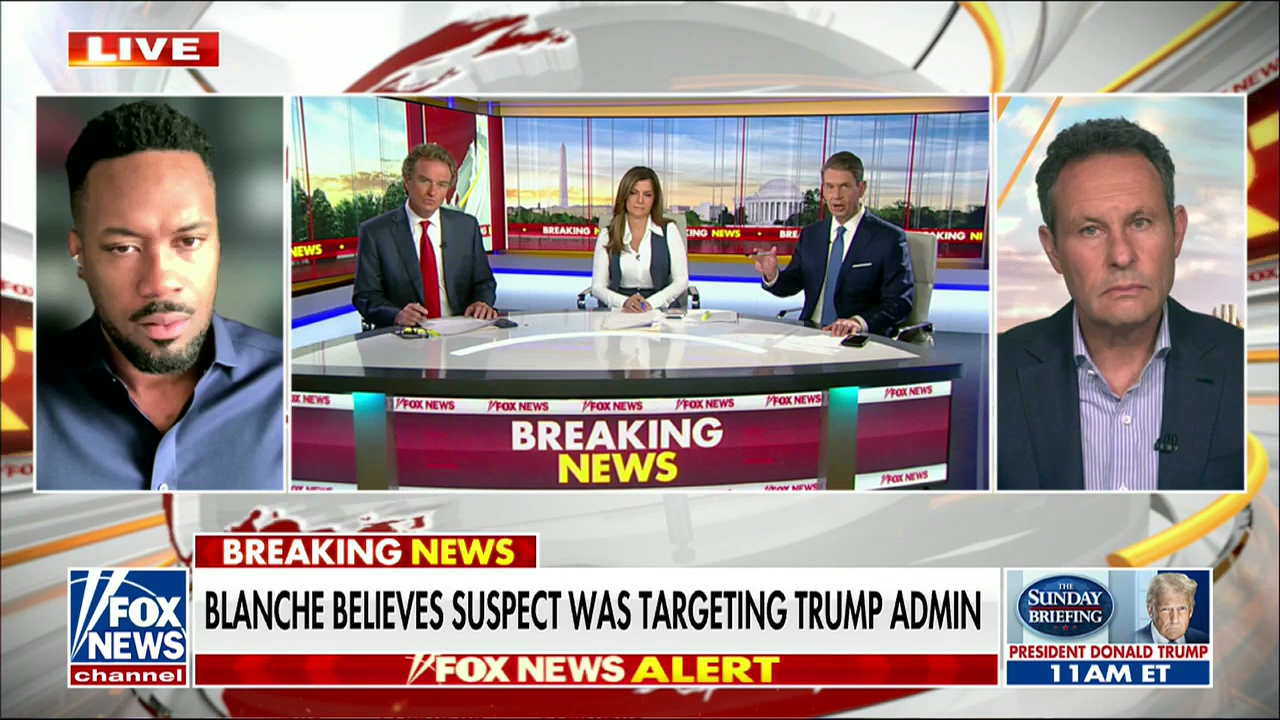
The facts of the shooting itself remain sparse. The gunman was targeting Trump specifically, not the press corps surrounding him. Yet the location mattered. For one brief moment the political class experienced, in physical form, the climate many Americans now accept as background noise. Republican officials and conservative media moved quickly to assign responsibility. Fox & Friends devoted significant time Sunday morning to the idea that mainstream outlets and their guests had helped create the conditions for the attack. Co-host Lawrence Jones spoke with Trump afterward and emerged impressed by the president's graciousness under threat. He then pivoted to the question of what comes next: Would Monday's coverage return to the same voices and frames that, in his view, inflame one side against the other?
The network singled out commentator Hasan Piker for past statements suggesting it was acceptable to "socially murder" corporate executives, a remark given additional platform by a New York Times-affiliated podcast. They noted that only one prominent Democrat, Rep. Marie Gluesenkamp Perez, had issued the blunt statement "Please stop trying to murder the president." Other Democratic leaders condemned violence in general terms, but the right detected a familiar reluctance to grapple with how their own language may contribute to a climate in which assassination attempts feel almost predictable.
Republican campaign committees took the cue. Official accounts targeted Democratic Senate candidates in battleground states, dredging up old statements and tying them directly to the shooting. Michigan progressive Abdul El-Sayed was accused of "fueling this hate." In Maine, Graham Platner faced renewed scrutiny over deleted 2018 Reddit posts that referenced violence as a means of social change, comments he has since disavowed. North Carolina's Roy Cooper was criticized for previously calling Trump a threat to democracy while remaining silent, in the GOP's telling, on this latest attack. The approach mirrors the playbook Republicans adopted after the two 2024 attempts on Trump's life and the 2025 assassination of conservative activist Charlie Kirk. In each case early calls for unity gave way to sustained arguments that Democratic rhetoric, particularly the repeated insistence that Trump endangers the constitutional order, had made violence more likely.
There is no public evidence linking any specific Democratic statement to this weekend's gunman, just as investigators found no clear causal connection between political speech and the 2024 incidents. Yet the broader pattern is hard to dismiss. Political violence has risen across the ideological spectrum. Threats against members of Congress, public health officials, election workers and journalists have become routine. Both sides increasingly describe their opponents not as wrong but as existential dangers. When politics is cast as a struggle between democracy and its destroyers, or between patriots and traitors, the logical next step for unstable individuals can become horrifyingly clear.
Conservative columnist Shaun McCutcheon made a related point in the aftermath. The Correspondents' Dinner is supposed to honor the First Amendment, he wrote, yet free speech has never been safe. It has always required courage and, in an era of loosened norms, vigilance. The "marketplace of ideas" cannot function if participants fear for their physical safety. The dehumanizing language that now dominates cable news, social media and campaign rhetoric shrinks the distance between disagreement and intimidation. When every election is framed as the last one before catastrophe, some people will conclude that extraordinary measures are justified.
Democrats will see Republican attacks as opportunistic, a way to shield Trump from legitimate criticism by labeling it incitement. Republicans will counter that the left spent years describing Trump in apocalyptic terms and cannot now pretend shock when the temperature rises. Both complaints contain truth. The country has normalized a style of politics in which opponents are cast as irredeemable, and the consequences keep arriving in the form of bullets, doxxing, death threats and disrupted public events.
The weekend's events leave little room for easy moralizing. Trump displayed personal bravery. The press corps found itself collateral damage in an attack meant for someone else. Law enforcement prevented what could have been a massacre. Yet the speed with which the tragedy was folded into the existing partisan grudge match suggests the deeper problem will remain untouched. American politics now operates in a feedback loop where violent acts are immediately weaponized rather than collectively mourned, which only accelerates the next act.
The First Amendment protects speech, but it cannot supply the restraint that makes democratic argument possible. That restraint must come from institutions, from leaders, and from a citizenry willing to lower the temperature even when it feels like losing. So far the evidence suggests few are interested in paying that price. The Correspondents' Dinner will happen again next year. The question is whether the country can rediscover the difference between sharp criticism and the kind of rhetoric that makes shootings at political gatherings feel inevitable.
You just read Liberal's take. Want to read what actually happened?
More in Politics

Trump at 32% Approval as Gas Prices Test GOP Midterm Hopes
NYT/Siena polling showed Trump's approval at historic lows around 32 percent with Democrats leading by double digits in key districts. Early voting has surged in battleground states.

Record Early Voting Hits Battlegrounds, Shifting Partisan Shares
AP analysis found hundreds of thousands more early ballots than in 2022 in states including Texas, Ohio, Kansas, Maine, and North Carolina, shifting partisan dynamics.

Trump Backs Marshall in Kansas Senate Race Tightened by Farm Costs
President Trump rallied in deep-red Kansas for GOP Sen. Roger Marshall in a competitive race, announcing an $8 billion farm fuel relief program amid high diesel prices. Democrats see an opening to end 94 years of GOP dominance in the state.

Trump Pauses Russia Sanctions Amid Ukraine Tensions and Missile Strikes
Trump waived sanctions on Russia and floated trilateral talks with Putin and Xi as part of ending the Ukraine war, while tensions rose with Zelenskyy over Starlink and arms. Bipartisan senators engaged Zelenskyy amid the shifts.
The Compass
You just read five takes on one story.
What's your take? Find your political shape in a few minutes.
Take the test