
South Carolina Senate Blocks Redistricting Push Before Primary
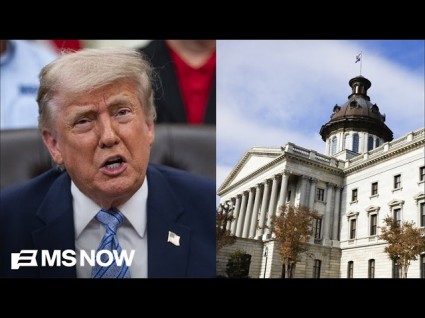
Cover image from crooksandliars.com, which was analyzed for this article
South Carolina lawmakers scrapped a Trump-preferred congressional map, preserving Rep. Jim Clyburn's district and drawing criticism from some Republicans.
PoliticalOS
Wednesday, May 27, 2026 — Politics
The Senate's refusal to redraw lines before the June primary leaves Clyburn's district unchanged for now and highlights a rare instance of Republican resistance to post-VRA redistricting pressure. The decisive factor cited by GOP senators was the practical impossibility of discarding ballots already cast in early voting.
What outlets missed
Neither account supplied the Senate vote margin or the sequence of House passage followed by Senate rejection. Both omitted the explicit warning from Republican senators that altering lines after early voting had started would require discarding thousands of ballots already cast. Coverage also gave limited attention to the internal GOP debate over whether the map risked creating competitive districts rather than safe ones, a calculation described by analysts as a practical rather than purely partisan concern.
Early voting had already begun in South Carolina when the state Senate adjourned without advancing a new congressional map on Tuesday. The decision left the current lines in place for the June primary and preserved the 6th District, the state's only majority-Black seat, represented by Democratic Rep. Jim Clyburn for 34 years.
The proposed changes followed the Supreme Court's ruling that weakened a key Voting Rights Act provision used to protect majority-Black districts. Republican-led states including Georgia and Mississippi have moved to redraw lines in response. In South Carolina the House had approved a new map, but the Senate declined to end debate on it. A motion to invoke cloture failed, and with more than 32,000 early ballots already cast, enough Republican senators refused to proceed.
State Sen. Richard Cash, a Republican, said the start of voting settled the matter for him. "South Carolina citizens are going to the polls today," he said. "And neither my conscience or common sense is going to let me stop an election that is already underway." The Senate then adjourned, postponing further action until after the primary.
Clyburn, who has said he will run again regardless of the lines, attributed the outcome to Republican senators placing constitutional timing rules above external pressure. Several Republican lawmakers cited the same timing conflict. Political observers also noted Clyburn's long record of directing federal funds to the state and his cross-aisle relationships as factors that limited support for the map inside the GOP caucus.
South Carolina Republicans hold a supermajority and had discussed creating seven Republican-leaning districts. Some party activists argued that winning elections entitled them to draw favorable lines. Others warned that concentrating Democratic voters could produce unintended competitive seats elsewhere. The Senate's refusal leaves the state as an outlier among Southern Republican legislatures that have pursued rapid redistricting this cycle. Leaders in Georgia and Mississippi have indicated they intend to revisit their maps before 2028.
More in Politics

Trump at 32% Approval as Gas Prices Test GOP Midterm Hopes
NYT/Siena polling showed Trump's approval at historic lows around 32 percent with Democrats leading by double digits in key districts. Early voting has surged in battleground states.

Record Early Voting Hits Battlegrounds, Shifting Partisan Shares
AP analysis found hundreds of thousands more early ballots than in 2022 in states including Texas, Ohio, Kansas, Maine, and North Carolina, shifting partisan dynamics.

Trump Backs Marshall in Kansas Senate Race Tightened by Farm Costs
President Trump rallied in deep-red Kansas for GOP Sen. Roger Marshall in a competitive race, announcing an $8 billion farm fuel relief program amid high diesel prices. Democrats see an opening to end 94 years of GOP dominance in the state.

Trump Pauses Russia Sanctions Amid Ukraine Tensions and Missile Strikes
Trump waived sanctions on Russia and floated trilateral talks with Putin and Xi as part of ending the Ukraine war, while tensions rose with Zelenskyy over Starlink and arms. Bipartisan senators engaged Zelenskyy amid the shifts.
The Compass
You just read five takes on one story.
What's your take? Find your political shape in a few minutes.
Take the test