
Trump Cuts South Korea Drills Short to Seek Kim Talks
Cover image from foxnews.com, which was analyzed for this article
Joint exercises were shortened at Trump's direction as the US seeks engagement with Kim Jong-un. The move raised questions about alliance commitments and China deterrence. Coverage included both left-leaning analysis of the shift and right-leaning skepticism.
PoliticalOS
Wednesday, August 19, 2026 — Politics
The core unresolved tension is whether shortening live training to facilitate diplomacy with North Korea will preserve alliance readiness or create exploitable gaps. Every outlet confirmed the same schedule change and Trump’s stated rationale; differences lie in which surrounding pressures each chose to emphasize.
What outlets missed
Most coverage omitted the specific figure of roughly 18,000 South Korean troops originally planned and the incorporation of Ukraine-derived tactics on drones and GPS disruption into this year’s schedule. Few noted that this is the first time a drill was curtailed mid-execution rather than scaled in advance planning. The connection between the decision and stalled $350 billion investment talks plus South Korea’s position on Iran operations appeared in only one account and could not be independently verified by other outlets. Bipartisan congressional criticism was mentioned unevenly across reports.
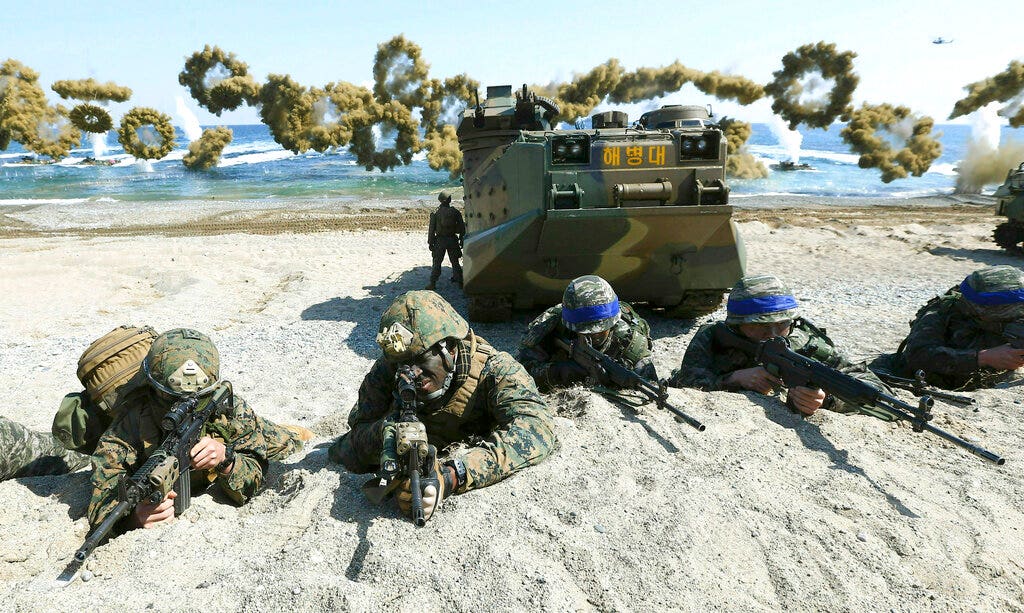
The United States and South Korea shortened their largest annual joint military exercise by nearly a week after President Donald Trump directed the change to reduce costs and ease tensions with North Korea. The Ulchi Freedom Shield drill, which began August 17 and had been set to continue through August 27, now ends August 21, with combined field maneuvers scaled back at the U.S. request, according to statements from South Korea’s Joint Chiefs of Staff and the Pentagon.
The adjustment preserves core command-post training objectives while canceling or converting some live events to simulations, the Pentagon said. South Korean defense officials confirmed the second phase focused on counterattack operations was dropped. Roughly 18,000 South Korean personnel had been scheduled to participate before the reductions.
Trump posted on Truth Social that the drills were expensive and sent an “inappropriate and hostile” signal to Pyongyang, which he described as having been “unthreatening and respectful” during his term. He separately told reporters he maintains a strong personal rapport with North Korean leader Kim Jong Un and that Kim had responded to requests for talks, though no dates were confirmed.
South Korean Foreign Minister Cho Hyun told a parliamentary hearing that neither Seoul nor U.S. officials received advance notice of the directive. The Wall Street Journal reported, citing U.S. officials, that Trump has instructed aides to pursue a meeting with Kim as early as this fall, possibly during the Asia-Pacific Economic Cooperation summit in Shenzhen, China, in November.
North Korea launched two ballistic missiles into the sea days before the exercise began and, through state media, condemned the drills as “frantic exercises” pushing the peninsula toward war while vowing to exercise its “right to self-defence.” Pyongyang did not mention the scaling back or Trump by name.
The drills, conducted since the 1950s armistice, train combined forces on command, logistics, and targeting under a single structure. Analysts at the Asan Institute and Stimson Center noted that abrupt changes risk leaving incoming commanders unfamiliar with procedures and that live-fire components cannot be fully replaced by simulations. The exercise had incorporated lessons from Ukraine on drone use and communications loss.
Trump previously suspended or reduced similar drills during his first term while pursuing summits in Singapore, Hanoi, and at the DMZ. Those efforts ended without a denuclearization agreement after disputes over sanctions relief. South Korean President Lee Jae Myung’s office said it hoped improved personal ties between Trump and Kim could produce “meaningful dialogue.”
Bipartisan members of Congress, including Sens. Mark Kelly, Thom Tillis, and Elissa Slotkin, criticized the move as weakening alliance readiness without reciprocal steps from Pyongyang. The decision also follows reported U.S. frustration over delays in a $350 billion South Korean investment framework and Seoul’s stance on Iran policy.
More in Politics

Federal Agents Search Omar Home in Ongoing Immigration Probe
Homeland Security agents searched the Minnesota Democrat's DC residence in a criminal probe, prompting accusations of political intimidation from Omar and Democratic leaders. Coverage spans left-leaning outlets like NPR, BBC, and The Guardian alongside right-leaning criticism from The Federalist and Daily Wire.

Trump Diesel Import Plan Draws Pushback Over Russia Ties
The weekend agreement drew bipartisan congressional pushback and criticism from Ukraine's Zelenskyy, with analysts downplaying US fuel price impacts. Right-leaning outlets like National Review, Dispatch, and Washington Examiner questioned its legality and effectiveness.

Independents Test Voter Appetite for Middle Ground in 2026 Midterms
Nearly 200 independents are running in competitive races as voters weigh ballot measures on housing costs in states like Massachusetts. Left-leaning coverage from NYT, NPR, and Guardian highlights turnout and key races while right outlets focus on GOP strategy.
Trump Rallies in Alaska, Ohio to Bolster GOP Senate Candidates
The president rallied in Wasilla for Sen. Dan Sullivan and faced empty seats at an Ohio event amid midterm concerns. Outlets across the spectrum covered the trips as signals of GOP vulnerability weeks before Election Day.
The Compass
You just read five takes on one story.
What's your take? Find your political shape in a few minutes.
Take the test