
SpaceX Surpasses Amazon in Market Value After IPO Surge

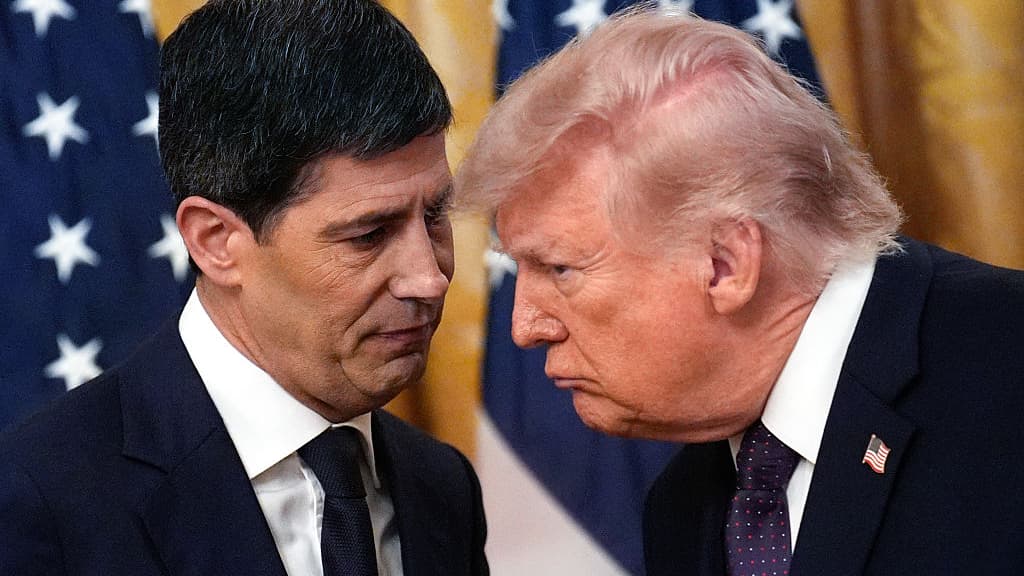
Cover image from investors.com, which was analyzed for this article
SpaceX shares climb past Amazon to become the world's fifth-largest company by market cap, highlighting investor enthusiasm amid broader market moves and AI/tech discussions.
PoliticalOS
Wednesday, June 17, 2026 — Business
SpaceX achieved a rapid valuation overtake of Amazon driven by post-IPO share gains of 50 percent or more, even as the company continues to post substantial losses. The development sits inside a single trading session dominated by anticipation of Federal Reserve policy under a new chairman.
What outlets missed
Coverage did not place the $2.65 trillion valuation in historical context against prior private-market rounds or comparable aerospace peers. No outlet examined how Starlink subscriber growth or launch cadence translated into the revenue projections Musk referenced on social media. The simultaneous Iran-related diplomatic developments and their potential effect on defense spending expectations received only passing mention despite possible relevance to SpaceX's government contracts.
Markets Rise Modestly Ahead of Federal Reserve Policy Announcement
Stock futures pointed higher Wednesday as investors positioned for the Federal Reserve's first interest rate decision under Chairman Kevin Warsh. Contracts tied to the S&P 500 advanced 0.1 percent while Nasdaq-100 futures climbed 0.5 percent. Dow Jones Industrial Average futures held near unchanged levels.
SpaceX shares extended their post-IPO advance, rising more than 3 percent in premarket trading and pushing the company's valuation above Amazon's. The rocket and satellite firm has gained roughly 62 percent since its public debut last week at $135 a share. Its market capitalization reached $2.65 trillion by Tuesday's close, briefly placing it among the four largest U.S. companies by valuation. Investors appear focused on founder Elon Musk's projection of potential revenue approaching $1 trillion by 2030, even as the company recorded a $4.9 billion net loss for 2025 and a further $4.28 billion loss in the first quarter.
Chip stocks also moved higher early, with ASML gaining 4 percent and Intel rising nearly 3 percent. The semiconductor exchange-traded fund SOXQ advanced 2 percent. Asian benchmarks closed mostly firmer, led by Japan's Nikkei 225, which reached a fresh record with a 0.72 percent gain. South Korea's Kospi rose 1.58 percent while mainland China's CSI 300 added nearly 1 percent. Europe's Stoxx 600 index edged up 0.3 percent.
The Federal Open Market Committee is scheduled to announce its decision at 2 p.m. Eastern time, followed by Warsh's press conference at 2:30 p.m. Market pricing indicates expectations that the target range for the federal funds rate will remain at 3.5 to 3.75 percent. Analysts note that Warsh may withhold a formal rate projection in the quarterly "dot plot," leaving future policy direction less explicitly telegraphed than in prior cycles.
Tuesday's session ended mixed after the Dow Jones Industrial Average crossed 52,000 for the first time. The S&P 500 and Nasdaq declined modestly. Observers have attributed recent price action to shifting assessments of monetary restraint and corporate earnings prospects rather than any single policy signal.
SpaceX's rapid revaluation illustrates how equity prices aggregate dispersed information about future cash flows and technological execution. The company's dominance in reusable launch systems and satellite broadband has drawn capital on the basis of demonstrated launch cadence and subscriber growth, not regulatory guarantees. At the same time, sustained losses underscore that current valuations rest on expectations of eventual profitability scaling with expanded operations.
Warsh inherits an institution whose repeated interventions have lengthened the lag between policy actions and observable economic adjustments. Historical patterns suggest that forward guidance and asset purchases can distort price signals that entrepreneurs rely upon to allocate resources. Market participants will therefore scrutinize any remarks on balance-sheet policy or inflation targets for clues about whether the new leadership intends to narrow or perpetuate those distortions.
Overseas equity performance reflected local earnings trends and currency movements more than immediate U.S. policy spillovers. Japan's index milestone coincided with steady corporate profit growth, while Hong Kong's modest decline aligned with property-sector concerns. European gains remained contained amid mixed manufacturing data.
Wednesday's premarket activity shows continued rotation toward companies viewed as possessing scalable technology platforms. Whether those valuations compress or expand will depend less on any single central-bank statement than on subsequent evidence that revenues and margins are closing the gap with current market capitalizations.
You just read Conservative's take. Want to read what actually happened?
More in Business & Economy
Fed Raises Rates 0.25 Points to Fight Inflation Despite Trump Pushback
The Federal Reserve hiked its benchmark rate by 0.25 points in a unanimous vote, its first since 2023, to combat inflation tied to energy shocks. President Trump publicly attacked the decision and called for cuts weeks before midterms.

Stocks Rise, Oil Drops Below $104 After Fed Hike
Stocks pointed higher after the rate hike while Treasury yields eased and oil retreated below $104. Generac shares surged on a data center deal.

Treasury yields hit 19-year high as oil tops $107 on Saudi strikes
The 10-year Treasury yield reached its highest level since 2007 near 5% as oil prices climbed above $100 on Middle East tensions. Markets are pricing in Fed rate hikes and inflation concerns.

Fed rate hike odds climb as inflation lingers from energy shocks
The Federal Reserve hiked its benchmark rate by 0.25 points in a unanimous vote, its first since 2023, to combat inflation tied to energy shocks. President Trump publicly attacked the decision and called for cuts weeks before midterms.
The Compass
You just read five takes on one story.
What's your take? Find your political shape in a few minutes.
Take the test