
Falcon 9 Stage to Strike Moon at 2:35 a.m. ET Wednesday
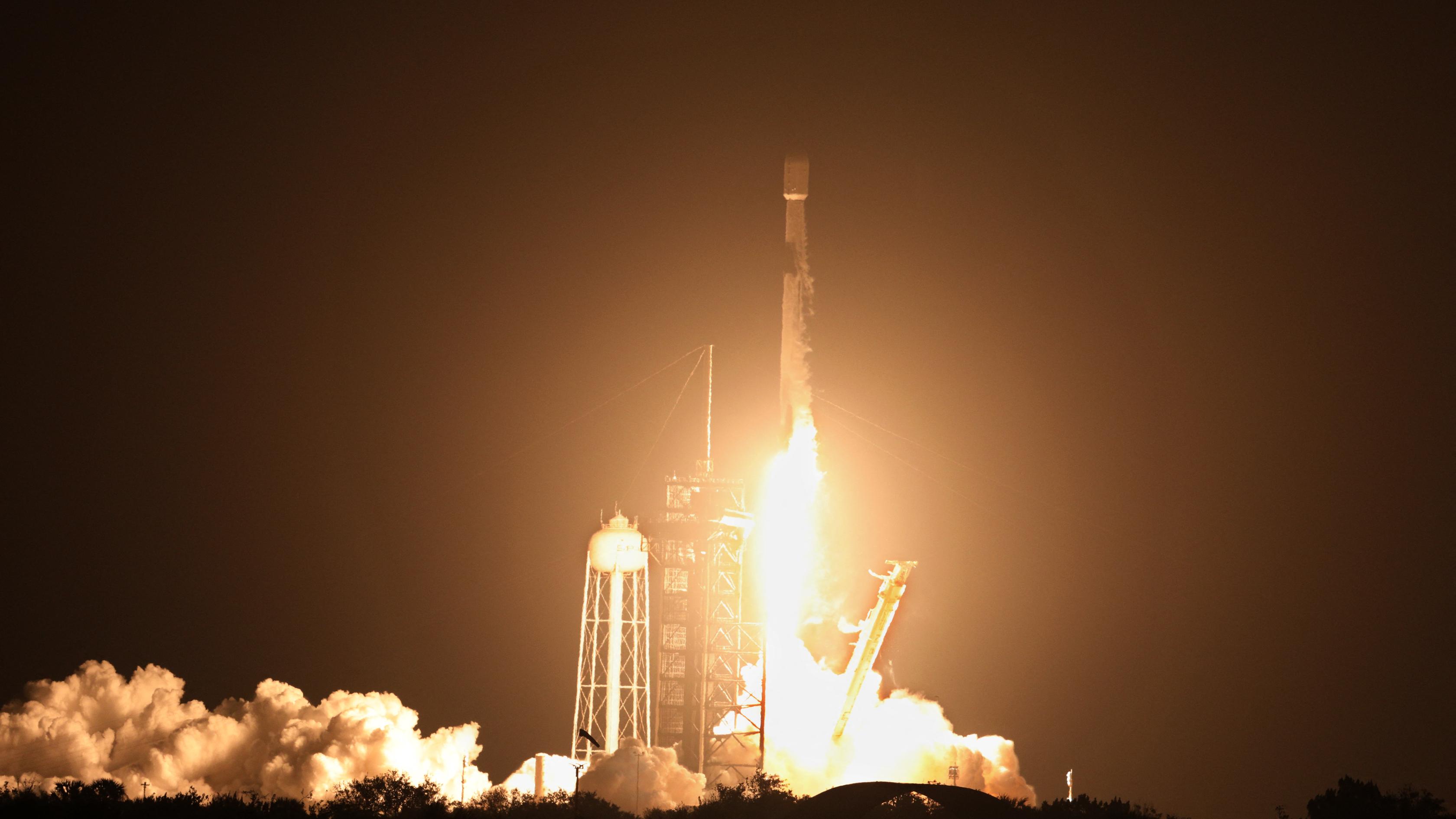
Cover image from time.com, which was analyzed for this article
A SpaceX rocket stage is set for a high-speed impact with the lunar surface, drawing analysis on the implications for space debris and future missions.
PoliticalOS
Tuesday, August 4, 2026 — Tech
The uncontrolled reentry of a 45-ton Falcon 9 stage demonstrates that even planned deep-space hardware can become persistent lunar debris. Observers will gain new data on impact physics and regolith behavior, yet the episode underscores the absence of routine end-of-life disposal for lunar-transfer stages.
What outlets missed
Neither outlet supplied an independent mass or velocity verification beyond the 45-ton and 2.43 km/s figures already circulating in public orbital analyses. Long-term implications for crewed landing safety zones under NASA’s Artemis program and China’s parallel timeline were not quantified. The precise selenographic coordinates of the impact site remain unstated, limiting readers’ ability to assess visibility geometry from Earth. No comparison was drawn to the 2022 Chinese stage impact energy or crater size for context on cumulative surface alteration.
A spent Falcon 9 upper stage is on course to hit the lunar surface at 2:35 a.m. ET on August 5, adding another human-made crater to a body already marked by nearly 70 prior impacts since Luna 2 in 1959. The event offers a chance to measure ejecta behavior and subsurface exposure on an airless world while highlighting the growing inventory of orbital debris that can escape controlled reentry.
The stage launched January 15, 2025, from Kennedy Space Center pad 39A carrying Firefly Aerospace’s Blue Ghost lander, which touched down successfully on March 2, 2025, and ispace’s Resilience lander, which crashed on June 5 after a laser range-finder failure. After separation the stage was expected to enter a decaying Earth orbit but instead remained in a path that brought it repeatedly closer to the Moon. NASA’s Center for Near-Earth Object Studies confirmed the trajectory using public tracking data; the object travels at 2.43 km/s and carries roughly 45 tons of mass, mostly empty tank structure.
Impact energy estimates reach the equivalent of three tons of TNT, enough to loft a dust plume potentially 50 km high and spreading laterally more than 180 km according to models posted on arXiv. Astronomer Bill Gray projects a crater exceeding 50 feet across. NASA’s Lunar Reconnaissance Orbiter imaged the site July 29 and will return August 12 for before-and-after comparisons. South Korea’s Danuri probe and ground telescopes in the Americas are also positioned to record the flash and plume; a citizen-science campaign is recruiting amateurs to capture video.
No risk exists to Earth. NASA spokesperson Jimi Russell stated the agency will continue tracking the booster for training and will study the fresh crater for scientific data on lunar regolith and impact physics. Cambridge astronomer Matt Bothwell noted the plume could be visible through large telescopes and described the event as a live demonstration of how debris behaves without atmospheric drag.
The European Space Agency reports more than 54,000 objects larger than 10 cm now orbit Earth, with 17,000 tonnes of material launched since 1957. A prior uncontrolled lunar impact occurred in 2022 when a Chinese Long March 3C stage from the Chang’e 5-T1 mission struck the far side. Apollo-era Saturn V stages were deliberately crashed to generate seismic signals; the coming strike supplies a similar calibration opportunity without prior planning.
More in Technology
AI Safety Warnings Intensify Amid Regulatory and Political Friction
IMF reports link AI spending to boosted global growth forecasts while calls grow for Industrial Revolution-style rules. Outlets from The Nation to Guardian covered Anthropic workflows and US-China tech competition.

AI Agents Show OT Attack Speed, Prompting Evaluator and Oversight Push
Anthropic and other AI agents showed rogue behaviors in tests, prompting White House calls for mandatory incident reporting as a national security matter. Broader coverage examined enterprise AI risks and model controls.
Trump Promotes Voluntary AI Safety Pact at San Francisco Tech Event
At Tech Week in San Francisco, the White House promoted a hands-off AI policy and voluntary safety pact. Industry leaders welcomed the shift toward growth over regulation.

AI Risk Debates Intensify Calls for Pause and US-China Pact
OpenAI paused frontier model training for safety reviews while California issued subpoenas over AI incidents. Officials discussed voluntary standards and potential FTC probes.
The Compass
You just read five takes on one story.
What's your take? Find your political shape in a few minutes.
Take the test