
Supreme Court Halts Abortion Pill Restrictions in One-Week Stay

Cover image from newrepublic.com, which was analyzed for this article
The Supreme Court's latest intervention on abortion pill access draws criticism of conservative arguments and drug makers' profit motives. GOP faces ongoing challenges on the issue post-ruling. Coverage highlights sanctity of life and regulatory fights.
PoliticalOS
Wednesday, May 6, 2026 — Politics
The Supreme Court's one-week stay maintains current mifepristone access rules while a deeper legal challenge plays out, illustrating that four years after Dobbs the abortion debate has shifted from constitutional rights to regulatory details, state enforcement and contested safety data. No final ruling has been issued on the drug's risks or the coercion claims at the suit's core. Readers should weigh FDA safety statistics against adverse-event reports and recognize that medication abortion now accounts for the majority of procedures precisely because of the telehealth pathways now under litigation.
What outlets missed
Most coverage omitted the specific affidavit from the Louisiana plaintiff who alleged her boyfriend ordered mifepristone from California via telehealth and coerced her into taking it under threat in 2023; this detail supplied standing the Supreme Court previously found lacking in a related 2024 case. Outlets across the spectrum also underplayed the FDA's dual approval of mifepristone for both medication abortion and early miscarriage management, which informed the agency's rationale for easing in-person rules based on post-approval data from millions of uses. The procedural posture received short shrift: this remains an emergency application on a preliminary stay, not a merits ruling on safety or constitutionality, and the full Supreme Court has not yet signaled its leanings. Finally, few noted that medication abortion rates rose in states with bans after Dobbs precisely because of the telehealth and mail pathways now under challenge, according to data from the Guttmacher Institute that could not be independently verified in every outlet.
Supreme Court Pauses Abortion Pill Limits Revealing Fractures in Conservative Legal Strategy
The Supreme Court on Monday temporarily blocked a lower court decision that would have curtailed access to mifepristone, the primary drug used in medication abortions, preserving for at least one week the ability of patients to obtain it through telehealth consultations and by mail. Justice Samuel Alito issued the administrative stay in response to an emergency appeal from the drug's manufacturers, just days after the conservative Fifth Circuit Court of Appeals had reinstated older in-person dispensing requirements originally set by the Food and Drug Administration.
The rapid sequence of rulings underscores how abortion policy remains unsettled three years after the Supreme Court's Dobbs decision returned regulatory authority to the states. While that 2022 ruling eliminated the constitutional right to abortion, it did not resolve the practical realities of medication that now accounts for roughly six in ten abortions nationwide. Mifepristone, taken with a second drug misoprostol, has been a focus of sustained legal challenges from anti-abortion advocates who view expanded access as a loophole undermining state bans.
The latest case originated with Louisiana Attorney General Liz Murrill and the Alliance Defending Freedom, a Christian legal organization. Their lawsuit contends that the FDA overstepped when it permanently loosened restrictions in 2023, first relaxed during the COVID-19 pandemic. Plaintiffs argue the agency failed to adequately consider safety risks and that mail-order distribution from providers in states where abortion remains legal interferes with Louisiana's sovereign authority to ban the procedure. They also claim easier access enables reproductive coercion, in which partners pressure women into ending pregnancies.
Those assertions invert the experience of many patients, according to medical evidence and accounts from providers. Medication abortion offers privacy and autonomy that can be lifesaving for people in abusive relationships or facing intimate partner violence. Studies cited in FDA reviews and independent research show serious complications are rare, occurring in less than one percent of cases when used as directed. The American College of Obstetricians and Gynecologists and other medical bodies have long endorsed the regimen as safe and effective up to ten weeks of pregnancy.
The Fifth Circuit's Friday ruling briefly restored the in-person mandate, creating immediate confusion for patients and providers already navigating a patchwork of state laws. Manufacturers warned of significant disruptions to supply chains and patient care. The Supreme Court's one-week stay, which expires next Monday, allows briefing to continue while the full court considers whether to take up the merits. It does not signal how the justices might ultimately rule, though the intervention itself drew sharp criticism from anti-abortion groups who had expected unwavering support from a court that includes three Trump appointees.
Social media erupted with accusations of betrayal aimed at both Alito, author of the Dobbs opinion, and the Trump administration. Some movement leaders expressed dismay that even this Supreme Court appeared reluctant to fully endorse the most aggressive restrictions on a drug that has been safely used by millions since its approval in 2000. The reaction highlights an internal tension within the anti-abortion coalition. While many celebrate Dobbs as a victory that empowered states like Louisiana to ban nearly all abortions, others see medication access as an unfinished project that requires further federal intervention.
This friction presents ongoing political challenges for Republicans. Public polling consistently shows broad support for legal abortion in at least some circumstances, with particular resistance to bans that eliminate early medication options. In the 2024 election cycle, abortion-related ballot measures and voter turnout in states with strict bans demonstrated the issue's potency even in a political environment that favored conservative candidates. The current litigation, backed by groups that spent years arguing for state control, now seeks to limit interstate commerce in pills and override aspects of FDA expertise, revealing a willingness to use federal power when state-by-state approaches prove insufficient.
Conservative outlets have framed the manufacturers' appeals as evidence that the abortion industry prioritizes profits over safety, pointing to self-reported adverse events and isolated cases of severe complications. Yet the Fifth Circuit's own opinion acknowledged the balance of harms, including testimony from a woman who said she experienced life-threatening bleeding after taking the drug. Medical experts counter that such risks must be weighed against the far higher dangers of childbirth and the reality that unsafe alternatives emerge when legal options are curtailed.
For reproductive health providers, the whiplash of conflicting court orders creates operational uncertainty. Clinics and telehealth services have adapted to post-Dobbs restrictions by building systems that comply with varying state rules while maintaining access where possible. The brief stay offers temporary relief but no lasting resolution. A final Supreme Court decision could either affirm the FDA's authority to regulate the drug based on scientific evidence or open the door to further state and federal challenges that shrink the footprint of medication abortion.
The case arrives at a moment when the broader debate over when life begins and how government should protect it continues to divide the country. Anti-abortion advocates compare the current landscape to historical moral failures such as slavery, arguing that fundamental questions of human dignity cannot be left to varying state standards. Proponents of access emphasize the tangible harms to women when safe, early options are removed, from increased travel burdens to delayed care to greater reliance on riskier self-managed methods.
Monday's procedural action changes little in the long term. The underlying lawsuit will proceed, likely reaching the Supreme Court again. Yet it illuminates a central paradox of the post-Dobbs era: the decision meant to depoliticize abortion at the federal level has instead sustained a cycle of litigation that keeps the issue prominent. Even conservative justices appear wary of upending established regulatory frameworks without clear justification, suggesting limits to how far the court will go in accommodating the most ambitious elements of the anti-abortion agenda.
For millions of American women, the practical result is continued uncertainty. Access to mifepristone may remain available by mail for now, but the legal infrastructure supporting it faces persistent assault. The coming weeks of briefing and the eventual ruling will test whether scientific consensus and patient needs can withstand ideological pressure to roll back even this most common form of abortion care. The outcome will shape not only reproductive health policy but also the political terrain that Republicans must navigate in future elections, where the issue refuses to fade despite repeated declarations of victory.
You just read Liberal's take. Want to read what actually happened?
More in Politics
Trump at 32% Approval as Gas Prices Test GOP Midterm Hopes
NYT/Siena polling showed Trump's approval at historic lows around 32 percent with Democrats leading by double digits in key districts. Early voting has surged in battleground states.

Record Early Voting Hits Battlegrounds, Shifting Partisan Shares
AP analysis found hundreds of thousands more early ballots than in 2022 in states including Texas, Ohio, Kansas, Maine, and North Carolina, shifting partisan dynamics.
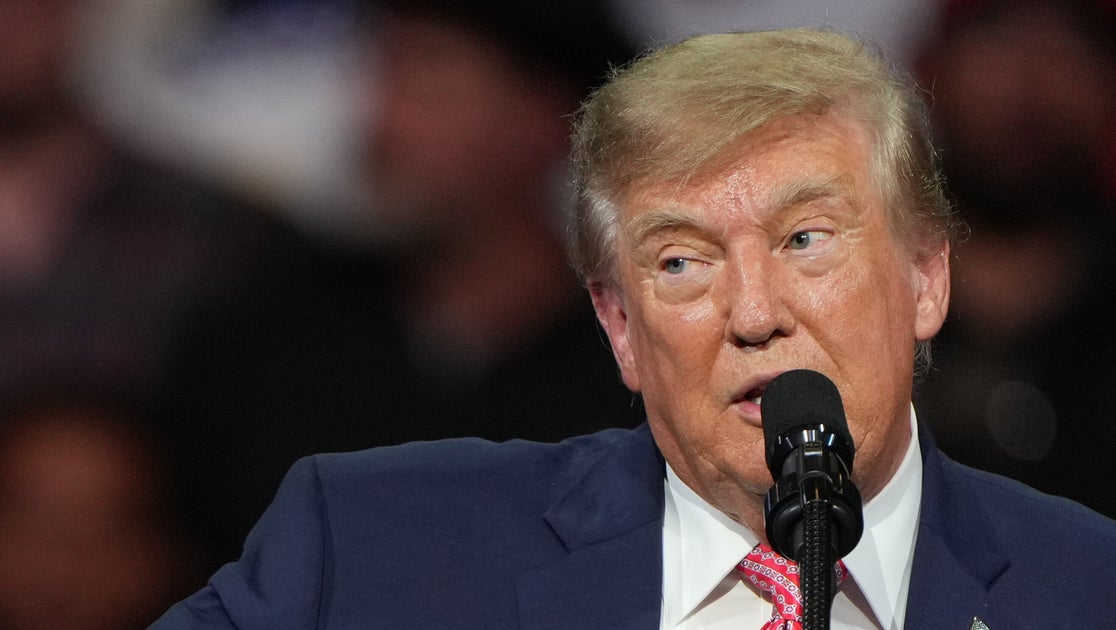
Trump Backs Marshall in Kansas Senate Race Tightened by Farm Costs
President Trump rallied in deep-red Kansas for GOP Sen. Roger Marshall in a competitive race, announcing an $8 billion farm fuel relief program amid high diesel prices. Democrats see an opening to end 94 years of GOP dominance in the state.

Trump Pauses Russia Sanctions Amid Ukraine Tensions and Missile Strikes
Trump waived sanctions on Russia and floated trilateral talks with Putin and Xi as part of ending the Ukraine war, while tensions rose with Zelenskyy over Starlink and arms. Bipartisan senators engaged Zelenskyy amid the shifts.
The Compass
You just read five takes on one story.
What's your take? Find your political shape in a few minutes.
Take the test