
Supreme Court Limits Race in Redistricting, Igniting Map Wars

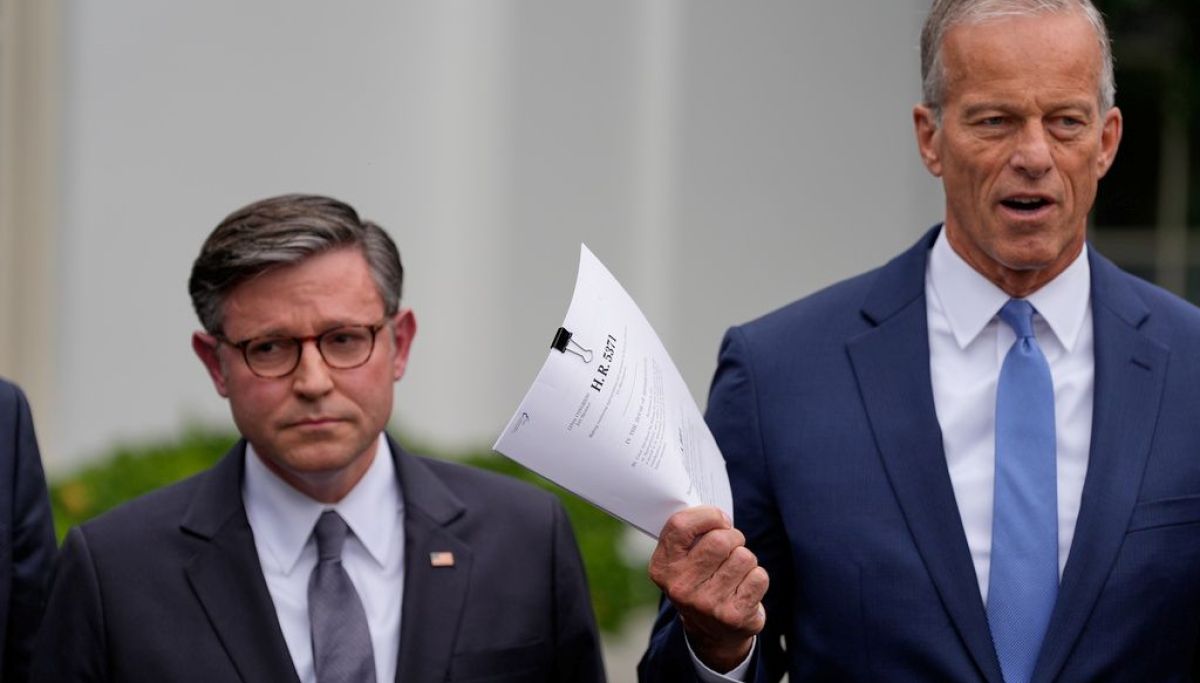
Cover image from redstate.com, which was analyzed for this article
The Supreme Court ruled against race-based gerrymandering in cases from multiple states, promoting colorblind districting. Conservatives celebrate reinforcement of constitutional principles; liberals claim it neutralizes GOP strategies. Impacts loom for mid-decade redistricting battles.
PoliticalOS
Friday, May 1, 2026 — Politics
The Supreme Court's 6-3 decision in Louisiana v. Callais establishes that race cannot be the predominant factor when states draw congressional districts, even to satisfy the Voting Rights Act. This shifts power toward traditional redistricting criteria and has already triggered new map-drawing in Florida, Texas, and Louisiana that could alter House margins ahead of the 2026 midterms. Readers should understand the ruling does not outlaw consideration of race entirely but raises the legal bar significantly, leaving both parties to test its boundaries in court while the tension between equal protection and effective minority representation remains unresolved.
What outlets missed
Most coverage downplayed or omitted that Louisiana's map under review was itself a response to a lower-court finding that the prior map violated Section 2 of the VRA by diluting Black votes; the Supreme Court did not eliminate Section 2 but ruled race cannot predominate over traditional criteria even when attempting to comply with it. Outlets across the spectrum gave short shrift to Florida's voter-approved 2010 Fair Districts Amendments, passed by 63 percent of voters, which explicitly ban partisan favoritism and remain a live constraint on DeSantis's new map. The 2020 Census undercounts in Florida (3.48 percent) and Texas (1.92 percent), documented by the Census Bureau, received mention in only one outlet yet supplied crucial context for why states viewed the decade's initial maps as flawed. Finally, the precise 6-3 lineup, Alito's majority opinion text, and Kagan's dissent warning that the ruling would make successful VRA claims far more difficult were rarely presented together in a single account, leaving readers without the full legal tension.
Supreme Court Ruling on Racial Gerrymandering Creates Unexpected Redistricting Openings
The Supreme Court’s 6-3 decision this week striking down Louisiana’s congressional map has been celebrated by conservatives as a long-overdue rejection of race-based district drawing. Yet early analyses suggest the ruling could instead complicate Republican efforts to lock in House advantages, exposing tensions between the ideal of a color-blind Constitution and the practical mechanics of American political geography.
At its core, the case concerned whether Louisiana could be required to create a second majority-Black congressional district under Section 2 of the 1965 Voting Rights Act. The Court ruled that the state’s map amounted to an unconstitutional racial gerrymander, saying race could not be the predominant factor in drawing lines. Legal observers across the ideological spectrum describe the decision as significantly narrowing the VRA’s reach, with some voting rights advocates arguing it effectively neuters a key tool against discriminatory mapmaking.
That diagnosis, however, is only part of the story. A new analysis circulating among Democratic leadership and outside groups, prepared by the voting rights organization Fair Fight Action, concludes that the weakening of Section 2 could free up as many as 22 additional House seats for potential reconfiguration before the 2028 elections. Max Flugrath, senior communications director for Fair Fight, described the moment in stark terms: Democrats now have “a clear path to neutralize this GOP power grab if they want to take it. This is the ‘break glass in case of emergency’ moment for American democracy.”
The logic rests on how the ruling interacts with existing maps drawn after the 2020 census. Many of those maps were negotiated under the shadow of VRA litigation, which sometimes forced states to concentrate minority voters into specific districts. Removing that legal pressure changes the strategic calculus. In several states, Democrats may now argue that maps previously defended as VRA-compliant are themselves vulnerable to new challenges that do not rely on race as the central criterion. The result, according to the Fair Fight analysis, could be enough new competitive or Democratic-leaning seats to offset even aggressive Republican gerrymanders elsewhere.
Republicans are not waiting to test that theory. The Trump Justice Department moved quickly to signal it will treat the ruling as binding nationwide. Assistant Attorney General Harmeet Dhillon responded to a query from Sen. Eric Schmitt of Missouri with a blunt “we are on it,” emphasizing the department’s commitment to “equal protection of the laws for ALL Americans” in voting as in other areas. Schmitt had urged the DOJ to use its full authority to dismantle what he called “illegal racially-gerrymandered districts” and “undo prior race-based actions.”
This sets up a likely clash between federal enforcement and state-level mapmaking. The tension is not abstract. Redistricting has always been a raw exercise of power, but the post-2020 cycle was especially contentious because the census itself was flawed by pandemic disruptions, leaving fast-growing states like Texas and Florida underrepresented for a decade. Both parties have engaged in aggressive line-drawing when given the chance. Democrats dominated the practice for much of the late 20th century; Republicans mastered it after the 2010 wave. The Supreme Court’s intervention was intended to set a neutral rule. Instead, it appears to have scrambled the board.
Florida offers one preview. Gov. Ron DeSantis has pushed maps that explicitly de-emphasize race as an organizing principle, drawing praise from conservative outlets for moving beyond what they term “racial gerrymanders.” Those maps have produced more Republican seats than a strictly population-based approach might have suggested. Similar efforts are underway or anticipated in other GOP-controlled states. The open question is whether Democratic attorneys general and voting rights lawyers can now use the same color-blind logic to unwind some of those advantages in court.
Fair-minded observers have long noted that consistent rules matter more than any single map. Both parties should face the same constraints, whether those constraints emphasize compact districts, respect for county lines, or competitive elections. Yet American redistricting has rarely operated with such consistency. The Court’s Louisiana decision may force a reckoning with that reality, but it does so at a time when trust in electoral institutions is already strained.
The practical stakes are high. A shift of even a handful of seats in 2028 could determine control of the House during a presidential term that will shape regulatory policy, judicial appointments, and responses to demographic change. For years, Republicans have viewed the VRA’s race-conscious provisions as an unfair thumb on the scale. Democrats have seen those same provisions as essential safeguards against the dilution of minority voting power in a polarized era.
This week’s ruling does not resolve that philosophical disagreement. It merely relocates the battlefield. The Trump administration’s pledge of nationwide enforcement suggests one side intends to press its advantage quickly. The emerging Democratic strategy, sketched in the Fair Fight memo, indicates the other side believes the new terrain may be more favorable than it first appeared. What began as a conservative effort to limit race in redistricting may yet produce the opposite of its intended political effect, not through judicial reversal but through the messy, self-interested logic of mapmakers in both parties responding to new legal incentives.
How state legislatures, federal courts, and the Justice Department navigate those incentives over the next two years will say a great deal about whether the Supreme Court has clarified constitutional principles or simply rewritten the rules of partisan combat. For now, the one certainty is that few maps will remain untouched.
You just read Liberal's take. Want to read what actually happened?
More in Politics
Trump at 32% Approval as Gas Prices Test GOP Midterm Hopes
NYT/Siena polling showed Trump's approval at historic lows around 32 percent with Democrats leading by double digits in key districts. Early voting has surged in battleground states.

Record Early Voting Hits Battlegrounds, Shifting Partisan Shares
AP analysis found hundreds of thousands more early ballots than in 2022 in states including Texas, Ohio, Kansas, Maine, and North Carolina, shifting partisan dynamics.
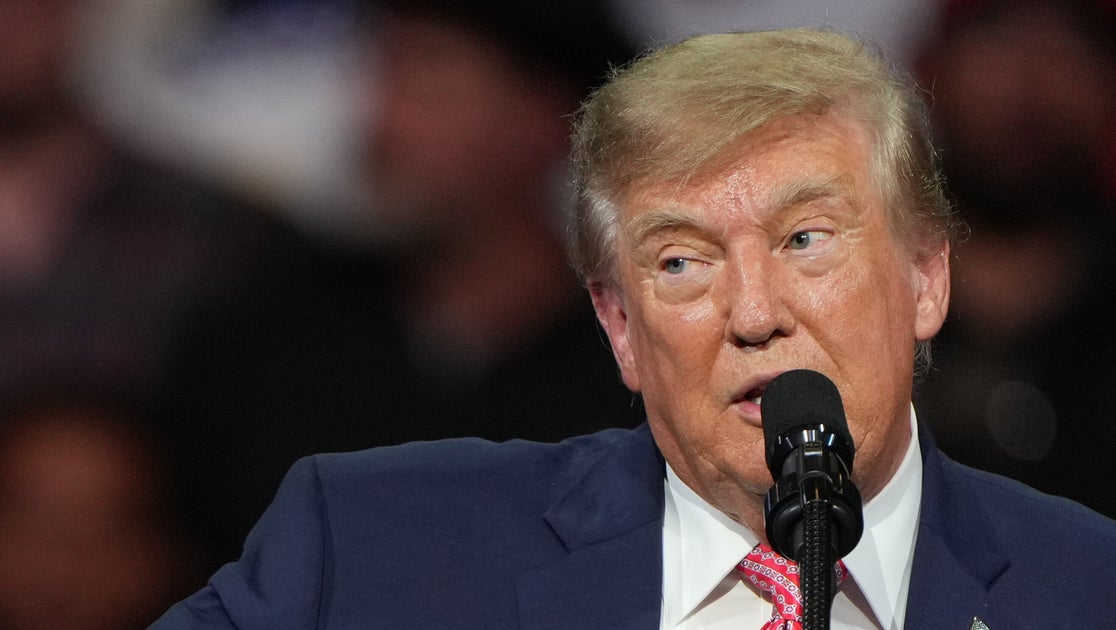
Trump Backs Marshall in Kansas Senate Race Tightened by Farm Costs
President Trump rallied in deep-red Kansas for GOP Sen. Roger Marshall in a competitive race, announcing an $8 billion farm fuel relief program amid high diesel prices. Democrats see an opening to end 94 years of GOP dominance in the state.

Trump Pauses Russia Sanctions Amid Ukraine Tensions and Missile Strikes
Trump waived sanctions on Russia and floated trilateral talks with Putin and Xi as part of ending the Ukraine war, while tensions rose with Zelenskyy over Starlink and arms. Bipartisan senators engaged Zelenskyy amid the shifts.
The Compass
You just read five takes on one story.
What's your take? Find your political shape in a few minutes.
Take the test