
Supreme Court Limits Race in Redistricting, Igniting Map Wars

Cover image from redstate.com, which was analyzed for this article
The Supreme Court ruled against race-based gerrymandering in cases from multiple states, promoting colorblind districting. Conservatives celebrate reinforcement of constitutional principles; liberals claim it neutralizes GOP strategies. Impacts loom for mid-decade redistricting battles.
PoliticalOS
Friday, May 1, 2026 — Politics
The Supreme Court's 6-3 decision in Louisiana v. Callais establishes that race cannot be the predominant factor when states draw congressional districts, even to satisfy the Voting Rights Act. This shifts power toward traditional redistricting criteria and has already triggered new map-drawing in Florida, Texas, and Louisiana that could alter House margins ahead of the 2026 midterms. Readers should understand the ruling does not outlaw consideration of race entirely but raises the legal bar significantly, leaving both parties to test its boundaries in court while the tension between equal protection and effective minority representation remains unresolved.
What outlets missed
Most coverage downplayed or omitted that Louisiana's map under review was itself a response to a lower-court finding that the prior map violated Section 2 of the VRA by diluting Black votes; the Supreme Court did not eliminate Section 2 but ruled race cannot predominate over traditional criteria even when attempting to comply with it. Outlets across the spectrum gave short shrift to Florida's voter-approved 2010 Fair Districts Amendments, passed by 63 percent of voters, which explicitly ban partisan favoritism and remain a live constraint on DeSantis's new map. The 2020 Census undercounts in Florida (3.48 percent) and Texas (1.92 percent), documented by the Census Bureau, received mention in only one outlet yet supplied crucial context for why states viewed the decade's initial maps as flawed. Finally, the precise 6-3 lineup, Alito's majority opinion text, and Kagan's dissent warning that the ruling would make successful VRA claims far more difficult were rarely presented together in a single account, leaving readers without the full legal tension.
Supreme Court Ruling Weakens Voting Rights Act but Offers Democrats Path to Offset GOP Gains
The conservative majority on the Supreme Court delivered a stark blow to voting rights enforcement Wednesday with a 6-3 ruling that forces Louisiana to redraw its congressional maps while raising fresh doubts about the future of the Voting Rights Act itself. Legal observers warn the decision in Louisiana v. Callais could dismantle key protections against racial discrimination in electoral mapmaking at a moment when Republican-led states continue aggressive efforts to consolidate power through redistricting.
At issue was Louisiana's creation of a second majority-Black congressional district, a map drawn to comply with Section 2 of the 1965 Voting Rights Act. That provision explicitly bars states from adopting policies that dilute the voting strength of racial minorities. The court's conservative bloc, including longtime critics of race-conscious remedies Justices Samuel Alito and Clarence Thomas, determined the map amounted to an unconstitutional racial gerrymander. The practical effect, voting rights groups say, is to render Section 2 largely toothless when it comes to challenging discriminatory district lines.
The decision lands in a familiar pattern for the Roberts court, which has spent more than a decade narrowing the Voting Rights Act, from gutting its preclearance formula in 2013 to repeated skepticism toward race-based remedies. Critics argue this latest move fits neatly into a broader right-wing project of dismantling legal tools designed to counteract centuries of racial exclusion in American elections. In practice, it hands Republican state legislatures wider latitude to draw maps that minimize the influence of Black and brown voters without fear of successful VRA lawsuits.
Yet in a striking potential twist, the ruling may not deliver the unilateral advantage Republicans anticipate. Max Flugrath, senior communications director for the voting rights organization Fair Fight Action, described the decision as an unintended opening for Democrats to fight back at the ballot box. In an analysis obtained by The New Republic and now circulating among Democratic leadership and outside groups, Fair Fight argues that the weakening of Section 2 constraints could allow Democrats to redraw as many as 22 additional congressional seats in time for the 2028 elections. That number, the group contends, would be enough to neutralize Republican gains even under the most aggressive GOP redistricting scenarios.
"Democrats have a clear path to neutralize this GOP power grab if they want to take it," Flugrath said. "This is the ‘break glass in case of emergency’ moment for American democracy."
The analysis arrives as the Trump Justice Department, now led by Acting Attorney General Todd Blanche, signals it will aggressively enforce the Supreme Court decision nationwide. Assistant Attorney General Harmeet Dhillon responded to a prompt from Sen. Eric Schmitt of Missouri with a blunt declaration that the department is "ON IT." In public statements, Dhillon framed the effort as a defense of "color-blind" equal protection under the law, extending to voting, employment, housing and education. Schmitt and his allies have urged the DOJ to target what they call illegal race-based maps still in effect from previous cycles, with some conservative commentators suggesting former President Barack Obama could face particular scrutiny over maps drawn during his administration.
This enforcement push reflects a long-standing conservative argument that racial gerrymandering, particularly the drawing of oddly shaped majority-minority districts, violates the Constitution's guarantee of equal protection. Outlets aligned with that view credit Republican governors like Florida's Ron DeSantis with leading the way toward maps that prioritize traditional districting principles over racial quotas. They note that Democrats themselves have enthusiastically pursued partisan gerrymanders when in power, only discovering principled objections to the practice after Republicans gained the upper hand following the 2010 census.
Yet that equivalence misses a fundamental asymmetry, voting rights advocates counter. For decades, the Voting Rights Act served as one of the few meaningful checks on map-drawing that predictably dilutes minority political power in the South and elsewhere. By declaring race off-limits even when it is being used to prevent dilution, the court has effectively licensed the very discrimination Section 2 was written to stop. The 2020 census, already marred by pandemic disruptions and undercounts in communities of color, only compounded these inequities by leaving states like Texas and Florida shortchanged in representation for an entire decade.
The Louisiana case therefore arrives at a perilous juncture. With Republicans controlling redistricting in numerous battleground states and a sympathetic Justice Department prepared to litigate on their behalf, the ruling risks accelerating the very power grab it claims to restrain. Democratic strategists now see a narrow counterplay: using the same diminished legal framework to maximize their own seats in states they control. Whether party leaders will treat this as the emergency moment Fair Fight describes remains to be seen.
What is already clear is that the Supreme Court's conservative justices have again reshaped the rules of American democracy in ways that reward partisan aggression over equal participation. The speed with which the Trump administration has moved to nationalize the Louisiana decision suggests Republicans intend to press every advantage. Voting rights organizations, civil rights attorneys and Democratic operatives are now scrambling to determine whether the court's latest gift to the right can somehow be turned against it before the next round of maps hardens into place for another decade. The stakes extend far beyond Louisiana's six congressional districts. They touch the basic question of whether minority voters will continue to enjoy any real voice in a system increasingly engineered to mute it.
You just read Progressive's take. Want to read what actually happened?
More in Politics
Trump at 32% Approval as Gas Prices Test GOP Midterm Hopes
NYT/Siena polling showed Trump's approval at historic lows around 32 percent with Democrats leading by double digits in key districts. Early voting has surged in battleground states.

Record Early Voting Hits Battlegrounds, Shifting Partisan Shares
AP analysis found hundreds of thousands more early ballots than in 2022 in states including Texas, Ohio, Kansas, Maine, and North Carolina, shifting partisan dynamics.
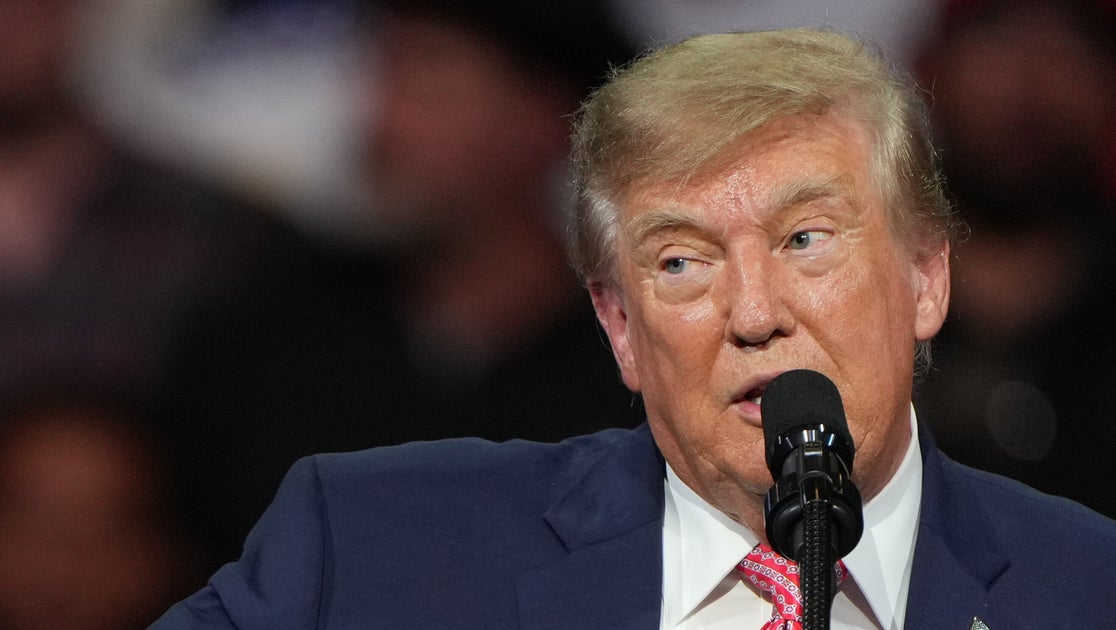
Trump Backs Marshall in Kansas Senate Race Tightened by Farm Costs
President Trump rallied in deep-red Kansas for GOP Sen. Roger Marshall in a competitive race, announcing an $8 billion farm fuel relief program amid high diesel prices. Democrats see an opening to end 94 years of GOP dominance in the state.

Trump Pauses Russia Sanctions Amid Ukraine Tensions and Missile Strikes
Trump waived sanctions on Russia and floated trilateral talks with Putin and Xi as part of ending the Ukraine war, while tensions rose with Zelenskyy over Starlink and arms. Bipartisan senators engaged Zelenskyy amid the shifts.
The Compass
You just read five takes on one story.
What's your take? Find your political shape in a few minutes.
Take the test