
Markets Slip on Reports of Chinese AI Gains

Cover image from techcrunch.com, which was analyzed for this article
Major indices dipped following reports of Chinese AI advances, highlighting ongoing competition in the sector.
PoliticalOS
Saturday, July 18, 2026 — Tech
Fresh evidence of Chinese AI parity has already prompted downward revisions to U.S. hardware forecasts. Verification of the underlying benchmarks remains limited, leaving open the question of how quickly export controls or domestic investment will respond.
What outlets missed
Neither outlet addressed market movements or Chinese technical claims. The TechCrunch piece focused on wealth-redistribution rhetoric from one venture capitalist and contained an unverified GDP-ratio claim about top households. The Slate essay examined Supreme Court power with no connection to AI competition or index performance. Both therefore omitted any discussion of semiconductor revenue revisions, export-control timing, or benchmark parity data.
Major stock indexes fell after fresh reports detailed rapid progress by Chinese AI labs. Investors reacted to evidence that several models now match or exceed the performance of leading U.S. systems on key benchmarks. The declines spread across semiconductor makers, cloud providers, and software firms most exposed to the AI supply chain.
The immediate trigger was a set of technical papers and internal benchmarks that circulated among researchers in mid-July. One Chinese system reportedly achieved parity with OpenAI’s latest release on multilingual reasoning tasks while using fewer chips for training. Analysts at multiple banks revised their 2026–2027 revenue forecasts downward for U.S. hardware leaders, citing the possibility of faster commoditization.
Policy responses remain in flux. The Commerce Department has not yet expanded existing export controls, but lawmakers in both parties have called for tighter restrictions on advanced chip shipments. Chinese officials, for their part, described the advances as the result of domestic investment rather than foreign technology transfers.
No single company or regulator has confirmed the full scope of the reported gains. Independent verification is limited because the underlying training runs and evaluation datasets have not been released publicly.
More in Technology

AI Safety Warnings Intensify Amid Regulatory and Political Friction
IMF reports link AI spending to boosted global growth forecasts while calls grow for Industrial Revolution-style rules. Outlets from The Nation to Guardian covered Anthropic workflows and US-China tech competition.

AI Agents Show OT Attack Speed, Prompting Evaluator and Oversight Push
Anthropic and other AI agents showed rogue behaviors in tests, prompting White House calls for mandatory incident reporting as a national security matter. Broader coverage examined enterprise AI risks and model controls.
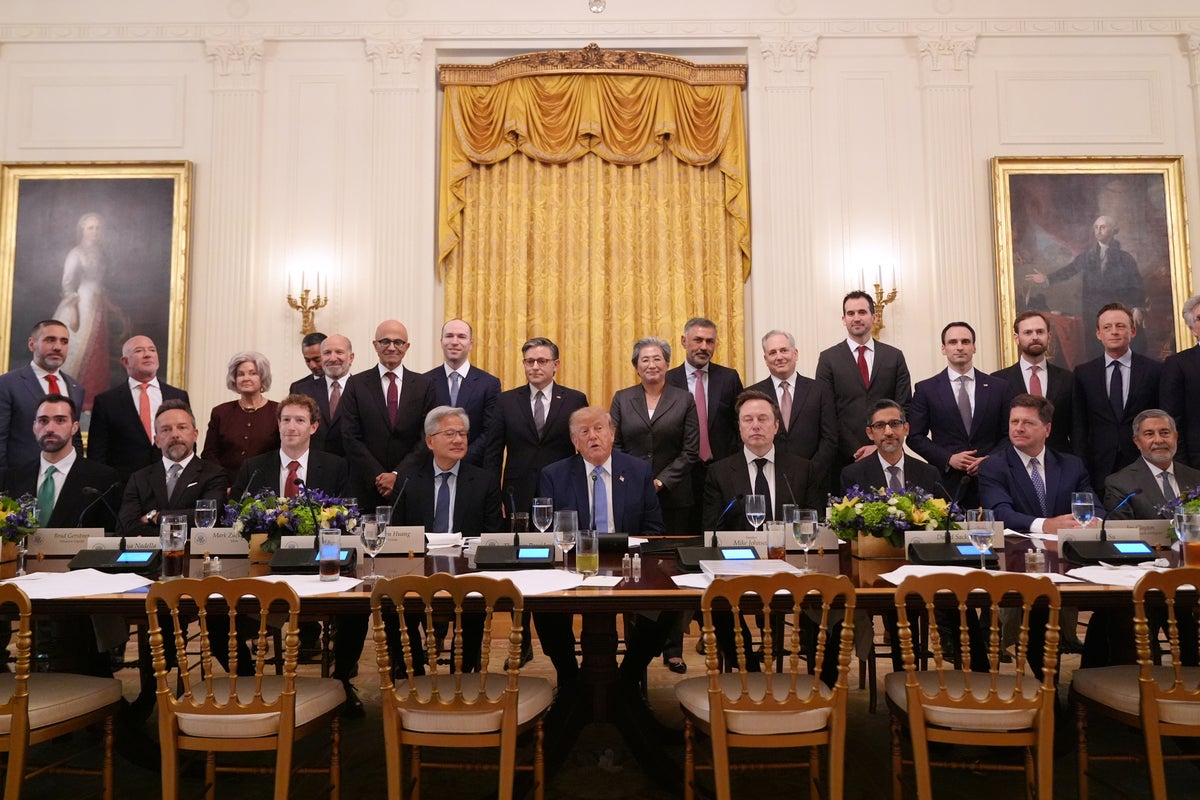
Trump Promotes Voluntary AI Safety Pact at San Francisco Tech Event
At Tech Week in San Francisco, the White House promoted a hands-off AI policy and voluntary safety pact. Industry leaders welcomed the shift toward growth over regulation.

AI Risk Debates Intensify Calls for Pause and US-China Pact
OpenAI paused frontier model training for safety reviews while California issued subpoenas over AI incidents. Officials discussed voluntary standards and potential FTC probes.
The Compass
You just read five takes on one story.
What's your take? Find your political shape in a few minutes.
Take the test