
Texas Runoff Pits Cornyn Against Trump-Backed Paxton
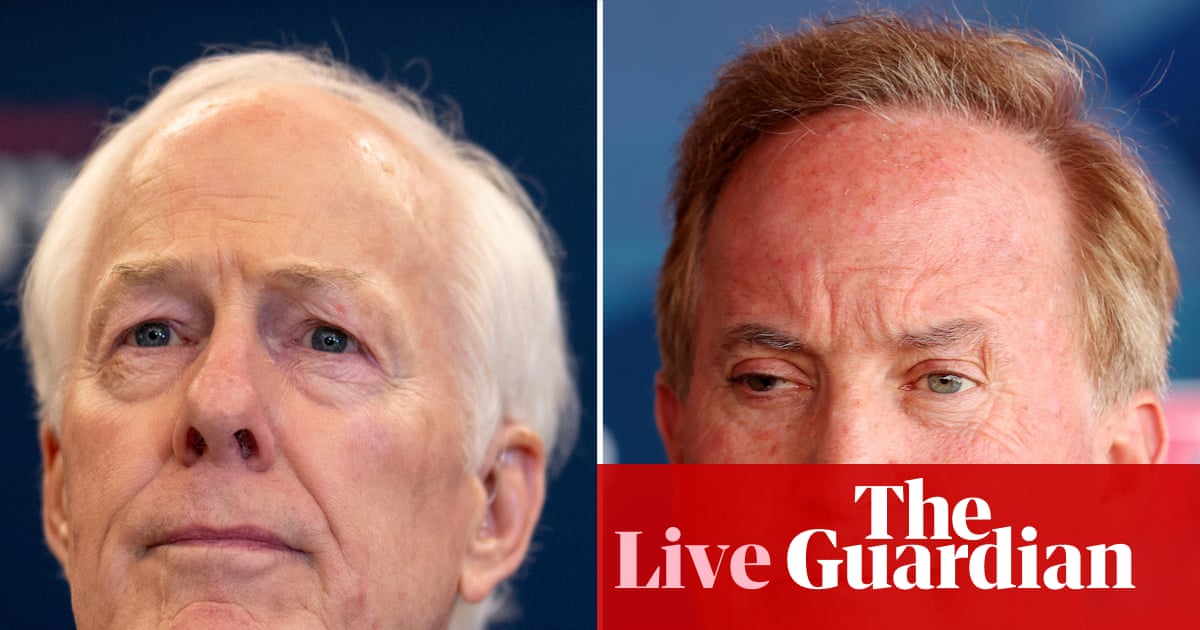
Cover image from theguardian.com, which was analyzed for this article
Voters decide between Sen. John Cornyn and Trump-endorsed Ken Paxton in a high-stakes Republican primary runoff that gauges the president's sway over the party. Both sides have poured resources into ads amid internal GOP divisions.
PoliticalOS
Tuesday, May 26, 2026 — Politics
The runoff measures whether Trump's late endorsement can overcome an incumbent's money and institutional support in a state Republicans have held since 1994. Whoever wins faces Democrat James Talarico in November, with the result affecting both Senate control and the balance between establishment and populist wings inside the GOP.
What outlets missed
Most coverage omitted the precise March primary margins and the $120 million total ad spend figure reported by AdImpact across both rounds. Few outlets detailed Paxton's specific MAHA-aligned lawsuits on food dyes, heavy metals in baby food, and forever chemicals in clothing. The simultaneous Democratic runoffs in redrawn districts and the absence of any Trump endorsement in the attorney general race received little attention outside procedural lists.
Trump Pushes Paxton Over Cornyn in Texas Senate Showdown
Texas voters decide Tuesday between longtime Republican Sen. John Cornyn and state Attorney General Ken Paxton in a runoff that has become the costliest Senate primary in U.S. history. President Donald Trump threw his weight behind Paxton just days before the vote, labeling Cornyn "VERY disloyal" and elevating the contest into a direct test of whether the president's endorsement can still override party establishment preferences in a reliably red state.
Cornyn, first elected in 2002 and a former Senate Republican whip, finished narrowly ahead of Paxton in the March primary with 42 percent to the attorney general's 40.5 percent. Neither reached a majority, forcing the runoff. Trump had initially held back, fueling speculation he might back the incumbent, but he ultimately chose Paxton, a longtime ally who has faced multiple investigations over allegations of corruption, financial impropriety and personal misconduct. Those issues have done little to dent his support among voters drawn to his aggressive legal challenges against federal policies and his vocal defense of Trump during past impeachments.
The outcome carries immediate consequences for Senate control. Republicans currently hold a slim 53-47 majority and must defend more seats than Democrats this cycle. The winner of the GOP nomination will face state Rep. James Talarico, a rising Democratic figure who defeated progressive Rep. Jasmine Crockett in the March primary. No Democrat has won a statewide race in Texas since 1994, yet party strategists view the seat as newly competitive if Paxton becomes the nominee and forces national Republicans to spend heavily to defend it.
Campaign events have underscored the party's internal split. At a recent Paxton rally in the Houston suburb of Katy, supporters danced to "YMCA" and dismissed Cornyn as too close to Democrats. One attendee told reporters that voting for the senator was "like voting for a Democrat." Cornyn, for his part, has spent weeks defending his record while warning that a Paxton victory would require Senate Republicans to divert hundreds of millions from other races. Public polling has shown Paxton ahead in the final days.
The race also features other high-profile contests on the same ballot, including runoffs for Texas attorney general and several congressional districts. Democrats see the broader environment as an opportunity to test whether Trump's influence has overextended into state-level fights, potentially exposing vulnerabilities in November. Talarico has already drawn support from former President Barack Obama during the primary season, signaling national interest in the general election matchup.
For Republicans, the contest highlights ongoing tensions between traditional conservatives and the populist wing that prioritizes loyalty to Trump. Cornyn's backers argue he remains the safer general-election candidate capable of protecting the Senate majority without extraordinary spending. Paxton's supporters counter that Cornyn represents an outdated approach that has failed to deliver on core conservative priorities. With polls closing at 9 p.m. Eastern Time, the results will reveal how much sway Trump's late intervention still carries in one of the party's most important battlegrounds.
You just read Progressive's take. Want to read what actually happened?
More in Politics
Trump at 32% Approval as Gas Prices Test GOP Midterm Hopes
NYT/Siena polling showed Trump's approval at historic lows around 32 percent with Democrats leading by double digits in key districts. Early voting has surged in battleground states.

Record Early Voting Hits Battlegrounds, Shifting Partisan Shares
AP analysis found hundreds of thousands more early ballots than in 2022 in states including Texas, Ohio, Kansas, Maine, and North Carolina, shifting partisan dynamics.
Trump Backs Marshall in Kansas Senate Race Tightened by Farm Costs
President Trump rallied in deep-red Kansas for GOP Sen. Roger Marshall in a competitive race, announcing an $8 billion farm fuel relief program amid high diesel prices. Democrats see an opening to end 94 years of GOP dominance in the state.

Trump Pauses Russia Sanctions Amid Ukraine Tensions and Missile Strikes
Trump waived sanctions on Russia and floated trilateral talks with Putin and Xi as part of ending the Ukraine war, while tensions rose with Zelenskyy over Starlink and arms. Bipartisan senators engaged Zelenskyy amid the shifts.
The Compass
You just read five takes on one story.
What's your take? Find your political shape in a few minutes.
Take the test