
Tight Senate and House Races Put Congress Control in Play

Cover image from independent.co.uk, which was analyzed for this article
Battlegrounds in Ohio, Texas, Iowa, and Michigan remained close, with Democrats needing net gains to take the Senate. Cross-party endorsements and last-minute attacks featured prominently.
PoliticalOS
Tuesday, November 3, 2026 — Politics
Control of both chambers remains unresolved in a small set of states where polls show single-digit or smaller margins. Economic conditions and candidate-specific controversies have narrowed several races that appeared safer for one party earlier in the cycle.
What outlets missed
The BBC omitted House-specific spending totals and redistricting effects that Independent coverage highlighted. Independent Senate and House pieces did not detail Alaska's ranked-choice system or the state investigation into the ballot-name dispute. Neither Independent article addressed Kansas or the full list of seven Senate toss-ups identified by Cook Political Report. Cross-state comparisons of Democratic performance in Trump-won districts versus Republican defense of narrow majorities received uneven treatment.
Voters on Election Day face a Congress whose narrow majorities could shift with results in a handful of states, directly affecting the final two years of President Donald Trump's term. A net Democratic gain of four Senate seats would flip control of the chamber, while House Democrats need a net gain of four seats to take the lower chamber from its current 219-214 Republican edge. Both parties poured billions into advertising and ground efforts in states where polls showed margins inside the margin of error.
The Senate map features seven races rated toss-ups by the Cook Political Report. In Alaska, Republican Sen. Dan Sullivan faces Democrat Mary Peltola amid a state investigation into a second candidate sharing Sullivan's name; Peltola holds a narrow lead in some surveys. Maine pits Republican Sen. Susan Collins against Democrat Troy Jackson, with polls showing a close contest after an earlier Democratic nominee withdrew. Texas Republican Ken Paxton, backed by more than $170 million including support from Elon Musk, faces Democrat James Talarico in the most expensive Senate race on record. Michigan pits Republican Mike Rogers against Democrat Abdul El-Sayed. Iowa Republican Ashley Hinson competes with Democrat Josh Turek. Ohio Republican Jon Husted, appointed to the seat vacated by Vice President JD Vance, runs against Democrat Sherrod Brown. Kansas Republican Roger Marshall faces Democrat Adam Hamilton.
House contests in Colorado's 8th, Florida's reconfigured South Florida districts, Iowa's rural 2nd, Maine's 2nd, Montana's open seat, North Carolina's 1st, New York's 17th and Ohio's 7th also tightened. Outside spending exceeded $20 million in several districts, with Democratic groups holding edges in Iowa and Colorado while Republicans matched or exceeded in Florida and North Carolina. Economic concerns over fuel and fertilizer prices, tied by some candidates to tariffs and the Iran conflict, featured in Iowa and Ohio messaging. Cross-party endorsements appeared in Michigan, where a defeated Democrat backed the Republican nominee.
Last-minute attacks centered on candidate backgrounds, including domestic allegations in one Ohio House race and college-era activism in Colorado. Alaska's ranked-choice voting and slow count add uncertainty to that Senate outcome. No single poll or spending total has been corroborated across all outlets as decisive in any race.
More in Politics

US Hits Iran's Qeshm Island in Limited Strikes Before Midterms
The US carried out limited defensive strikes on Iran's Qeshm Island amid ongoing tensions, coinciding with Election Day and raising concerns over fuel prices. Coverage highlights diplomatic fallout and potential impact on voter sentiment.

Severe Weather Forces Polling Shifts Across Regions
Flash floods, heavy rain, and tornadoes forced polling place changes across parts of the US on Election Day. Coverage examined potential effects on turnout.
Polls Show Democrats Leading Key Senate Races Ahead of Midterms
NYT-Siena and other polls show Democrats leading in key Senate races including Michigan, Texas, and Maine, with national surveys indicating an edge for congressional control.
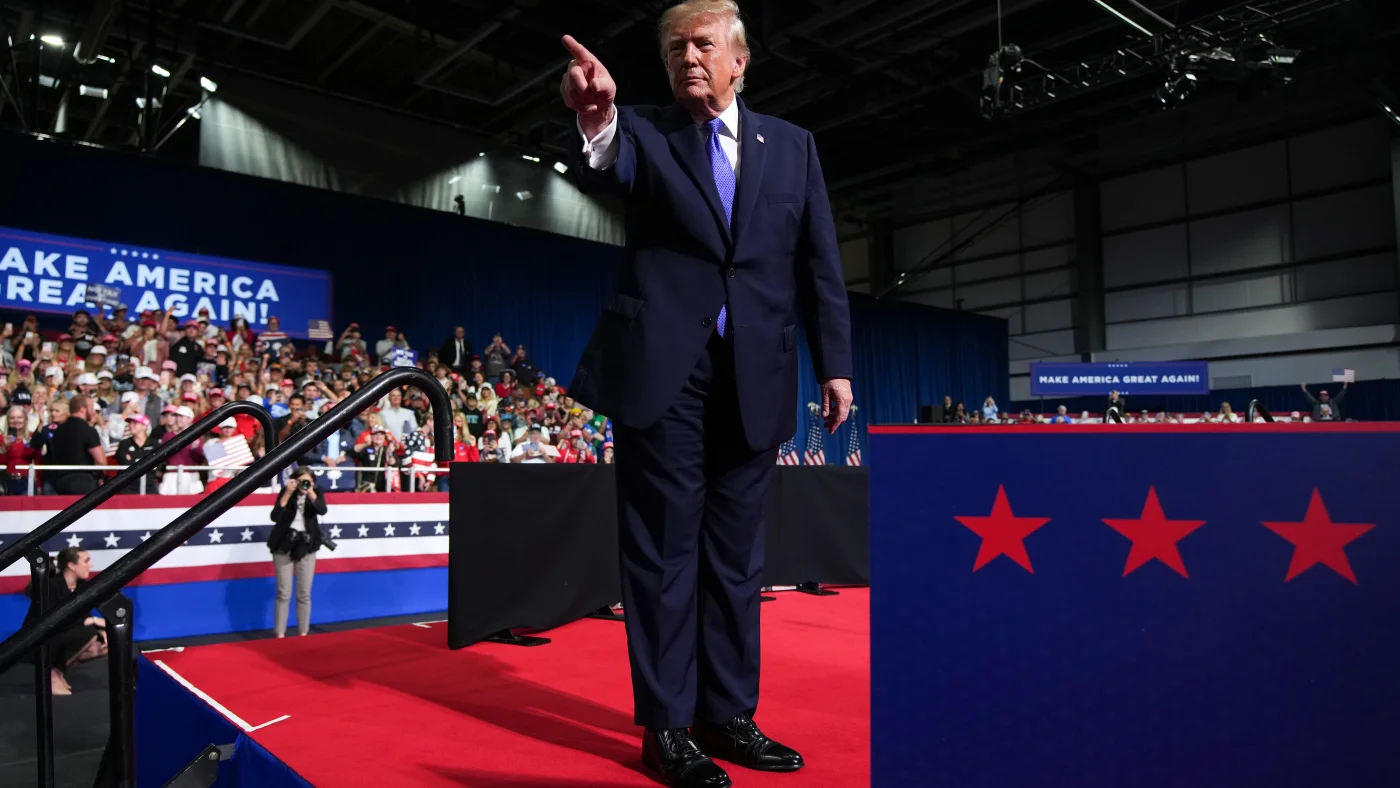
Trump Rallies in Iowa, Kansas as Tight Senate Races Loom
President Trump held in-person rallies to boost GOP turnout in key Senate and House races ahead of the November 3 midterms. Polls show some races tighter than expected in the Farm Belt.
The Compass
You just read five takes on one story.
What's your take? Find your political shape in a few minutes.
Take the test