
Trump's Team Shakeup: Purge or Accountability Amid War Backdrop
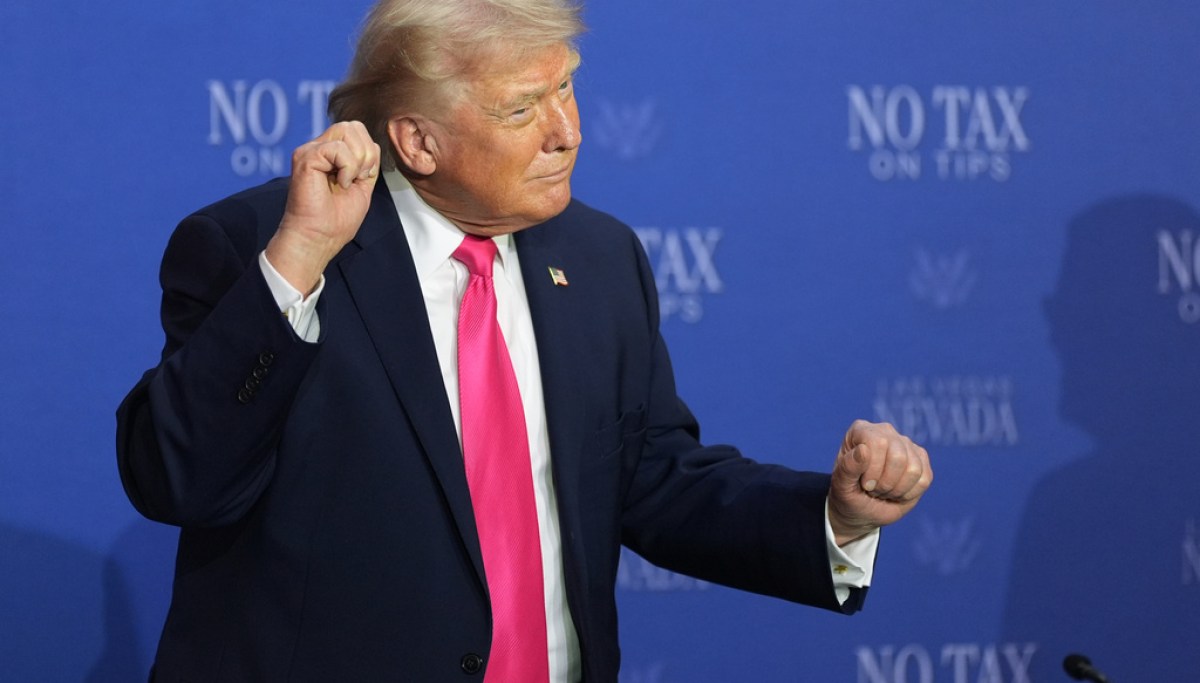
Cover image from washingtonexaminer.com, which was analyzed for this article
Widespread personnel changes dubbed a 'purge' by critics target Congress oversight and Pentagon, with Navy chief out. Defenders call it accountability after Biden holdovers. Spring cleaning tests Trump's coalition limits.
PoliticalOS
Thursday, April 23, 2026 — Politics
Multiple high-ranking officials across the Pentagon, Cabinet, and Congress have departed or been removed in a compressed window, occurring against the backdrop of U.S. military action in Iran that raised energy costs and hurt presidential approval. Specific reasons for several military exits rely on anonymous or unverified accounts that other outlets could not corroborate, while the administration has publicly cited merit and performance. The most important reality is that these changes test continuity and readiness at a sensitive moment; readers should distinguish between confirmed announcements and unattributed claims about motives.
What outlets missed
Most coverage omitted the February 2026 sequence of Iranian proxy attacks that preceded U.S.-Israeli strikes, the subsequent Iranian missile response on U.S. bases, and the fact that the Iranian Supreme Leader was killed during the exchanges. Pentagon statements citing performance reviews and meritocracy as drivers for the military changes received little attention outside conservative outlets and were not balanced against anonymous sourcing in mainstream reporting. The immediate court injunction blocking certification of Virginia's redistricting results on April 22 was rarely noted, softening the perceived finality of that Democratic gain. Specific ethics triggers for the three congressional resignations, including documented indictments and admissions, were downplayed by outlets preferring a generic "purge era" narrative. Low voter turnout of 47.94 percent in the Virginia referendum also went largely unmentioned, providing important context for the narrow margin.
Trump Administration Faces Reckoning After Virginia Redistricting Defeat and Military House Cleaning
Washington finds itself in familiar territory this week, clutching its pearls over what the corporate press has rushed to label a "purge" inside the Trump administration and the Pentagon. In reality, several senior officials have been shown the door following months of concerns about leadership failures, ideological drift in the military, and basic competence. At the same time, a narrow defeat in Virginia on redistricting has laid bare deeper fractures among Republicans about whether the party still possesses the will to wield power in a system where Democrats play for keeps.
The personnel changes come after a turbulent period. Navy Secretary John Phelan, a billionaire art collector and Trump fundraiser, was asked to step down after repeated clashes with Defense Secretary Pete Hegseth over shipbuilding delays and management issues. Army Chief of Staff Gen. Randy George retired this month following controversy over his decision to override the Army’s Battalion Command Assessment Program. The general approved a promotion for an officer who had failed that rigorous evaluation not once but twice. Pentagon officials described the moves as necessary to restore focus on lethality and merit over other considerations that have crept into senior ranks in recent years.
Critics in the media and among the permanent bureaucracy have decried these shifts as unprecedented and dangerous. Yet the record shows otherwise. Barack Obama removed far more generals and admirals during his time in office, often with minimal outcry from the same voices now sounding alarms. Civilian control of the military remains a foundational principle, and secretaries are not merely caretakers. They exist to ensure the armed forces prioritize winning wars rather than chasing social experiments or protecting underperformers. The pattern of dismissals under Hegseth, including earlier departures, reflects an administration determined to reverse what many service members and outside observers have described as a politicized senior leadership class more attuned to Washington trends than battlefield reality.
This house cleaning coincides with another setback that has Republicans pointing fingers in multiple directions. Virginia voters narrowly approved a redistricting ballot measure that hands map-drawing power to a process likely to produce congressional districts less favorable to the GOP. The "yes" vote prevailed despite the "no" side outperforming Donald Trump’s 2024 numbers in the state. The outcome further endangers the party’s already slim hold on the House of Representatives heading into midterms that many now fear could become a Democratic wave.
Recriminations have been swift. Why didn’t national Republican groups pour more resources into defeating the measure instead of saving ammunition for other races? Should the White House have intervened more directly? Did former Governor Glenn Youngkin fail to lean in sufficiently? These questions miss a larger tension that has divided conservatives since Trump first disrupted the old order. For decades, the right preached limited government, neutral rules, and playing within institutional guardrails. Democrats, meanwhile, have shown no such hesitation. They rammed through a 10-1 Democratic congressional map in a purple state where Kamala Harris barely scraped 52 percent of the vote. When Republicans in Indiana or elsewhere consider aggressive map-drawing to protect their slim majorities, the same guardians of norms cry foul.
The Virginia result magnifies this intraparty argument. One camp warns that mimicking Democratic ruthlessness erodes the rule of law and hands the left a moral cudgel. The emerging New Right perspective, forged in the Trump years, asks a simpler question: how has unilateral disarmament worked out? If neutral institutions no longer exist in practice, why pretend they do while watching your majority evaporate? The redistricting loss suggests that hesitation carries real costs. Several House members, including some who have tangled with party leadership, find themselves on shakier ground. Reports indicate figures such as Eric Swalwell, Tony Gonzales, and Sheila Cherfilus-McCormick have already been sidelined or face uncertain futures amid shifting lines and internal score-settling.
None of this occurs in a vacuum. The administration’s approval ratings have taken hits from an unpopular conflict between Israel and Iran that has driven up energy prices. Yet the personnel moves appear driven more by long-simmering frustrations than short-term politics. Military families and rank-and-file troops have voiced exhaustion with leadership that seemed more focused on diversity mandates and public relations than procurement, training, and deterrence. Replacing those leaders is not chaos. It is the straightforward exercise of authority voters endorsed when they returned Trump to office.
Democrats and their allies in the press predictably frame every change as destabilizing. They rarely applied the same standard when their own side targeted dissenters or reshaped institutions to favor preferred outcomes. CNN’s recent hand-wringing over nominees who declined to affirm every detail of the 2020 election certification stands in stark contrast to the leeway granted to past Democratic figures who questioned results in their own time. The double standard has become routine.
What matters now is whether Republicans learn from Virginia. The party can continue observing Marquess of Queensberry rules while opponents redraw the ring, or it can recognize that political power, once ceded, is not easily reclaimed. The military adjustments suggest the Trump team understands the stakes in at least one arena. The redistricting aftermath will test whether that realism extends to the electoral map. With midterms approaching and House control hanging in the balance, the internal debate is no longer theoretical. It is deciding who holds leverage in a capital that rewards those willing to use it.
You just read America First's take. Want to read what actually happened?
More in Politics
Trump at 32% Approval as Gas Prices Test GOP Midterm Hopes
NYT/Siena polling showed Trump's approval at historic lows around 32 percent with Democrats leading by double digits in key districts. Early voting has surged in battleground states.

Record Early Voting Hits Battlegrounds, Shifting Partisan Shares
AP analysis found hundreds of thousands more early ballots than in 2022 in states including Texas, Ohio, Kansas, Maine, and North Carolina, shifting partisan dynamics.
Trump Backs Marshall in Kansas Senate Race Tightened by Farm Costs
President Trump rallied in deep-red Kansas for GOP Sen. Roger Marshall in a competitive race, announcing an $8 billion farm fuel relief program amid high diesel prices. Democrats see an opening to end 94 years of GOP dominance in the state.

Trump Pauses Russia Sanctions Amid Ukraine Tensions and Missile Strikes
Trump waived sanctions on Russia and floated trilateral talks with Putin and Xi as part of ending the Ukraine war, while tensions rose with Zelenskyy over Starlink and arms. Bipartisan senators engaged Zelenskyy amid the shifts.
The Compass
You just read five takes on one story.
What's your take? Find your political shape in a few minutes.
Take the test