
Trump's Team Shakeup: Purge or Accountability Amid War Backdrop
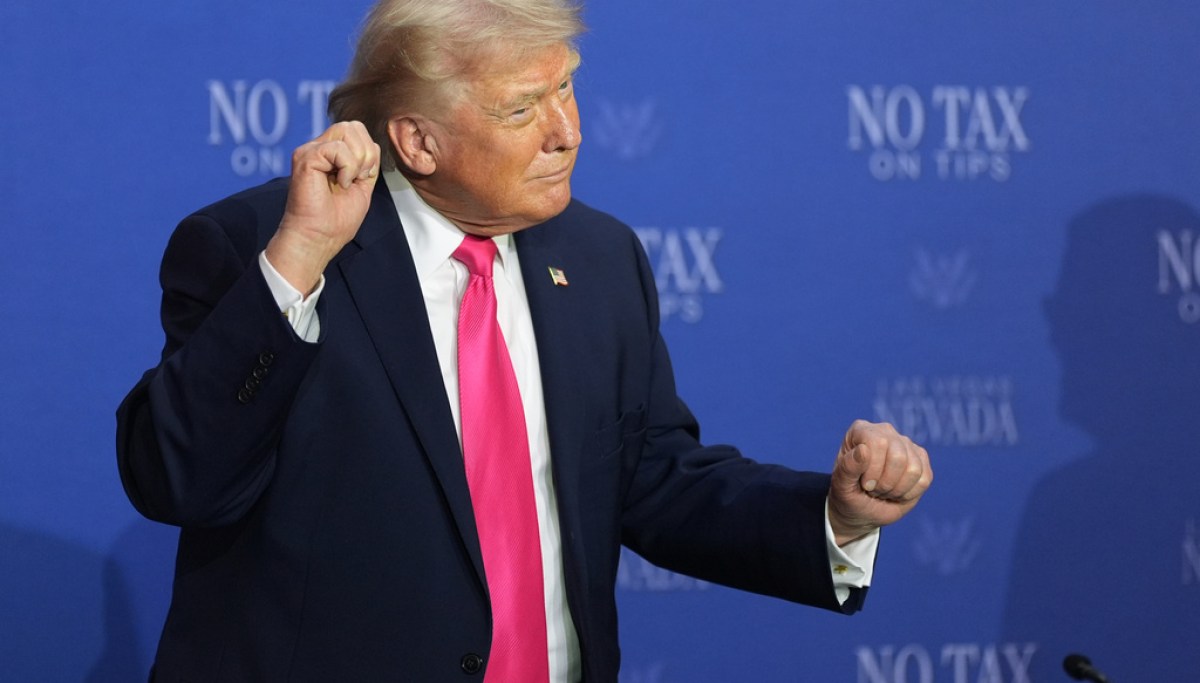
Cover image from washingtonexaminer.com, which was analyzed for this article
Widespread personnel changes dubbed a 'purge' by critics target Congress oversight and Pentagon, with Navy chief out. Defenders call it accountability after Biden holdovers. Spring cleaning tests Trump's coalition limits.
PoliticalOS
Thursday, April 23, 2026 — Politics
Multiple high-ranking officials across the Pentagon, Cabinet, and Congress have departed or been removed in a compressed window, occurring against the backdrop of U.S. military action in Iran that raised energy costs and hurt presidential approval. Specific reasons for several military exits rely on anonymous or unverified accounts that other outlets could not corroborate, while the administration has publicly cited merit and performance. The most important reality is that these changes test continuity and readiness at a sensitive moment; readers should distinguish between confirmed announcements and unattributed claims about motives.
What outlets missed
Most coverage omitted the February 2026 sequence of Iranian proxy attacks that preceded U.S.-Israeli strikes, the subsequent Iranian missile response on U.S. bases, and the fact that the Iranian Supreme Leader was killed during the exchanges. Pentagon statements citing performance reviews and meritocracy as drivers for the military changes received little attention outside conservative outlets and were not balanced against anonymous sourcing in mainstream reporting. The immediate court injunction blocking certification of Virginia's redistricting results on April 22 was rarely noted, softening the perceived finality of that Democratic gain. Specific ethics triggers for the three congressional resignations, including documented indictments and admissions, were downplayed by outlets preferring a generic "purge era" narrative. Low voter turnout of 47.94 percent in the Virginia referendum also went largely unmentioned, providing important context for the narrow margin.
Trump Administration Shakeup Exposes Republican Rift Over Power and Norms
The narrow passage of a Virginia ballot measure on congressional redistricting has crystallized a deeper struggle inside the Republican Party, one that pits traditional conservative commitments to neutral rules against a newer willingness to match Democratic hardball tactics in the pursuit of political survival. The vote, which came in just after President Donald Trump’s 2024 performance in the state, hands map-drawing authority to a process widely expected to dilute Republican strength in the state’s delegation and accelerates warnings of a difficult midterm landscape for the GOP.
The referendum’s outcome triggered immediate recriminations. Critics inside the party questioned whether national Republican leaders and the White House should have committed more resources to defeat it, and whether former Gov. Glenn Youngkin could have done more to rally opposition. Yet the sharper debate is philosophical. For some Republicans, especially those aligned with the institutional habits of the pre-Trump era, aggressive gerrymandering feels like a departure from limited-government principles and faith in neutral procedures. For others, it looks like necessary realism. Democrats, after all, drew a heavily tilted 10-1 congressional map in Indiana, a state where Kamala Harris fell short of 52 percent in 2024. If one side plays by those rules, the argument goes, the other must respond in kind or accept permanent disadvantage.
This tension arrives at the same moment the Trump administration is engaged in a sweeping personnel overhaul that its defenders describe as long-overdue accountability and its critics call a purge. In the past two months, at least five senior officials have been removed or pushed out, including Navy Secretary John Phelan, Army Chief of Staff Gen. Randy George, Attorney General Pam Bondi, Labor Secretary Lori Chavez-DeRemer, and Homeland Security Secretary Kristi Noem. The changes coincide with an unpopular U.S.-Israeli military campaign against Iran that has driven up energy prices and weighed on the president’s approval ratings.
Defense Secretary Pete Hegseth has been the central figure in the military side of the shakeup. The removal of Gen. George followed controversy over his decision to promote an officer who had twice failed the Army’s Battalion Command Assessment Program, a merit-based filter designed to ensure competence at key leadership levels. Hegseth’s allies argue that civilian control of the military is not a slogan but a constitutional requirement, and that secretaries must be free to install leaders who prioritize lethality and discipline over other considerations. They note that President Barack Obama removed dozens of generals and admirals with far less public complaint.
Yet the pace and ideological tone of the current turnover have unsettled even some Republicans who accept the principle of accountability. Career military officers and longtime Pentagon civilians describe a climate in which policy disagreements or perceived disloyalty can accelerate exit. The ouster of Phelan, a billionaire Trump fundraiser, stemmed from repeated clashes with Hegseth over shipbuilding programs and broader management questions. His replacement by Undersecretary Hung Cao, a Trump loyalist, fits a pattern that extends beyond any single policy failure.
At the same time, Congress is experiencing its own version of personnel turbulence. The departures of Reps. Eric Swalwell, Tony Gonzales, and Sheila Cherfilus-McCormick have fueled talk of a “purge era” on Capitol Hill, though the cases involve different mixes of scandal, ideological deviation, and electoral pressure. Democrats point to what they see as selective enforcement that targets moderates or internal critics. Republicans counter that institutions long tolerated underperformance and ideological drift; what is happening now is simply correction after years of lax standards.
The larger backdrop is a Republican Party that won the White House and a narrow House majority in 2024 but now confronts the classic governing challenge: translating campaign disruption into durable institutional advantage. Virginia’s redistricting defeat suggests that advantage may be more fragile than expected. If the new maps survive legal challenges, Republicans could lose several seats in a state that has trended away from them in recent cycles. Similar fights are brewing in other states, amplifying the sense that control of the House in 2026 is at genuine risk.
Underlying the tactical arguments is a philosophical disagreement that has intensified since Trump first reshaped conservative institutions. One camp continues to believe that restraint, consistent rules, and respect for process ultimately protect republican government. The other believes that politics is inherently zero-sum and that unilateral forbearance amounts to unilateral disarmament. The Virginia result and the spring shakeup both illustrate how unresolved that disagreement remains.
Public reaction has split along familiar lines. Conservative outlets frame the personnel changes as restoration of accountability and civilian supremacy. Liberal commentators warn of politicization of the military and erosion of independent expertise inside government. The truth contains elements of both: some of those removed had records open to legitimate criticism, yet the scale and visibility of the turnover risk signaling that loyalty tests now carry more weight than they once did.
Midterm dynamics will test which interpretation voters endorse. Rising energy costs from the Iran conflict, continued internal drama, and the mechanical effects of redistricting could combine to produce the “blue wave” some Democrats now anticipate. For Republicans, the coming months will determine whether the harder-edged approach to power consolidates their gains or accelerates the very losses they sought to avoid. The Virginia vote was only one referendum, but it exposed fault lines that the party has yet to resolve.
You just read Liberal's take. Want to read what actually happened?
More in Politics

Trump Defends Ramaswamy Ad Using Estranged Mother in Ohio Race
President Trump defended a GOP nominee's ad featuring a Democratic opponent's estranged mother, calling it powerful, while drawing criticism from some Republicans including Ohio Gov. Mike DeWine. The ad has sparked internal GOP tensions ahead of midterms.
Federal Raid Targets Omar Amid Unresolved Name and Marriage Allegations
Agents searched Rep. Ilhan Omar's DC residence over immigration fraud allegations; she called it bizarre. Reports and commentary questioned her birth name and past marriage details.

Supreme Court Upholds New Hampshire Student ID Voting Ban
The Supreme Court upheld New Hampshire's ban on student IDs as valid voter identification just before midterms, affecting a tight Senate race.
Early Voting Hits 21 Million as Most Trust Midterm Accuracy
Millions have already voted early as parties make final appeals amid $1.4 billion in ad spending; polls show confidence in election accuracy.
The Compass
You just read five takes on one story.
What's your take? Find your political shape in a few minutes.
Take the test