
Trump's Economic Ratings Hit Lows in Fox Poll Amid Gas Price Surge

Cover image from newrepublic.com, which was analyzed for this article
Fox News poll reveals Trump's worst approval on key election pledges, with Reuters/Ipsos linking blame to gas prices. Support erodes from crucial blocs as aides scramble amid bad mood and reality check on promises. Critics highlight fragility in Oval Office meltdowns.
PoliticalOS
Friday, April 24, 2026 — Politics
Recent Fox, Reuters/Ipsos and Third Way polls document genuine economic discontent and declining approval for President Trump driven by war-induced gas prices above $4 a gallon, creating a challenging environment for Republicans six months before midterms. Yet the data also reveal sharp partisan polarization, uncorroborated specifics across outlets, and GOP resilience on immigration, meaning the ultimate electoral impact will hinge on whether energy costs moderate and how voters prioritize issues beyond the economy. The single most important thing to understand is that secondary interpretations often amplify unverified numbers; readers gain most by reviewing the primary Fox and Reuters releases directly.
What outlets missed
Most coverage omitted that the February 2026 U.S.-Israeli strikes on Iran specifically targeted nuclear enrichment sites, ballistic missile infrastructure and air defenses after years of failed negotiations, providing critical context for the resulting oil disruption rather than framing it solely as unprompted escalation. Outlets downplayed or ignored the Fox poll's simultaneous record 70 percent disapproval rating for congressional Democrats and persistent GOP advantages on immigration and China policy, which illustrate intense polarization instead of one-sided collapse. Many also failed to note Trump's documented gains with Latino voters in 2024, from 32 percent to 42-46 percent per Pew and AP data, making current erosion appear more dramatic without the baseline. Finally, few mentioned Fox pollster observations about remaining Republican optimism within their own party or AAA reports suggesting prices had already begun easing from the $4.03 peak as crude inventories stabilized.
Trump Economic Approval Sinks to Record Lows as Gas Prices Weigh on Voters
A Fox News poll released this week delivers sobering data on President Donald Trump's standing with voters on the economy, an issue that once formed the core of his political appeal. The survey found just 34 percent of registered voters approving of Trump's handling of the economy, with 66 percent disapproving. On inflation, the numbers were even more stark: 28 percent approval against 72 percent disapproval. For the first time in 16 years, a Fox News poll showed Democrats holding a four-point lead over Republicans on which party would better manage the economy, 52 percent to 48 percent.
These figures mark a sharp reversal from earlier in Trump's term. Data analyst Harry Enten, appearing on CNN, described the results as "downright atrocious" and the worst recorded for any modern president on the economy. No president has previously posted a net negative 32-point approval rating on this question. Joe Biden's lowest was minus 25 in 2022, and George W. Bush reached the same level in 2006. The shift appears driven heavily by independents, who now give Trump a net negative 55-point rating on the economy, compared with a slight positive rating as recently as January 2025.
The numbers arrive as separate polling underscores the concrete pressures shaping public sentiment. A Reuters/Ipsos survey conducted this month found 77 percent of registered voters holding Trump at least partly responsible for the recent surge in gasoline prices. That view crossed party lines, with 55 percent of Republicans, 82 percent of independents, and 95 percent of Democrats attributing blame to the president. The price increase stems from the U.S. and Israeli military strikes on Iran launched in February, which disrupted roughly one-fifth of global oil trade. American gasoline prices have climbed to about four dollars per gallon, a dollar higher than before the conflict began.
Fifty-eight percent of voters in the Reuters/Ipsos poll said they would be less likely to support midterm candidates who back Trump's approach to the Iran conflict. Republican strategists acknowledged the difficulty. Sarah Chamberlain, president of the Republican Main Street Partnership, told reporters, "Right now, it's bad. People are upset."
The economic discontent extends to key demographic groups that helped deliver Trump's 2024 victory. A March poll by Third Way and UnidosUS found Trump's favorability among Latino voters at 34 percent favorable to 66 percent unfavorable, a significantly wider gap than his overall 44-55 split. On the economy, only 33 percent of Latino respondents viewed Trump's performance positively against 66 percent negative. Immigration ratings followed a similar pattern, with 32 percent positive and 67 percent negative among Latinos.
Congressional ballot tests in that survey showed Democrats leading Republicans by 45-41 overall but by a commanding 61-31 margin among Latino voters, a 30-point swing from 2024 patterns. The Democratic advantage with Latino men reached 22 points, returning to historical norms and exceeding Kamala Harris's 2024 performance in the group.
Inside the White House, the polling has not gone unnoticed. Multiple reports indicate Trump is in a foul temper and moving to dismiss senior officials. GOP senators speaking to Politico described a climate of purges, with one observing, "He's in a bad mood, so he's letting a lot of them go." Advisers are said to be scrambling to devise a midterm strategy that can stem losses in the House and Senate, where Republican majorities already appear vulnerable.
G. Elliott Morris, who analyzes polling at Strength in Numbers, has argued for months that Trump's underlying position is weaker than much of the public commentary has recognized. In conversation with The New Republic's Greg Sargent, Morris placed the current Fox numbers in context against Biden's earlier lows and noted the speed with which independent voters have shifted. The data suggest that when prices at the pump rise and household budgets tighten, voters respond to tangible costs rather than abstract arguments.
Economists have long observed that energy prices function as a highly visible tax on working families, transmitting global shocks directly into monthly expenses. The current disruption traces to a deliberate policy choice to confront Iran militarily, a decision that succeeded in removing its leadership but carried predictable second-order effects on oil markets. History offers ample precedent: sudden increases in fuel costs have eroded incumbent support across administrations of both parties.
Midterm elections remain six months away, and political fortunes can shift. Yet the convergence of these surveys points to a clear pattern. Voter judgments on the economy appear grounded in the prices they encounter at the grocery store and gas station, not in partisan messaging. For Republicans hoping to retain congressional majorities, the data present a warning that abstract successes in foreign policy have not offset the immediate financial strain felt by millions of households. Whether that dynamic hardens or softens in coming months will depend on events still unfolding in the Middle East and their continued impact on American pocketbooks.
You just read Conservative's take. Want to read what actually happened?
More in Politics
Trump at 32% Approval as Gas Prices Test GOP Midterm Hopes
NYT/Siena polling showed Trump's approval at historic lows around 32 percent with Democrats leading by double digits in key districts. Early voting has surged in battleground states.

Record Early Voting Hits Battlegrounds, Shifting Partisan Shares
AP analysis found hundreds of thousands more early ballots than in 2022 in states including Texas, Ohio, Kansas, Maine, and North Carolina, shifting partisan dynamics.
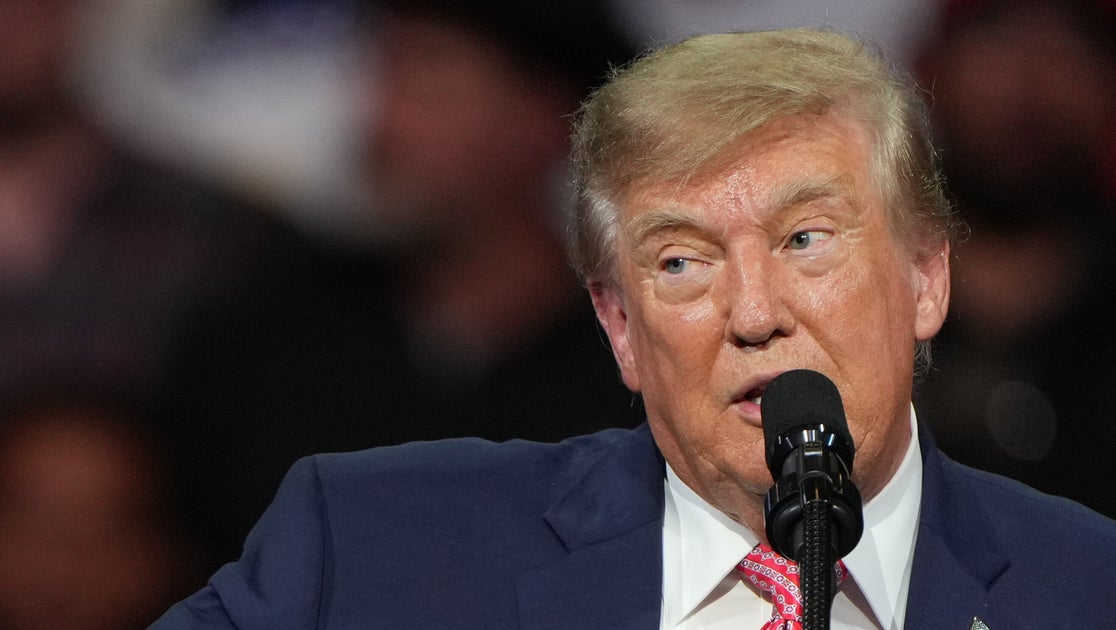
Trump Backs Marshall in Kansas Senate Race Tightened by Farm Costs
President Trump rallied in deep-red Kansas for GOP Sen. Roger Marshall in a competitive race, announcing an $8 billion farm fuel relief program amid high diesel prices. Democrats see an opening to end 94 years of GOP dominance in the state.

Trump Pauses Russia Sanctions Amid Ukraine Tensions and Missile Strikes
Trump waived sanctions on Russia and floated trilateral talks with Putin and Xi as part of ending the Ukraine war, while tensions rose with Zelenskyy over Starlink and arms. Bipartisan senators engaged Zelenskyy amid the shifts.
The Compass
You just read five takes on one story.
What's your take? Find your political shape in a few minutes.
Take the test