
Trump Meets Xi in Beijing Amid Trade, Iran and Taiwan Tensions
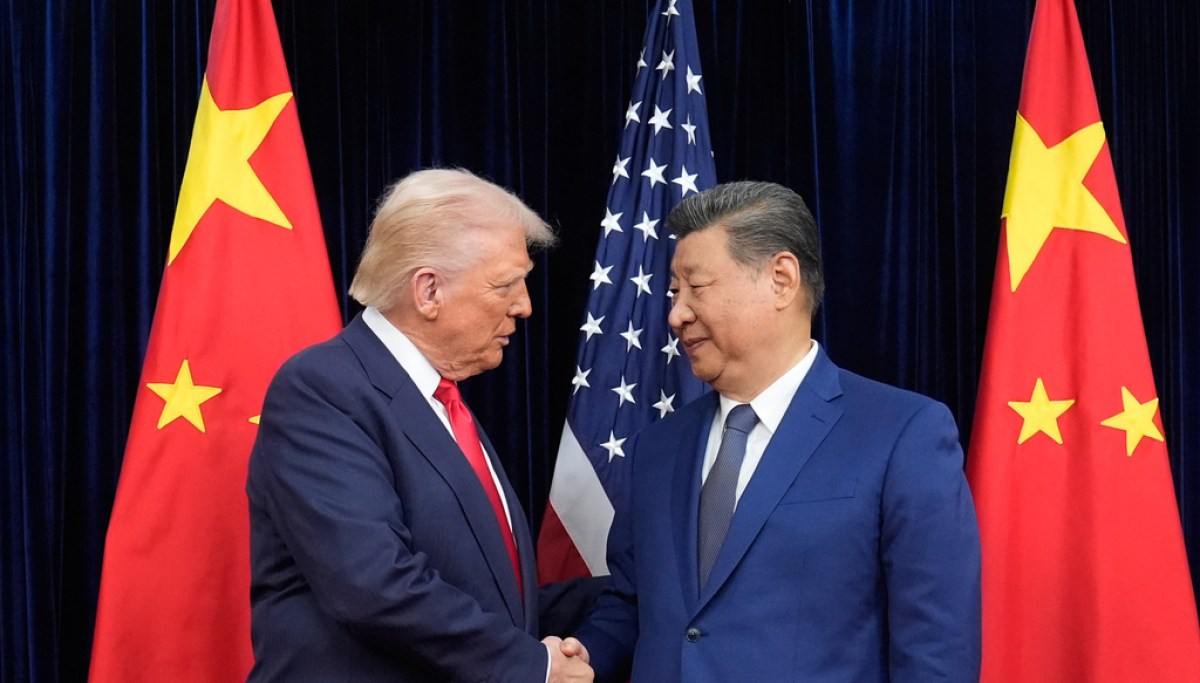
Cover image from washingtonexaminer.com, which was analyzed for this article
Trump travels to Beijing for high-stakes talks with Xi on trade, Taiwan, Iran support, and AI amid bilateral frictions. Tech CEOs including Elon Musk and Tim Cook accompany him, though Nvidia's Huang stays behind. The summit tests their relationship as Trump softens on China's system.
PoliticalOS
Tuesday, May 12, 2026 — Politics
The summit is primarily an effort to stabilize trade relations and manage immediate frictions over Iran and Taiwan rather than to achieve a sweeping new agreement. Trump’s personal rapport with Xi provides the main channel for modest deals on agriculture and aircraft, yet structural competition over technology and security remains unresolved.
What outlets missed
Most coverage omitted the precise sequence of the Iran conflict, including that U.S. and Israeli strikes preceded Iran’s closure of the Strait of Hormuz. Few outlets reported the exact scale of past commercial deals announced during Trump-Xi meetings or confirmed that no Supreme Court ruling on tariffs occurred in February. Several pieces also failed to note that Nvidia CEO Jensen Huang is not traveling with the delegation while other semiconductor executives are.
Trump Travels to Beijing Seeking Leverage on Trade and Iran
President Donald Trump arrived in Beijing on Tuesday for a two-day summit with Chinese leader Xi Jinping, the first such visit by a U.S. president in nearly nine years. The meetings come at a delicate moment for both countries, as they attempt to stabilize an economic relationship strained by tariffs while addressing the spillover effects of the ongoing conflict in Iran and longstanding disputes over Taiwan and technology.
Trump has described his personal rapport with Xi in warm terms, calling the Chinese president a “tremendous guy” and predicting a productive encounter. Yet the agenda includes several points of friction. U.S. officials say Trump plans to press China over its continued purchases of Iranian oil and its role in supplying dual-use components that could benefit both Iran and Russia. Beijing has already signaled resistance, issuing directives instructing Chinese firms to disregard certain U.S. sanctions on Iranian energy exports. The administration has imposed new penalties in recent days, and officials expect those measures to feature in the talks.
Trade remains the most tangible area where both sides see potential for modest progress. Last fall’s meeting on the sidelines of the Asia-Pacific Economic Cooperation summit produced a pause in escalating tariffs. American businesses continue to face higher costs on many Chinese imports, and polls show voters want relief from those expenses even as they view China primarily as an economic rival rather than a military threat. A recent NPR/Chicago Council on Global Affairs survey found that nearly eight in ten Americans believe Beijing seeks global dominance, yet a majority also favors maintaining robust commercial ties and reducing tariffs to limit consumer price increases.
Xi, for his part, is expected to seek greater predictability in export markets and relief from U.S. restrictions on advanced semiconductors and other technologies. Chinese officials have long complained that tariffs and export controls disrupt supply chains without achieving their stated goals. They are also likely to press for clearer U.S. assurances regarding Taiwan, including limits on arms sales and stronger statements against formal independence for the island.
A notable feature of Trump’s delegation is the inclusion of several prominent technology executives, among them Elon Musk of Tesla and SpaceX, outgoing Apple chief Tim Cook, and leaders from Qualcomm, Micron, and Cisco. Their presence underscores the administration’s interest in shaping rules around artificial intelligence and semiconductor supply chains. The United States retains advantages in frontier AI models and certain high-end chips, yet China has made rapid gains in manufacturing scale and has sought to reduce reliance on foreign suppliers. Both governments have incentives to avoid a complete decoupling that would raise costs for firms on each side.
The summit was originally scheduled for earlier this spring but was postponed as the Iran conflict intensified. That delay has left Washington in a somewhat weaker negotiating position, with the Strait of Hormuz still partially closed and no clear end to the fighting in sight. China, by contrast, has maintained steady oil flows from Iran and positioned itself as a relatively stable partner for Tehran. Analysts expect Xi to link any cooperation on energy routes to concessions elsewhere, particularly on Taiwan.
Public expectations for dramatic breakthroughs remain low. Past meetings between the two leaders have produced incremental deals on agriculture and financial services, but core disagreements over subsidies, technology transfer, and security issues have persisted. The current moment is defined less by the prospect of a grand bargain than by the narrower question of whether both sides can prevent further deterioration while managing immediate crises.
For the United States, the challenge lies in balancing pressure on Iran and Taiwan with the economic costs of prolonged confrontation. For China, the priority is restoring a measure of stability to its export-led economy without appearing to yield on core sovereignty claims. The coming days will test whether personal familiarity between the two leaders can translate into concrete steps on any of these fronts.
You just read Liberal's take. Want to read what actually happened?
More in Politics
Trump at 32% Approval as Gas Prices Test GOP Midterm Hopes
NYT/Siena polling showed Trump's approval at historic lows around 32 percent with Democrats leading by double digits in key districts. Early voting has surged in battleground states.

Record Early Voting Hits Battlegrounds, Shifting Partisan Shares
AP analysis found hundreds of thousands more early ballots than in 2022 in states including Texas, Ohio, Kansas, Maine, and North Carolina, shifting partisan dynamics.
Trump Backs Marshall in Kansas Senate Race Tightened by Farm Costs
President Trump rallied in deep-red Kansas for GOP Sen. Roger Marshall in a competitive race, announcing an $8 billion farm fuel relief program amid high diesel prices. Democrats see an opening to end 94 years of GOP dominance in the state.

Trump Pauses Russia Sanctions Amid Ukraine Tensions and Missile Strikes
Trump waived sanctions on Russia and floated trilateral talks with Putin and Xi as part of ending the Ukraine war, while tensions rose with Zelenskyy over Starlink and arms. Bipartisan senators engaged Zelenskyy amid the shifts.
The Compass
You just read five takes on one story.
What's your take? Find your political shape in a few minutes.
Take the test