
Trump Meets Xi in Beijing Amid Trade, Iran and Taiwan Tensions
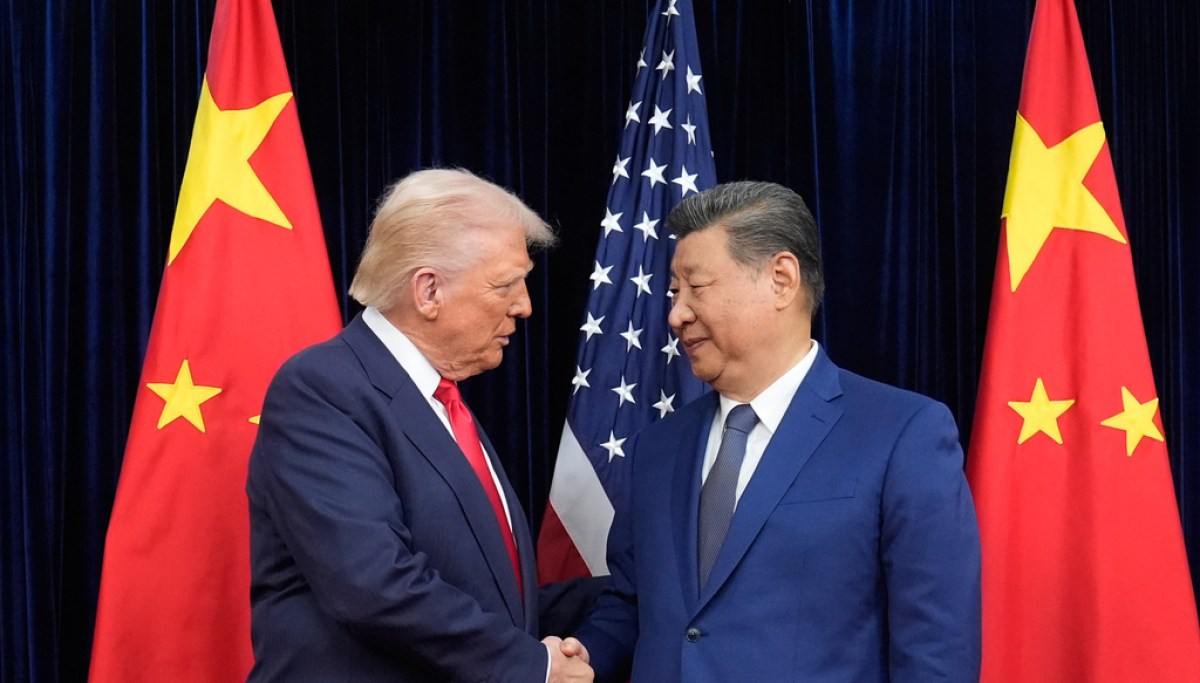
Cover image from washingtonexaminer.com, which was analyzed for this article
Trump travels to Beijing for high-stakes talks with Xi on trade, Taiwan, Iran support, and AI amid bilateral frictions. Tech CEOs including Elon Musk and Tim Cook accompany him, though Nvidia's Huang stays behind. The summit tests their relationship as Trump softens on China's system.
PoliticalOS
Tuesday, May 12, 2026 — Politics
The summit is primarily an effort to stabilize trade relations and manage immediate frictions over Iran and Taiwan rather than to achieve a sweeping new agreement. Trump’s personal rapport with Xi provides the main channel for modest deals on agriculture and aircraft, yet structural competition over technology and security remains unresolved.
What outlets missed
Most coverage omitted the precise sequence of the Iran conflict, including that U.S. and Israeli strikes preceded Iran’s closure of the Strait of Hormuz. Few outlets reported the exact scale of past commercial deals announced during Trump-Xi meetings or confirmed that no Supreme Court ruling on tariffs occurred in February. Several pieces also failed to note that Nvidia CEO Jensen Huang is not traveling with the delegation while other semiconductor executives are.
Trump Heads to China Seeking Leverage Amid Lingering Iran War and Trade Disputes
President Donald Trump arrives in Beijing on Tuesday for his first visit to China in nearly nine years, a summit with Chinese leader Xi Jinping that comes at a moment of heightened friction over the war in Iran, stalled trade talks and competing visions for global technology dominance. The trip, originally slated for earlier this spring, was postponed as the conflict with Tehran dragged on, leaving Washington dependent on Beijing's influence with its Iranian ally to help ease the crisis.
Senior administration officials have signaled that Trump plans to press Xi directly over China's continued economic and material support for both Iran and Russia. This includes purchases of Iranian oil that have defied recent U.S. sanctions and shipments of dual-use components that could aid adversarial regimes. Trump has already raised these issues in multiple prior conversations with Xi, officials said, and he is expected to continue that line during the two-day meetings. China, for its part, has instructed its companies to ignore certain American sanctions targeting Tehran, a move that directly challenges Washington's efforts to isolate Iran.
The war has complicated Trump's negotiating position. What the White House once hoped would be a short engagement has become a protracted stalemate, with the closure of the Strait of Hormuz disrupting global energy flows and leaving Beijing looking comparatively steady. Analysts note that Xi may seek concessions in exchange for any assistance in reopening the waterway, particularly on Taiwan. Trump has acknowledged that Taiwan's status will feature in the discussions, telling reporters that Xi wants the United States to reduce its support for the self-governing island.
Trade and tariffs remain central to the agenda. The two leaders reached a tentative truce last fall in Busan, South Korea, halting a new round of tariff escalations. Yet the U.S. trade deficit with China still exceeds $200 billion, and Beijing is pushing for lower barriers on its exports, including electric vehicles and other manufactured goods. Trump has brought along a delegation of American business leaders, including Apple's Tim Cook and Tesla's Elon Musk, in hopes of securing investment commitments and technology deals. Discussions on artificial intelligence rules and semiconductor access are also anticipated, though the absence of Nvidia's Jensen Huang from the trip may limit prospects for major chip-related breakthroughs.
Public opinion in the United States adds another layer of pressure. A recent NPR-Chicago Council on Global Affairs-Ipsos poll found that nearly eight in ten Americans believe China seeks to become the world's dominant power, with a majority viewing it as either a rival or an adversary. At the same time, respondents expressed a clear preference for maintaining strong trade ties and reducing tariffs to keep consumer costs in check. Only a small minority sees China as posing no threat at all.
Trump has described his personal rapport with Xi in glowing terms, calling the Chinese leader a "great gentleman" and predicting positive outcomes. Yet the summit carries clear risks. Any short-term trade concessions on agriculture or aircraft could come at the expense of longer-term leverage on Taiwan or technology controls. China, facing its own economic headwinds from a collapsing real estate sector, has strong incentives to stabilize the relationship and secure predictable market access. With Russian President Vladimir Putin scheduled to visit Beijing shortly after Trump's departure, the optics of great-power maneuvering will be hard to ignore.
The stakes extend well beyond bilateral commerce. How the two leaders navigate the Iran conflict, Taiwan's security and emerging rules for artificial intelligence could shape global stability for years to come. Both sides appear eager to avoid outright rupture, but the underlying tensions suggest that durable agreements will require more than personal chemistry.
You just read Progressive's take. Want to read what actually happened?
More in Politics

Trump Defends Ramaswamy Ad Using Estranged Mother in Ohio Race
President Trump defended a GOP nominee's ad featuring a Democratic opponent's estranged mother, calling it powerful, while drawing criticism from some Republicans including Ohio Gov. Mike DeWine. The ad has sparked internal GOP tensions ahead of midterms.
Federal Raid Targets Omar Amid Unresolved Name and Marriage Allegations
Agents searched Rep. Ilhan Omar's DC residence over immigration fraud allegations; she called it bizarre. Reports and commentary questioned her birth name and past marriage details.

Supreme Court Upholds New Hampshire Student ID Voting Ban
The Supreme Court upheld New Hampshire's ban on student IDs as valid voter identification just before midterms, affecting a tight Senate race.
Early Voting Hits 21 Million as Most Trust Midterm Accuracy
Millions have already voted early as parties make final appeals amid $1.4 billion in ad spending; polls show confidence in election accuracy.
The Compass
You just read five takes on one story.
What's your take? Find your political shape in a few minutes.
Take the test