
DOJ Files to Denaturalize 12 Over Alleged Fraud, Terror Ties
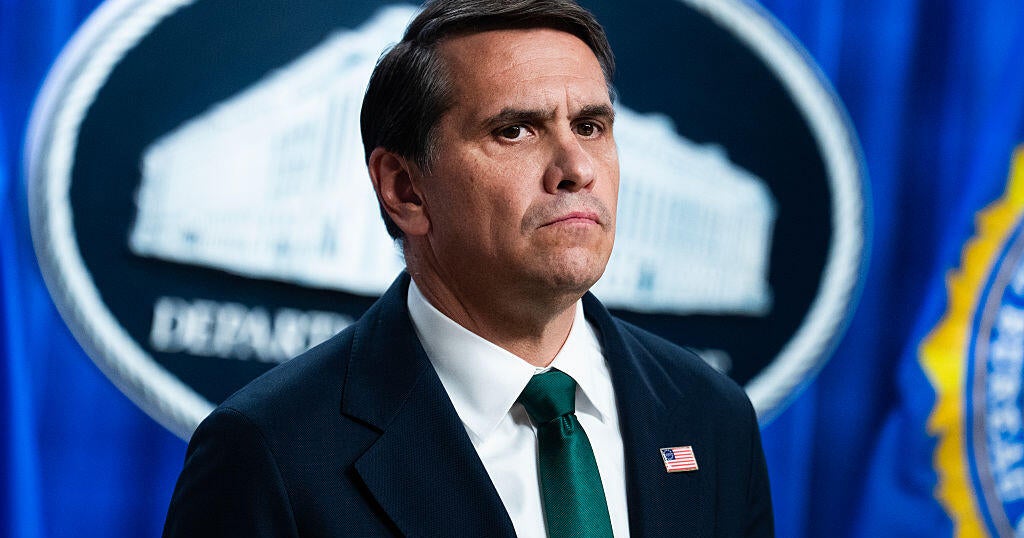
Cover image from cbsnews.com, which was analyzed for this article
The Justice Department under Trump is targeting naturalized citizens for denaturalization, focusing on those with alleged terror ties or fraud, including a dozen cases. This escalates immigration enforcement amid broader crackdowns. Supporters praise protecting national security, opponents decry targeting immigrants.
PoliticalOS
Friday, May 8, 2026 — Politics
The Justice Department is actively pursuing denaturalization against a small group of naturalized citizens accused of deliberately concealing terrorism ties, war crimes or sexual abuse during their applications, as part of a larger review that could reach hundreds of cases. The tool remains legally difficult, requiring clear and convincing evidence of material fraud, and has been used sparingly by multiple administrations. The central unresolved question is whether this returns integrity to the system or undermines the security that naturalized citizens have long relied upon.
What outlets missed
Most coverage omitted that the 12 public cases represent only initial filings from a documented April 2026 DOJ directive assigning nearly 400 potential denaturalizations across 39 U.S. Attorney offices, a procedural shift that reframes the story from isolated actions to systematic review. Outlets gave limited attention to the precise legal standard: the government must prove with clear and convincing evidence that the concealed information was material, meaning citizenship would not have been granted had it been known. Few explored logistical realities, including chronic staffing shortages in the Civil Division, judicial skepticism toward expansive use, and the fact that many referenced cases rely on allegations or convictions from a decade or more ago rather than fresh discoveries. Past administrations, including Obama-era efforts that improved fraud detection through better data sharing, received almost no mention, erasing continuity in enforcement.
Justice Department Acts to Revoke Citizenship from Naturalized Americans Who Concealed Serious Crimes
The Department of Justice has initiated proceedings to denaturalize 12 naturalized U.S. citizens accused of obtaining their citizenship by concealing grave offenses including ties to terrorism, war crimes, sexual abuse of minors, and other violent acts. The action, announced Friday, marks a significant escalation in the use of a long-available but seldom-employed legal tool and reflects the Trump administration's determination to restore integrity to the naturalization process.
Among those targeted is Victor Manuel Rocha, a former U.S. ambassador to Bolivia and one-time National Security Council official. Rocha, a native of Colombia, is currently serving a 15-year federal prison sentence after being convicted in 2024 of spying for the Cuban government over decades. Prosecutors allege he concealed these activities and his divided loyalties during his path to citizenship and subsequent government service. The inclusion of such a high-profile figure underscores the stakes involved when individuals with hidden allegiances to foreign powers or criminal networks gain the full rights and protections of American citizenship.
The other cases involve individuals from Iraq, Somalia, China, India, and additional countries in Africa, Asia, and South America. One defendant, Ali Yousif Ahmed, became a citizen after claiming he fled Iraq in 2009 to escape al-Qaeda violence against his family. Federal authorities now say Ahmed omitted that he had in fact served as an al-Qaeda leader and was wanted by Iraqi officials for the murder of two police officers. Such discrepancies between claimed persecution and actual conduct raise fundamental questions about the reliability of the screening processes that admitted these individuals.
Acting Attorney General Todd Blanche framed the initiative in straightforward terms. "The Trump administration is taking action to correct these egregious violations of our immigration system," Blanche said. "Those who intentionally concealed their criminal histories or misrepresented themselves during the naturalization process will face the fullest extent of the law." He added that the lax practices and selective enforcement of prior years would not continue, signaling a broader effort to prioritize prosecutorial integrity over volume of cases.
Denaturalization has historically been rare for good reason. Government data show that between 1990 and 2017 the United States opened an average of just 11 such cases annually. The process is deliberately difficult, requiring clear and convincing evidence in civil court that citizenship was procured through fraud or willful misrepresentation of material facts. Citizenship, once granted, carries profound weight in American tradition. Yet that tradition has always rested on the assumption of honesty in the application process. When that assumption proves false, particularly in matters involving national security or serious crime, the government's duty to correct the record becomes clear.
The current wave of cases follows internal guidance issued last summer directing the Justice Department's Civil Division to treat denaturalization as a priority. Officials have referred hundreds of additional potential cases for review, with plans to pursue them methodically. The administration views these efforts as complementary to its larger immigration enforcement strategy, one that emphasizes legal entry, truthful vetting, and the principle that American citizenship should not be available to those who obtain it by deceit.
Critics of expanded denaturalization often warn of due process concerns or fear a slippery slope toward targeting ordinary immigrants. Yet the specific allegations in these 12 cases involve concealment of terrorism support, participation in atrocities, or sexual predation, not minor paperwork errors. The distinction matters. A system that cannot or will not revoke citizenship from individuals later shown to have sworn falsely undermines confidence in the entire naturalization framework. Lawful immigrants who complete the demanding process in good faith have every reason to support rigorous enforcement against those who cheat it.
The cases also illuminate patterns that have long troubled immigration scholars. Several defendants hail from regions with active terrorist organizations or unstable governance where background verification can prove exceptionally difficult. When individuals from such environments later prove to have maintained loyalties to designated terrorist groups or to have committed serious crimes abroad, the consequences extend beyond the individuals involved. They erode public trust in immigration policy itself and place additional strain on communities asked to welcome newcomers whose histories remain partially obscured.
Rocha's case stands as a particularly stark example. A man entrusted with sensitive diplomatic and national security responsibilities turned out to have served a hostile foreign power for years. His successful navigation of the naturalization and security clearance systems suggests gaps that extend beyond any single administration. Correcting those gaps requires not only pursuing current cases but also improving the initial vetting that prevents fraudulent applications from succeeding in the first place.
The Justice Department has filed the complaints in federal courts across multiple jurisdictions. Each case will now proceed under the exacting standards of denaturalization law, with defendants afforded full opportunity to contest the government's evidence. Outcomes will depend on the facts presented, not political pressure. Yet the very existence of these proceedings sends a necessary signal: American citizenship is a solemn pact based on truth. Those who enter that pact while deliberately concealing material facts about terrorism, war crimes, or sexual offenses against children invite the lawful consequences that follow.
This first batch of 12 represents only the beginning of what officials describe as a sustained effort. As additional cases move forward, the public will gain further insight into how many individuals may have slipped through the naturalization process during periods of looser scrutiny. The measure of success will not be the raw number of revocations but the degree to which the system regains the credibility essential to its proper functioning. In a nation built on laws and individual responsibility, few principles matter more than ensuring that the highest civic honor goes only to those who claim it honestly.
You just read Conservative's take. Want to read what actually happened?
More in Politics
Trump at 32% Approval as Gas Prices Test GOP Midterm Hopes
NYT/Siena polling showed Trump's approval at historic lows around 32 percent with Democrats leading by double digits in key districts. Early voting has surged in battleground states.

Record Early Voting Hits Battlegrounds, Shifting Partisan Shares
AP analysis found hundreds of thousands more early ballots than in 2022 in states including Texas, Ohio, Kansas, Maine, and North Carolina, shifting partisan dynamics.
Trump Backs Marshall in Kansas Senate Race Tightened by Farm Costs
President Trump rallied in deep-red Kansas for GOP Sen. Roger Marshall in a competitive race, announcing an $8 billion farm fuel relief program amid high diesel prices. Democrats see an opening to end 94 years of GOP dominance in the state.

Trump Pauses Russia Sanctions Amid Ukraine Tensions and Missile Strikes
Trump waived sanctions on Russia and floated trilateral talks with Putin and Xi as part of ending the Ukraine war, while tensions rose with Zelenskyy over Starlink and arms. Bipartisan senators engaged Zelenskyy amid the shifts.
The Compass
You just read five takes on one story.
What's your take? Find your political shape in a few minutes.
Take the test