
DOJ Files to Denaturalize 12 Over Alleged Fraud, Terror Ties
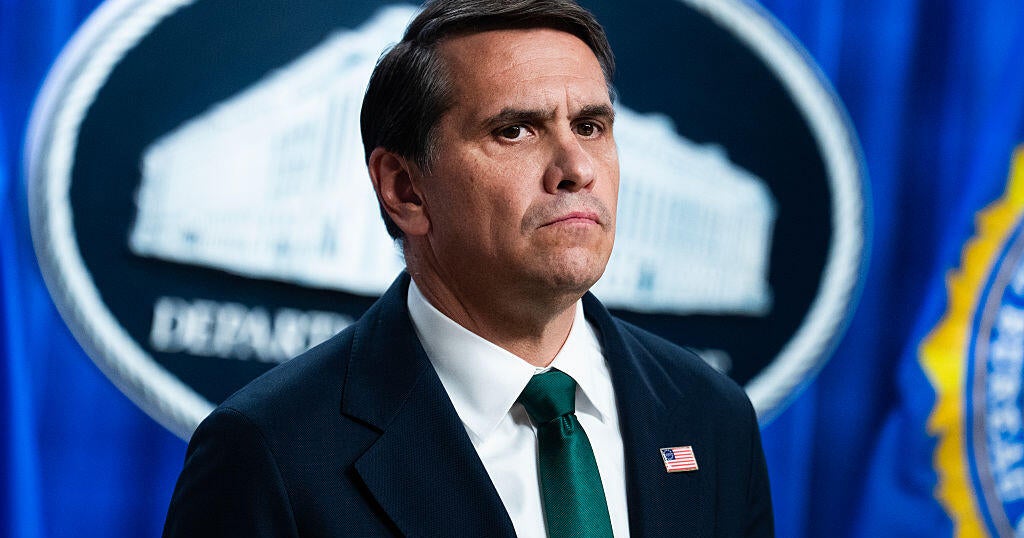
Cover image from cbsnews.com, which was analyzed for this article
The Justice Department under Trump is targeting naturalized citizens for denaturalization, focusing on those with alleged terror ties or fraud, including a dozen cases. This escalates immigration enforcement amid broader crackdowns. Supporters praise protecting national security, opponents decry targeting immigrants.
PoliticalOS
Friday, May 8, 2026 — Politics
The Justice Department is actively pursuing denaturalization against a small group of naturalized citizens accused of deliberately concealing terrorism ties, war crimes or sexual abuse during their applications, as part of a larger review that could reach hundreds of cases. The tool remains legally difficult, requiring clear and convincing evidence of material fraud, and has been used sparingly by multiple administrations. The central unresolved question is whether this returns integrity to the system or undermines the security that naturalized citizens have long relied upon.
What outlets missed
Most coverage omitted that the 12 public cases represent only initial filings from a documented April 2026 DOJ directive assigning nearly 400 potential denaturalizations across 39 U.S. Attorney offices, a procedural shift that reframes the story from isolated actions to systematic review. Outlets gave limited attention to the precise legal standard: the government must prove with clear and convincing evidence that the concealed information was material, meaning citizenship would not have been granted had it been known. Few explored logistical realities, including chronic staffing shortages in the Civil Division, judicial skepticism toward expansive use, and the fact that many referenced cases rely on allegations or convictions from a decade or more ago rather than fresh discoveries. Past administrations, including Obama-era efforts that improved fraud detection through better data sharing, received almost no mention, erasing continuity in enforcement.
Trump Administration Escalates Denaturalization Campaign Against Naturalized Citizens
The Trump administration's Justice Department has launched a notable expansion of denaturalization proceedings, filing cases against a dozen naturalized U.S. citizens whom officials accuse of concealing serious criminal histories or terrorist ties during their path to citizenship. The move, announced Friday, includes high-profile targets and signals a deliberate shift toward more aggressive use of a legal tool that previous administrations have deployed sparingly.
Among those targeted is Victor Manuel Rocha, a Colombian-born former U.S. ambassador to Bolivia and one-time National Security Council official. Rocha has been serving a 15-year federal prison sentence since 2024 after pleading guilty to acting as an agent of the Cuban government for decades, including during his time in sensitive diplomatic roles. The government alleges he concealed this allegiance when applying for citizenship. The other cases involve individuals from Iraq, Somalia, China, India and additional countries in Africa, Asia and South America. They range in age from 26 to 75 and stand accused of hiding offenses that include providing material support to terrorists, committing war crimes, sexual abuse of a minor, or direct involvement in violent crimes.
One case highlighted by authorities involves Ali Yousif Ahmed, an Iraqi national who became a U.S. citizen after claiming he fled persecution by al-Qaeda in 2009. Federal officials now say Ahmed omitted that Iraqi authorities had sought his extradition for allegedly serving as an al-Qaeda leader and murdering two police officers. Acting Attorney General Todd Blanche framed the actions as a restoration of integrity to the immigration system. "Those who intentionally concealed their criminal histories or misrepresented themselves during the naturalization process will face the fullest extent of the law," Blanche said. He added that the "weaponization that happened under the Biden Administration will not happen again."
The cases represent a sharp departure from historical norms. Between 1990 and 2017, the government pursued an average of just 11 denaturalization cases annually, according to long-standing research cited across multiple outlets. Denaturalization is a complex civil process that requires proving fraud or willful misrepresentation in the original naturalization application. Citizenship, once granted, has long been treated as a nearly irrevocable status, reflecting America's self-image as a nation of immigrants who can fully join the political community.
That tradition is now under strain. Internal directives issued last summer ordered the Department of Homeland Security to refer as many as 200 potential cases per month for review. Justice Department offices were recently instructed to prepare for an initial wave of nearly 400 denaturalization actions. Officials describe the effort as a targeted response to fraud and national security threats, part of a broader immigration enforcement push that includes heightened scrutiny of refugee programs and past grants of citizenship.
The administration's approach reflects a view that naturalization is not an absolute shield. By revoking citizenship from those who allegedly lied about ties to terrorism or heinous crimes, officials argue they are correcting systemic vulnerabilities that allowed dangerous individuals to embed within American society. Yet the scale of the planned expansion raises practical and institutional questions. Denaturalization cases demand significant legal resources, often stretching over years with extensive evidentiary requirements. If pursued at the volume now contemplated, the effort could test the capacity of federal courts and the Civil Division of the Justice Department.
It also touches deeper issues about the security of citizenship itself. Naturalized Americans, who make up roughly 7 percent of the U.S. adult population, have historically enjoyed the same fundamental protections as native-born citizens. Broadening the use of denaturalization risks introducing a tiered understanding of citizenship, in which certain groups remain perpetually vulnerable to retroactive scrutiny. Immigrant communities and civil rights organizations have long warned that such policies can chill legitimate applications and erode trust in the system, even when individual cases involve disturbing allegations like espionage or al-Qaeda leadership.
The Friday announcements arrive amid a larger policy debate over how the United States defines membership. Supporters see this as a necessary recalibration after years of lax enforcement. Critics, including some legal scholars, worry it normalizes the idea that citizenship can be clawed back for a widening array of past misdeeds or associations. The inclusion of a former ambassador who compromised U.S. foreign policy adds a layer of gravity, underscoring that these are not abstract bureaucratic adjustments.
For now, each of the 12 cases will proceed through federal courts on their individual merits. The outcomes will likely turn on whether prosecutors can prove the original naturalization applications contained deliberate falsehoods material to approval. Yet the broader campaign suggests denaturalization is moving from the margins of immigration policy toward the center. How aggressively it is applied in the coming months, and whether it remains narrowly focused on clear fraud and security threats, will help determine if this represents a precise correction or a more fundamental redefinition of what it means to be an American citizen.
You just read Liberal's take. Want to read what actually happened?
More in Politics
Trump at 32% Approval as Gas Prices Test GOP Midterm Hopes
NYT/Siena polling showed Trump's approval at historic lows around 32 percent with Democrats leading by double digits in key districts. Early voting has surged in battleground states.

Record Early Voting Hits Battlegrounds, Shifting Partisan Shares
AP analysis found hundreds of thousands more early ballots than in 2022 in states including Texas, Ohio, Kansas, Maine, and North Carolina, shifting partisan dynamics.
Trump Backs Marshall in Kansas Senate Race Tightened by Farm Costs
President Trump rallied in deep-red Kansas for GOP Sen. Roger Marshall in a competitive race, announcing an $8 billion farm fuel relief program amid high diesel prices. Democrats see an opening to end 94 years of GOP dominance in the state.

Trump Pauses Russia Sanctions Amid Ukraine Tensions and Missile Strikes
Trump waived sanctions on Russia and floated trilateral talks with Putin and Xi as part of ending the Ukraine war, while tensions rose with Zelenskyy over Starlink and arms. Bipartisan senators engaged Zelenskyy amid the shifts.
The Compass
You just read five takes on one story.
What's your take? Find your political shape in a few minutes.
Take the test