
Navy Secretary Phelan Removed as US Maintains Iran Blockade
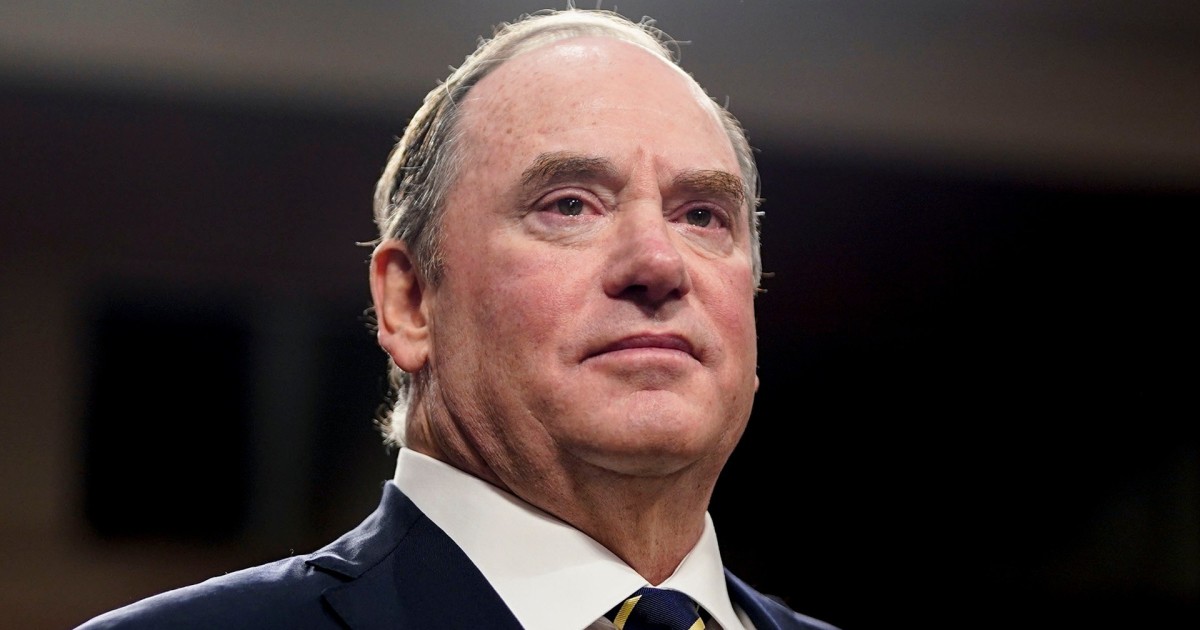
Cover image from today.com, which was analyzed for this article
Navy Secretary John Phelan was removed effective immediately as part of Trump administration shakeups during the critical Hormuz crisis. Pentagon denies long mine clearance timelines, but leadership change raises questions on strategy. Outlets note ties to broader personnel purges.
PoliticalOS
Thursday, April 23, 2026 — Politics
The removal of Navy Secretary John Phelan stems primarily from documented policy and management disagreements with Defense Secretary Pete Hegseth over naval shipbuilding and modernization priorities, not operational failures in the Strait of Hormuz. It forms part of routine high-level Pentagon turnover under the current administration and is unlikely to directly affect ongoing naval blockade activities, though it adds to questions about leadership continuity. Readers should focus on the administrative nature of the role and cross-check ceasefire status and specific strategic disputes rather than assume crisis from headline phrasing alone.
What outlets missed
Most coverage downplayed or omitted the specific strategic disagreement over shipbuilding priorities: Phelan's emphasis on large manned battleships versus Hegseth's reported preference for unmanned vessels, stealth aircraft, submarines and electronic warfare systems, as detailed by naval analyst Bryan Clark. Outlets also underplayed the administration's framing of these and related changes as merit-based performance reviews rather than personal purges. The full background on acting secretary Hung Cao, including his 25 years of service, unsuccessful Senate runs and public statements favoring aggressive warfighting culture, received limited treatment outside specialized reports. Finally, precise details on the April 7 ceasefire timeline, mutual ship seizures by both sides, and the Navy secretary's purely administrative (non-operational) role were often blurred to heighten drama around "wartime" instability.
Pentagon Turmoil Deepens With Navy Secretary's Ouster as Iran War Enters Critical Phase
The Trump administration's pattern of rapid leadership turnover at the Pentagon claimed another high-profile casualty on Wednesday when Navy Secretary John Phelan was fired amid ongoing military operations against Iran. The dismissal, effective immediately, comes as U.S. naval forces maintain a blockade of Iranian ports and a heavy presence in the Strait of Hormuz, the narrow chokepoint through which roughly one-fifth of global oil and gas supplies flowed in peacetime. With reports of potential peace talks circulating and the conflict now in its eighth week, the move underscores a troubling instability in the civilian oversight of America's most forward-deployed military service at a moment when continuity and expertise matter most.
Pentagon spokesman Sean Parnell announced the departure in a brief social media post, offering no explanation beyond gratitude for Phelan's service and well wishes for his future. Navy Undersecretary Hung Cao will assume the role on an acting basis. Multiple officials speaking to various outlets described the firing as the culmination of months of tension between Phelan and Defense Secretary Pete Hegseth, centered on the implementation of the administration's ambitious "Golden Fleet" shipbuilding initiative. That program, which includes plans for a "Trump-class" battleship, was a signature priority for the president, yet Phelan's handling of it reportedly frustrated his superiors.
Phelan, a Harvard Business School graduate, Palm Beach financier, and major Trump campaign donor with no prior military or defense leadership experience, had been appointed in 2024 as a political ally rather than a traditional naval expert. His role as Navy secretary is largely administrative: formulating policy, overseeing recruitment and training, managing budgets, and directing the construction and repair of ships. These functions may seem removed from immediate combat operations, yet they shape the service's long-term capacity at a time when the Navy has been executing high-risk missions, including the detention of Iran-linked vessels and enforcement of the Hormuz blockade that has already strained global energy markets and contributed to higher prices at the pump.
This is not an isolated incident. Hegseth has purged more than a dozen senior military officers since entering the Pentagon, including the chief of naval operations and the Air Force vice chief of staff. Earlier this month he pushed out Army Chief of Staff Gen. Randy George, along with two other Army officials. The Washington Post reported that at least five high-ranking officials have been forced out or resigned under pressure since March, coinciding with a deeply unpopular war that has eroded President Trump's approval ratings. Sources described Phelan as failing to understand that his job was to execute orders rather than shape them, clashing repeatedly with Hegseth and Deputy Defense Secretary Stephen Feinberg. One official told Axios that Phelan "didn't understand he wasn't the boss."
The broader context reveals a Pentagon leadership in flux precisely when institutional steadiness is most needed. The United States finds itself in a conflict that began in late February alongside Israel, one that has already disrupted global shipping and raised the specter of wider regional escalation. Al Jazeera and the BBC both noted that Phelan's exit arrives as U.S. forces continue operations around the Strait of Hormuz, where any miscalculation could spike energy prices further or draw in additional adversaries. The Navy's role here is not abstract; it involves real-time decisions about logistics, sustainment, and the industrial base that supports prolonged operations.
Critics of the administration's approach, including some within military and congressional circles, worry that repeated leadership changes prioritize personal loyalty and ideological alignment over the deep institutional knowledge required to manage complex shipbuilding programs that take years, if not decades, to bear fruit. The "Golden Fleet" concept itself reflects the president's well-known preference for large, visible symbols of American power. Yet turning campaign rhetoric into functional naval capacity requires steady bureaucratic execution, something the current turnover makes harder to achieve. Phelan's background as a fundraiser rather than a manager of large-scale defense projects had always raised questions about whether he possessed the right skills for the job. His departure now, without any public indication of a ready successor beyond the acting undersecretary, adds to concerns about whether the administration is treating the Pentagon as an extension of its political operation rather than a critical national security institution.
The Independent reported that a senior administration official framed the decision as recognition that "new leadership at the Navy is needed," with Hegseth personally informing Phelan before the public announcement. This follows a familiar pattern in the second Trump term, where clashes between political appointees and career military figures often resolve in favor of the former. Earlier friction between Hegseth and Army Secretary Daniel P. Driscoll over promotions suggests the tensions extend beyond one service.
As potential ceasefire talks hover on the horizon, the United States must balance immediate operational demands with the longer-term imperative of rebuilding naval strength to deter future conflicts. Shipbuilding disputes may sound technical, but they sit at the intersection of industrial policy, budget realities, and strategic competition. Persistent leadership churn risks turning those disputes into chronic weaknesses. The administration's willingness to accept that risk during active hostilities raises fundamental questions about how it defines effective governance in wartime, questions that extend well beyond the personality of one Navy secretary.
For now, the Pentagon has offered little insight into how Cao's acting tenure might differ or whether the "Golden Fleet" initiative will be restructured. What is clear is that the military's civilian leadership continues to be remade in the image of a president who has long viewed the armed forces through a lens of personal allegiance. In the Strait of Hormuz and the shipyards alike, the consequences of that approach are coming into sharper focus.
You just read Liberal's take. Want to read what actually happened?
More in Politics

Trump Defends Ramaswamy Ad Using Estranged Mother in Ohio Race
President Trump defended a GOP nominee's ad featuring a Democratic opponent's estranged mother, calling it powerful, while drawing criticism from some Republicans including Ohio Gov. Mike DeWine. The ad has sparked internal GOP tensions ahead of midterms.

Federal Raid Targets Omar Amid Unresolved Name and Marriage Allegations
Agents searched Rep. Ilhan Omar's DC residence over immigration fraud allegations; she called it bizarre. Reports and commentary questioned her birth name and past marriage details.

Supreme Court Upholds New Hampshire Student ID Voting Ban
The Supreme Court upheld New Hampshire's ban on student IDs as valid voter identification just before midterms, affecting a tight Senate race.

Early Voting Hits 21 Million as Most Trust Midterm Accuracy
Millions have already voted early as parties make final appeals amid $1.4 billion in ad spending; polls show confidence in election accuracy.
The Compass
You just read five takes on one story.
What's your take? Find your political shape in a few minutes.
Take the test